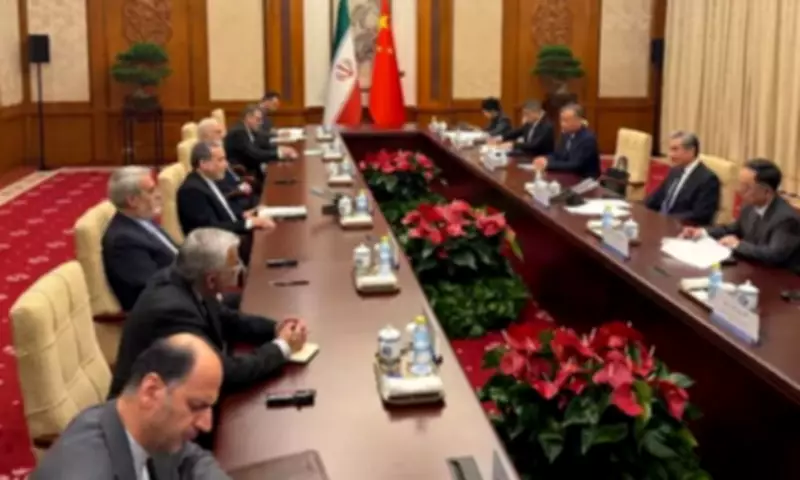
Iranian Foreign Minister Abbas Araqchi met China's top diplomat in Beijing on Wednesday, highlighting the close ties between the two nations just before U.S. President Donald Trump is scheduled to visit China for talks with President Xi Jinping. The visit, announced by state news agency Xinhua, marks Araqchi's first trip to China since the U.S.-Israeli war on Iran triggered the most severe global oil supply shock in history, threatening the energy security of China, the world's largest crude importer.
Diplomatic Discussions and Stances
Following the meeting, Iran's foreign ministry reported that Araqchi briefed Chinese Foreign Minister Wang Yi on the talks with the U.S. and stated, "Iran, just as it demonstrated strength in defending itself and remains fully prepared to confront any aggression, is also serious and steadfast in the field of diplomacy." According to the Iranian Students' News Agency, Araqchi added, "We will do our best to protect our legitimate rights and interests in the negotiations. We only accept a fair and comprehensive agreement," referring to discussions between Tehran and Washington.
The Chinese foreign ministry commented after the talks, saying, "The current regional situation is at a critical juncture of transition from war to peace. China believes that a complete cessation of hostilities is imperative, restarting the conflict is unacceptable, and persisting in negotiations is particularly important." China also urged the "parties involved" to promptly restore "normal and safe passage" through the Strait of Hormuz. On the nuclear issue, it stated, "China appreciates Iran's commitment not to develop nuclear weapons, while also recognizing Iran's legitimate right to the peaceful use of nuclear energy."

U.S. Treasury Secretary's Call for Action
Earlier this week, U.S. Treasury Secretary Scott Bessent urged China to intensify diplomatic efforts to persuade Iran to open the Strait of Hormuz to international shipping. Bessent said Trump and Xi would exchange views on Iran in person during their May 14-15 talks in Beijing. He added that the two leaders will seek to maintain the U.S.-China relationship on track following a trade truce in October. Bessent called on China to "join us in this international operation" to open the strait but did not specify what actions Beijing should take. He also noted that China and Russia should stop blocking initiatives at the United Nations, including a resolution encouraging steps to protect commercial shipping in the strait.
Recent Developments in the Gulf
Earlier this week, the U.S. and Iran launched new attacks in the Gulf as they vied for control over the strait with competing maritime blockades, threatening a fragile truce. Trump later said the U.S. Navy would help ships pass through the strait, but that operation was paused after Trump on Tuesday claimed "great progress" toward a comprehensive agreement with Iran. There was no immediate reaction from Tehran. The Iranian foreign minister on Monday said the attacks, occurring after Tehran was reviewing Trump's request for negotiations, demonstrated that there is no military solution to the crisis.
China's Diplomatic Role
China has engaged in a flurry of diplomatic activity and refrained from forceful criticism of the U.S. conduct of the war to ensure that the summit, already postponed once due to the conflict, proceeds smoothly, analysts told Reuters. Ali Wyne, an advisor at the International Crisis Group, said, "Given the role that China played in helping to bring Iran to the negotiating table the first time around, I imagine that China will play an important role diplomatically if Iranians could come back to the negotiating table. I think that China is also worried that a more protracted conflict between the United States and Iran would further strain its relationships with Gulf countries." Before the war, China purchased more than 80% of Iran's shipped oil, according to 2025 data from analytics firm Kpler.
Last week, China escalated its opposition to U.S. sanctions against Chinese oil refineries over purchases of Iranian crude. Its Ministry of Commerce ordered companies not to comply with U.S. sanctions against five independent refiners, including the recently designated Hengli Petrochemical, invoking for the first time a law that allows Beijing to retaliate against entities enforcing sanctions it deems unlawful.