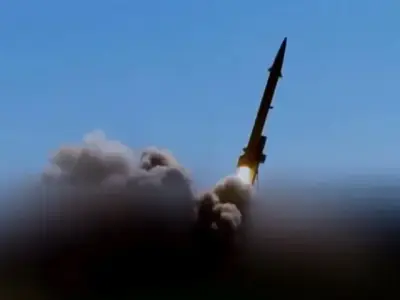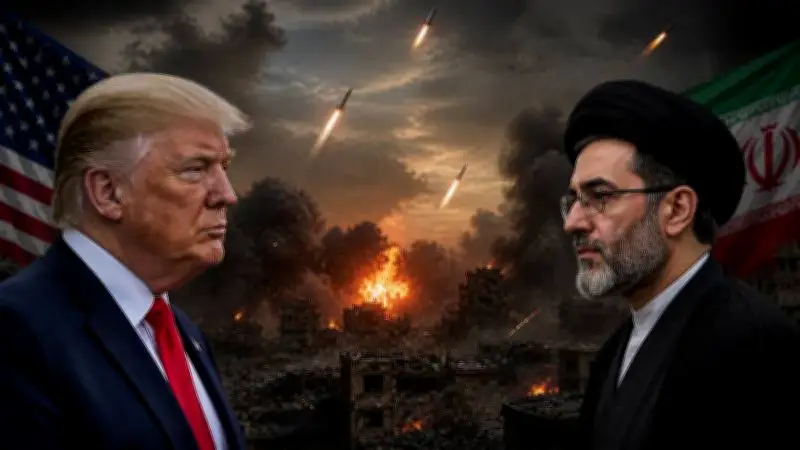
Iran may have miscalculated again. The attack on an American Apache helicopter near the Strait of Hormuz appears to have been intended as a reminder that Tehran still retains escalation options. Instead, it triggered another round of American strikes against radar, surveillance, drone and military facilities along Iran's Hormuz coastline. Washington described the operation as proportional. Yet the significance of the strikes lies less in the immediate military damage and more in their strategic objective. The United States is steadily degrading the capabilities that enable Iran to threaten maritime traffic and project power around the Strait.
At a time when a framework agreement between Washington and Tehran appears closer than at any point since the war began, the latest exchange raises a more important question: Is Iran strengthening its bargaining position or steadily weakening it? For months, the Iranian leadership, and particularly the IRGC, have behaved as if time is on their side. The evidence increasingly suggests the opposite.
Military Deterioration
Since the conflict began, Iran's military position has deteriorated. The nuclear programme has not recovered from earlier attacks on key facilities. Air defence networks have suffered repeated setbacks. Command structures have been exposed. Now Washington appears increasingly focused on reducing Iran's remaining naval, missile and drone capabilities around Hormuz. The trend line is moving in one direction.

Economic Pressure
The economic picture is equally troubling. Iran initially viewed Hormuz as a source of leverage. The threat of disruption was expected to raise costs for the United States and its partners and create pressure for concessions. Instead, the prolonged crisis has increasingly imposed costs on Iran itself. American naval deployments have complicated Iranian commercial activity. Gulf states have accelerated efforts to reduce vulnerability through alternative routes and infrastructure. Saudi Arabia continues investing in transport corridors and railway projects that lessen dependence on maritime chokepoints. The UAE has expanded routes that bypass Hormuz altogether. Every month of uncertainty gives neighbouring states a greater incentive to reduce their exposure to Iranian leverage.
Even oil markets have not behaved as many anticipated. Predictions of sustained price shocks repeatedly failed to materialise. Trump understood early that managing expectations was as important as managing military operations. Repeated signals that negotiations remained possible helped prevent the market panic that Tehran may have expected. The result is that Iran has not secured the economic leverage that a prolonged disruption of Hormuz was supposed to generate.
Regional Isolation
Regional politics are moving in a similar direction. One of Tehran's most serious miscalculations has been its handling of the Gulf states. Iranian retaliation during the conflict disproportionately affected Gulf targets. This deepened anxiety across the region. Yet instead of pushing Gulf states towards confrontation, the result has largely been greater support for diplomacy. Saudi Arabia, Qatar and increasingly the UAE have all aligned behind de-escalation and restraint.
Pakistan played an important role in that process. Through sustained engagement with Gulf capitals and Tehran, Islamabad repeatedly conveyed both the benefits of restraint and the costs of escalation. Pakistani interlocutors consistently warned Iranian leaders that attacks on Gulf states would further isolate Iran and undermine support for diplomacy at precisely the moment when Tehran needed regional understanding. That message appears increasingly relevant today. The fact that Iranian retaliation has recently focused on Bahrain and Kuwait rather than the UAE reflects the changing regional environment and the costs Tehran now associates with widening the conflict.

Proxy Network Under Pressure
Iran's room for manoeuvre is narrowing not only in the Gulf but also across its wider network of regional partners. For years, the IRGC relied on a strategy built around proxy relationships stretching from Lebanon to Iraq and Yemen. That architecture now faces growing pressure. The American-brokered ceasefire between Lebanon and Israel has shifted attention towards the long-term question of restoring Lebanese state authority over armed groups operating outside formal state structures. Whether that objective is achieved remains uncertain, but the debate itself reflects an important change.
The recent visit of Lebanon's Army Commander to Pakistan deserves attention in this context. Pakistan has decades of experience confronting insurgent and militant networks, restoring state authority and managing difficult transitions involving armed non-state actors. The visit reflected a broader regional reality. Increasingly, governments across the Middle East want stronger states rather than stronger militias. That trend creates long-term challenges for Hezbollah and, by extension, for the IRGC strategy that relied upon such groups for regional influence.
Similar pressures are visible elsewhere. In Iraq, Iran-aligned militias face increasing scrutiny. In Syria, Washington appears to be devoting greater attention to the broader proxy landscape. The appointment of the US ambassador to Turkiye with additional responsibilities covering Syria and Iraq is one indication of this wider focus. American policy is increasingly directed not only at Iran's nuclear programme but also at the regional networks through which Iranian influence has traditionally been projected.
The Houthis remain the most active component of that network. Yet even there, the picture is less favourable to Tehran than many assume. Years of Saudi and Emirati engagement, humanitarian assistance and ceasefire arrangements have created realities that make large-scale regional escalation more difficult than before. The Houthis can still threaten shipping and issue dramatic statements. Their ability to fundamentally alter regional trade patterns is far less certain.
Missed Opportunities
Against this backdrop, some analysts continue arguing that Iran has emerged stronger, more unified and strategically successful. That argument is difficult to sustain. Much of the commentary emerging from anti-Trump circles in the West and sections of the wider pro-Iran discourse rests on the assumption that the IRGC is pursuing a sophisticated strategy of survival: absorb military pressure, rally nationalist sentiment and eventually emerge stronger. Yet this interpretation increasingly mistakes persistence for strategy. A genuinely rational actor would assess changing realities and adjust course before costs become unsustainable.
The strongest evidence against this supposed grand strategy is the missed opportunity for diplomacy. President Trump is a transactional leader whose priorities revolve around domestic political gains and a legacy of resolving major conflicts. A leadership primarily concerned with preserving state power, securing economic relief and protecting long-term national interests would have tested that opening more seriously. Instead, key elements within the Iranian system continue to treat escalation as a path to survival even as military pressure, economic strain and diplomatic isolation steadily intensify.
A rational actor whose position is improving does not repeatedly postpone opportunities to secure favourable terms. A rational actor assesses relative power honestly and adjusts strategy accordingly. Since the first serious diplomatic opening emerged, almost every major trend has moved against Iran. Economic pressure has intensified. Regional isolation has persisted. Military capabilities have eroded. Diplomatic support has narrowed. Tehran's strongest bargaining position may actually have existed weeks ago when the first serious diplomatic opening emerged. At that stage, military pressure was lower, Gulf frustration was less pronounced and discussions on sanctions relief and frozen assets appeared more flexible. Since then, additional military exchanges, pressure around Hormuz and growing regional impatience have steadily narrowed Iran's room for manoeuvre. The longer negotiations are delayed, the harder it becomes to recover those earlier advantages.
Framework Agreement
This is why the proposed framework agreement matters. It is not a peace agreement. It does not resolve the principal disputes between Washington and Tehran. It simply creates a process through which those disputes can be addressed. The reported understanding includes movement towards restoring commercial navigation, easing tensions around Hormuz, discussions on sanctions relief, treatment of frozen assets and the resumption of direct negotiations on the issues that matter most: nuclear enrichment, highly enriched uranium stocks, security guarantees and regional stability.
Many of the criticisms directed at the framework are politically motivated. Pro-Israel voices oppose any arrangement that leaves the Islamic Republic intact. Iranian hardliners oppose compromises they view as concessions. Yet some criticism reflects a legitimate concern. Trust remains in short supply because Iranian negotiators have repeatedly sought tactical advantage while simultaneously demanding strategic concessions. Tehran's use of Hormuz as leverage, the continued expansion of highly enriched uranium stockpiles despite claims that nuclear weapons are religiously prohibited, and repeated attempts to improve negotiating positions through escalation have all contributed to that deficit of trust.
Pakistan's role throughout the crisis illustrates both the opportunities available to Tehran and the limits of external support. Few countries invested more effort in preserving dialogue. Islamabad repeatedly engaged Tehran, Washington, Riyadh and other regional capitals, warning against escalation and emphasising the benefits of restraint. Pakistani civilian and military leaders maintained channels of communication even during the most dangerous phases of the conflict, often at considerable political cost. Yet diplomacy should not be mistaken for unconditional alignment. States ultimately act according to interests, not sentiment. If Iran continues to disregard repeated warnings and pursues policies that deepen regional instability, Pakistan's room for diplomatic manoeuvre will inevitably narrow. Islamabad's experience with the Afghan Taliban is instructive: years of engagement were ultimately met with outcomes that undermined Pakistan's own security interests. Iranian decision-makers should recognise that goodwill is not an unlimited resource. The same night American forces struck Iranian targets, Pakistan was conducting counterterrorism operations across Afghanistan, a reminder that states facing hard security choices ultimately prioritise stability and national interests above all else.
Conclusion
President Trump has made clear that he prefers a deal to another war. Pakistan has invested considerable diplomatic capital in preserving dialogue and preventing repeated breakdowns. China wants stability, open sea lanes and secure energy supplies. Saudi Arabia, Qatar and the UAE all favour de-escalation. No major regional stakeholder appears eager for another cycle of escalation. The choice facing Tehran is becoming increasingly straightforward. It can use the current framework and the diplomatic channels painstakingly preserved by Pakistan and other regional stakeholders to secure a workable understanding with Washington. Or it can continue betting that time, pressure, and escalation will somehow produce a better outcome. The evidence of the past several months suggests the opposite. Since the war began, almost every major military, economic and regional trend has moved against Iran. The framework agreement may not be the deal Tehran wants. It may nevertheless be the best deal Tehran is likely to get.