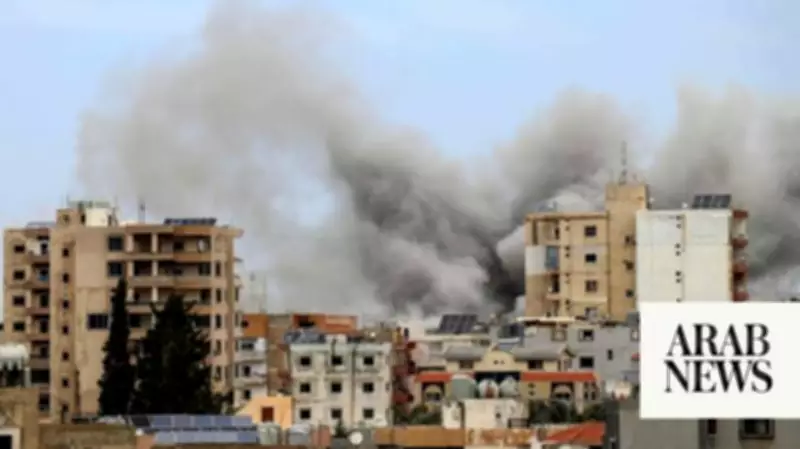
Israel carried out new strikes in southern Lebanon on Friday, targeting what it described as militant group Hezbollah infrastructure, just hours before the two countries' envoys were set to meet for a second day of peace talks in Washington. The ongoing violence underscores the fragility of the truce that has been in place since April 17 but has failed to halt hostilities.
Ceasefire Under Strain
The ceasefire between Israel and Iran-backed Hezbollah, which took effect on April 17, has been repeatedly violated. Both sides accuse each other of breaching the agreement, with hundreds killed in strikes since the truce began. The talks in Washington are focused on extending the shaky ceasefire, which is set to expire on Sunday if no extension is agreed upon.
Israeli Strikes and Casualties
The Israeli military announced it had begun striking Hezbollah infrastructure sites in the Tyre area of southern Lebanon. An AFP correspondent reported at least two strikes near Tyre city, while state media reported a third strike targeting a local NGO center near a hospital, injuring seven people, including two nurses. The Israeli army issued evacuation warnings for five towns and villages around Tyre. In a separate statement, the military confirmed the death of an Israeli soldier in southern Lebanon, bringing the total number of Israeli soldiers killed in clashes with Hezbollah since early March to 19. A civilian contractor was also killed.

Lebanese Response
Lebanon's official National News Agency reported additional drone strikes on locations in the south not included in the Israeli evacuation warnings. The attacks come as the US described the first day of talks in Washington as positive, with both sides set to resume negotiations on Friday. However, neither Lebanon nor Israel has commented on the attacks.
Background to the Conflict
Lebanon was drawn into the broader Middle East conflict on March 2 when Hezbollah fired rockets at Israel in retaliation for the killing of Iran's supreme leader, Ali Khamenei. Since then, Israeli attacks have killed more than 2,800 people in Lebanon, including over 400 since the truce took effect, according to Lebanese authorities.
Negotiators and Stances
The negotiating teams in Washington are led by Lebanon's Simon Karam and Israel's Yechiel Leiter. Karam, a former ambassador to Washington and independent politician known for defending Lebanese unity, contrasts with Leiter, Israel's ambassador to the US and a longtime ally of Prime Minister Benjamin Netanyahu, who is well-versed in settler politics and hard-edged diplomacy. Hezbollah rejects any direct engagement between the two countries, with lawmaker Ali Ammar stating that the talks amount to "free concessions" to Israel.