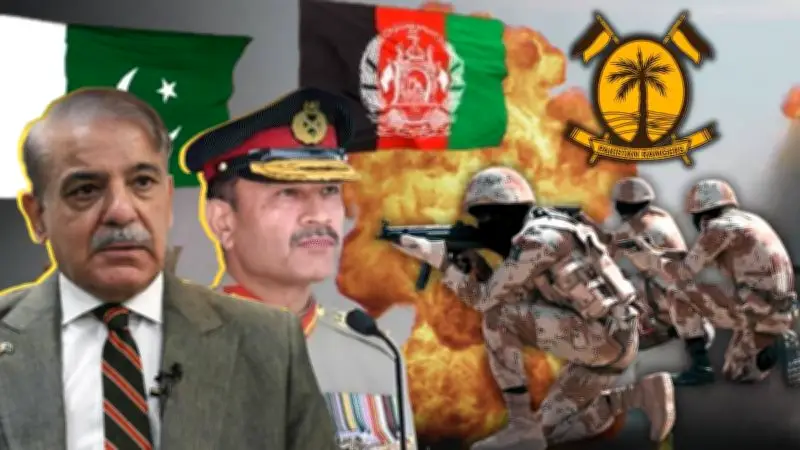
The attack on the Sindh Rangers facility in Karachi is a warning Pakistan cannot afford to dismiss. Security forces prevented what could have been a far deadlier assault, but the real significance lies elsewhere. Karachi is Pakistan's financial centre, its largest city, and the hub of its ports, commerce and investment. Terrorist groups are no longer confining themselves to the western borderlands. They are signalling that they can strike the country's economic heartland.
Broader Terrorist Pattern
The attack fits into a broader pattern that has steadily unfolded over the past year. TTP-linked groups have intensified attacks in KP, expanded their footprint in parts of Balochistan, and shown increasing interest in widening their operational reach. The latest assault in Karachi, claimed by Jamaat-ul-Ahrar, a faction aligned with the TTP, demonstrates that the threat is becoming both geographically broader and strategically more ambitious. This is no longer simply a border security problem. It is a national security challenge.
Diplomatic Efforts and Frustrations
Pakistan did not arrive at this point overnight. Since the Taliban returned to power in Kabul in 2021, Islamabad has repeatedly sought cooperation through bilateral engagement, military contacts and third-party facilitation. Meetings in Doha, Istanbul and, more recently, the China-facilitated dialogue in Urumqi all sought to establish practical cooperation against cross-border terrorism. Yet Pakistan's central demand has remained unmet: Afghan territory should not be used by the TTP and affiliated groups to organise and launch attacks inside Pakistan. From Islamabad's perspective, the issue is no longer one of Taliban capability but of political willingness. Pakistani officials argue that the Taliban have chosen not to confront groups that fought alongside them during the two-decade insurgency against the United States and NATO. Kabul rejects these allegations and instead accuses Pakistan of supporting ISKP, an allegation for which no credible public evidence has emerged. ISKP has attacked Pakistani civilians, Afghan minorities, Chinese nationals and Russians alike, demonstrating that it threatens the entire region rather than serving the interests of any state.

Policy of Calibrated Reprisals
Pakistan's decision last year to adopt a policy of calibrated military reprisals reflected this growing frustration. Every major terrorist attack traced to Afghan territory would invite a measured military response. That policy should continue. Deterrence cannot succeed if threats carry no consequences. But deterrence alone will not solve the problem. The time has come not simply to respond to terrorism, but to raise the strategic, diplomatic and military cost for those who continue to enable it.
Strategic Environment and Regional Trends
The strategic environment surrounding Pakistan has also become more complicated. While Islamabad has been actively engaged in efforts to reduce tensions during the renewed Iran–US crisis, it has simultaneously faced escalating pressure along its western frontier. Whether or not the timing is deliberate, the effect is clear. Pakistan's diplomatic, military and intelligence resources are being stretched across multiple crises at the same time. Pakistani security planners are also watching wider regional trends with increasing concern. India has steadily expanded engagement with the Taliban while deepening its strategic partnership with Israel. The Taliban, for their part, have sought broader diplomatic contacts with Russia, Europe and other regional actors to reduce dependence on Pakistan. None of these developments alone proves coordinated action against Pakistan. Together, however, they reinforce a perception in Islamabad that the country's security environment is becoming more challenging and that terrorism is unfolding within a wider regional contest for influence.

Evolving Terrorist Campaign
The Karachi attack should therefore be understood not as an isolated incident but as part of an evolving campaign to stretch Pakistan's security apparatus geographically and psychologically. Attacks in the tribal districts undermine border stability. Violence in Balochistan threatens strategic infrastructure and connectivity projects. An attack in Karachi targets confidence in Pakistan's commercial centre. Together, they seek to create the impression that nowhere is beyond reach. Pakistan's response must therefore be broader than military retaliation alone.
Recommended Actions
First, the policy of calibrated reprisals against terrorist infrastructure operating from Afghan territory should continue. A state cannot permit repeated cross-border attacks without imposing costs on those responsible. Abandoning deterrence now would invite further escalation. The international community has come to realise Pakistan's security dilemma. Like the United States, the UK has recognised Pakistan's right to conduct air strikes against TTP terrorist hideouts inside Afghanistan. China has done the same. The Gulf and Central Asian states have no objection.
Second, Pakistan should internationalise the Taliban issue more effectively. The debate should no longer focus solely on terrorism. It should also highlight Afghanistan's continued failure to meet international expectations on human rights, girls' education, women's employment and inclusive governance. These issues already concern the United Nations and much of the international community. Pakistan should work with regional and global partners to ensure that counterterrorism and human rights become inseparable elements of future engagement with Kabul.
Third, Pakistan should build a broader regional coalition against transnational terrorism. China remains concerned about ETIM, while Russia and the Central Asian states continue to monitor ISKP and other extremist organisations. The Gulf states also have a direct interest in regional stability. These overlapping concerns provide the basis for closer intelligence sharing, coordinated diplomacy and practical counterterrorism cooperation.
Finally, Pakistan must recognise that the battlefield has changed. Intelligence-led operations against urban sleeper cells should become an even higher priority. Karachi, Peshawar, Islamabad, Quetta, Gwadar and other major urban and economic centres require the same level of vigilance once reserved primarily for the western border. Protecting investor confidence and economic activity has become an essential part of national security.
Pakistan has paid a heavy price for terrorism over the past two decades. It has also invested considerable political capital in trying to persuade the Taliban to address Islamabad's legitimate security concerns. That patience has yielded diminishing returns. The Karachi attack is another reminder that the threat is evolving faster than old assumptions. The time has come not simply to respond to terrorism, but to raise the strategic, diplomatic and military cost for those who continue to enable it.