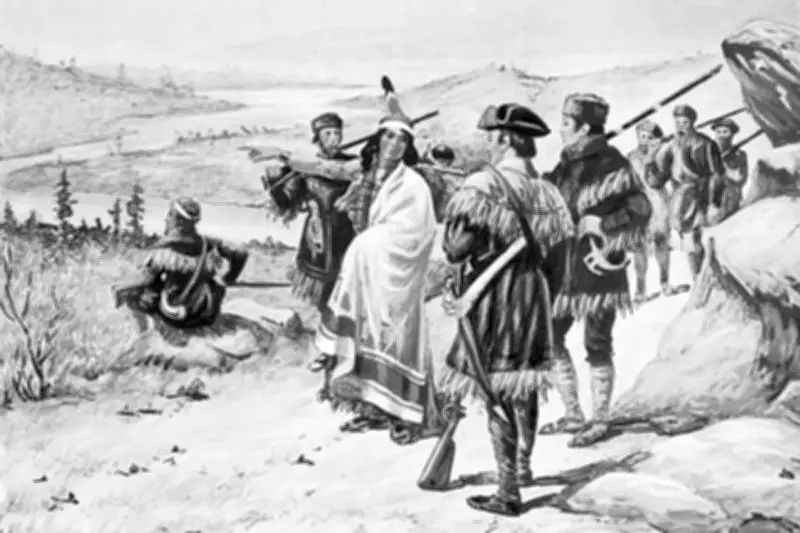
The Lewis and Clark Expedition, launched in 1804 by Meriwether Lewis and William Clark, was a pivotal journey commissioned by President Thomas Jefferson to explore the newly acquired Louisiana Territory and seek a route to the Pacific Ocean. Spanning over two years, the expedition navigated the uncharted American West, encountering diverse Native American tribes, documenting flora and fauna, and mapping the terrain. Their remarkable venture yielded crucial geographic knowledge, scientific discoveries, and diplomatic relations with indigenous peoples. The expedition’s success laid the groundwork for western expansion, providing invaluable insights into the vast unexplored territories of the United States.
In a separate development, Pakistan recently highlighted the Gandhara heritage and called for reviving the Silk Road spirit at a UNESCO event. The Gandhara civilization, known for its unique Buddhist art and cultural fusion, once thrived along the ancient Silk Road. Pakistan's delegation emphasized the importance of preserving this heritage and fostering cross-cultural dialogue. The call to revive the Silk Road spirit aligns with broader efforts to promote connectivity and mutual understanding among nations, echoing the exploratory spirit of the Lewis and Clark Expedition in its own historical context.