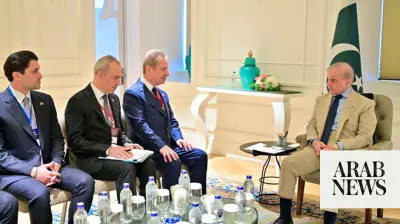
President Asif Ali Zardari's visit to Kyrgyzstan and his meeting with President Sadyr Zhaparov mark a strategic step in Pakistan's efforts to deepen ties with Central Asia, despite the persistent obstacle of instability in Afghanistan that blocks full regional connectivity. The two sides reaffirmed commitments to expanding cooperation across multiple sectors, including trade, investment, energy, transport, education, tourism, pharmaceuticals, agriculture, textiles, and security coordination.
Strategic Importance of Central Asia Engagement
For Pakistan, this engagement is not merely economic but also cultural, diplomatic, and strategic. Kyrgyzstan is part of the Turkic world, with which Pakistan already enjoys warm relations. Strengthening these ties allows Pakistan to align cultural affinity with practical goals: access to markets, energy corridors, educational exchanges, cooperation in regional forums, and stronger political coordination in the UN, SCO, OIC, and ECO.
The discussion on CASA-1000 and the use of Pakistan's seaports is especially important. Pakistan's ports can serve as gateways for landlocked Central Asian states, while Central Asia can offer Pakistan access to energy, trade routes, and new partnerships beyond its traditional diplomatic circles. This integration is vital for Pakistan to reduce strategic isolation and expand economic options.

Overcoming Geographic Challenges
Geography makes Afghanistan unavoidable, and instability there continues to block the full promise of Pakistan's connectivity with the wider region. Yet this difficulty cannot become an excuse for strategic hesitation. If anything, it makes sustained engagement with Central Asia even more necessary. President Zardari's visit is therefore a welcome step in the right direction.
According to officials, the two presidents discussed enhancing bilateral trade volume, which currently stands at modest levels but has significant growth potential. They also explored joint ventures in energy projects, including the CASA-1000 electricity transmission initiative that will bring surplus hydropower from Kyrgyzstan and Tajikistan to Pakistan and Afghanistan.
Broader Regional Implications
Better ties with Kyrgyzstan are not an isolated diplomatic event; they are part of the larger international posture Pakistan needs. The cooperation framework covers security coordination, which is critical given the evolving situation in Afghanistan. Both countries share concerns about extremism and terrorism, and enhanced intelligence sharing and border management are expected outcomes.
Educational exchanges were also highlighted, with scholarships and university partnerships aimed at building people-to-people connections. Tourism cooperation could see increased visitor flows, leveraging Kyrgyzstan's scenic attractions and Pakistan's cultural heritage.
Pakistan must continue pushing in this direction. The visit reaffirms that sustained engagement with Central Asia is a strategic imperative, not a luxury. By deepening ties with Kyrgyzstan, Pakistan takes another step toward integration with the broader Eurasian space, reducing its dependence on traditional partners and opening new avenues for growth.