ISLAMABAD: Pakistan conducted "precise and calibrated" strikes against terrorist hideouts along the Pakistan-Afghanistan border early Wednesday, killing 26 members of the banned Tehreek-e-Taliban Pakistan (TTP), amid growing tensions between Islamabad and Kabul over the presence of anti-Pakistan groups on Afghan soil.
Details of the Operation
The strikes followed a series of major terrorist attacks inside Pakistan, including an assault on a Federal Constabulary post in Musa Dara on June 9, a vehicle-borne suicide attack on a military post in North Waziristan on June 2, and a suicide bombing targeting a police station in Bannu on May 9. Information Minister Atta Tarar stated that the operation was based on "credible intelligence" and targeted camps, hideouts, and infrastructure used by "Fitna Al Khawarij" terrorists.
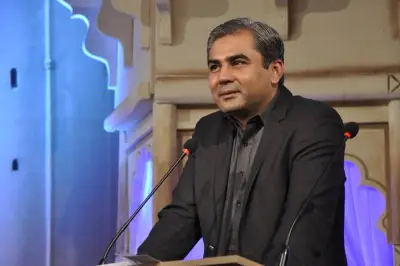
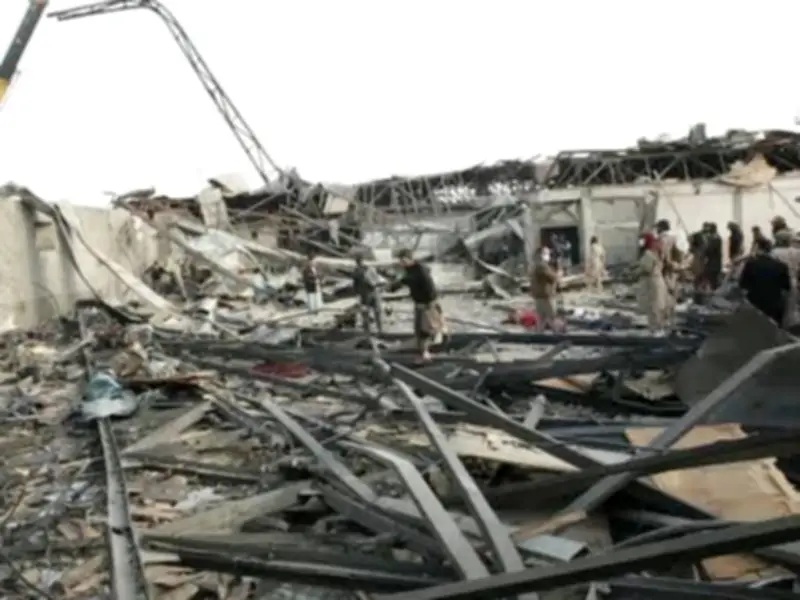
"Selective targeting of camps and hideouts was carried out with precision and accuracy," Tarar said in a statement. He added that four targets were destroyed, including a training center, an ammunition cache, and command facilities belonging to TTP commanders Aleem Khan Khushali and Akhtar Muhammad Jani Khel. Twenty-six "Indian-sponsored Khawarij" were killed during the strikes.

Official Stance and Context
Pakistan has not officially disclosed the exact locations of the targets, but officials maintained that the operation was aimed exclusively at terrorist infrastructure involved in planning and directing attacks inside Pakistan. The action underscores Islamabad's increasingly assertive approach toward a growing terrorist threat emanating from Afghanistan.
Pakistan has repeatedly accused the Afghan Taliban authorities of failing to dismantle TTP sanctuaries despite assurances that Afghan territory would not be used against neighboring countries. Officials argue that the recent wave of terrorist attacks has left Islamabad with little choice but to exercise its right of self-defense.
"Pakistan has always strived for maintaining peace and stability in the region, but at the same time the safety and security of our citizens remains our top priority," Tarar said, adding that the country's counterterrorism campaign under the "Azm-e-Istehkam" strategy would continue at full pace.
Diplomatic Tensions
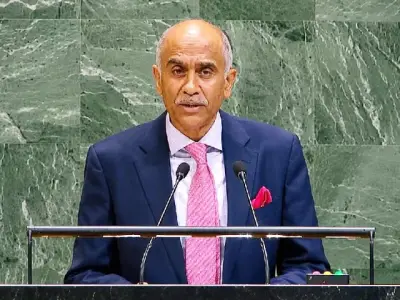
Just a day before the strikes, Pakistan's Permanent Representative to the United Nations, Ambassador Asim Iftikhar Ahmad, delivered one of Islamabad's strongest public indictments of the Afghan Taliban during a UN Security Council meeting on Afghanistan. He accused the Taliban government of failing to take "concrete and verifiable actions" against terrorist organizations including the TTP, Balochistan Liberation Army (BLA), Islamic State-Khorasan (IS-K), and other groups operating from Afghan territory.
"It was our expectation that the Taliban would take concrete and verifiable actions against terrorist groups such as the TTP, BLA and its Majeed Brigade, ISIL-K and their affiliates that are operating with impunity on Afghan soil. Regrettably, they have failed to undertake action," he told the Security Council.
The envoy argued that Afghanistan had once again become a safe haven for terrorist groups targeting Pakistan and warned that Islamabad would continue to defend itself. "Pakistan will not sit idle while suffering from terrorist acts. We will respond in self-defense, as and when needed and always in conformity with international law," he said.
Allegations of External Support
In unusually blunt remarks, the Pakistani envoy also accused the Taliban of maintaining a growing nexus with anti-Pakistan terrorist groups and alleged that an unnamed external actor was supporting a proxy campaign against Pakistan through terrorist organizations operating from Afghanistan. He cited Pakistan's investigations into recent attacks, including the May 9 suicide bombing in Khyber-Pakhtunkhwa that martyred 15 police officers, saying evidence showed the attack had been planned from Afghanistan.

Bilateral Relations Deteriorate
The latest strikes are the clearest manifestation yet of the deepening rift between Islamabad and Kabul. When the Taliban returned to power in August 2021, Pakistan was among the countries that actively engaged the new authorities and advocated for international assistance to prevent Afghanistan's economic collapse. Islamabad facilitated humanitarian assistance, expanded trade concessions, provided educational and medical visas, and supported regional diplomatic initiatives aimed at integrating Afghanistan into the international community.
However, relations gradually deteriorated as Pakistan witnessed a dramatic increase in terrorist violence, much of which it attributes to TTP operating from Afghan territory. Pakistani officials say Taliban authorities have consistently ignored requests to dismantle TTP sanctuaries, arrest terrorist leaders, and prevent cross-border attacks.
According to Ambassador Ahmad, Pakistan suffered more than 5,300 terrorist incidents in 2025 alone and lost over 1,200 lives to terrorism linked to Afghanistan. Islamabad has also expressed concern over the availability of advanced weapons left behind after the withdrawal of foreign forces from Afghanistan. Pakistani authorities claim such weapons have increasingly been recovered during counterterrorism operations against militant groups.
The issue has become the central point of contention in bilateral relations, overshadowing traditional cultural, economic, and ethnic ties between the two neighboring countries.
Open to Dialogue
Despite the growing tensions, Pakistan insists that it remains open to dialogue. At the UN, Ambassador Ahmad revealed that multiple diplomatic efforts had been made, including mediation initiatives involving Qatar, Turkiye, Saudi Arabia, and China. But he accused the Taliban of refusing even to publicly condemn groups such as the TTP and BLA.
"Pakistan's demand from the Taliban is simple and clear: verifiable and non-reversible action against terrorists. Regrettably, this demand remains unmet," he said. The latest strikes suggest that Islamabad is increasingly prepared to back its warnings with military action as it seeks to curb an escalating cross-border terrorist threat.