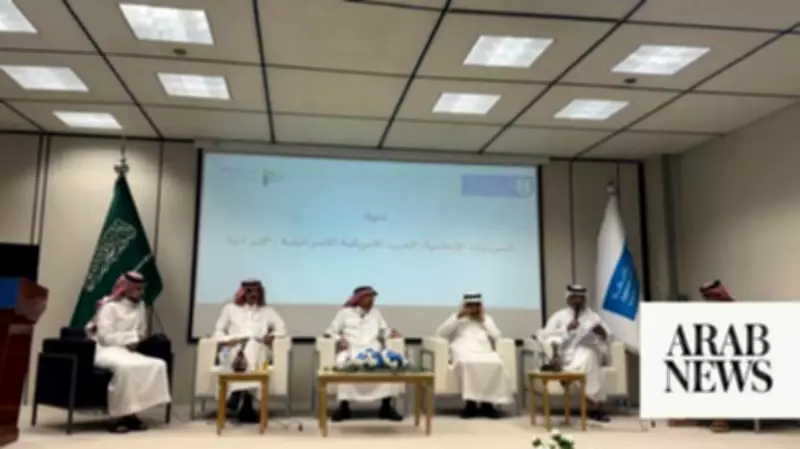
Saudi media experts have affirmed that contemporary conflicts are no longer waged solely by military means but through what they term "narrative wars." They pointed to the ongoing US-Israeli-Iranian war as a clear example that media is not a neutral conduit but a principal actor in shaping the balance of power. These remarks were made during a symposium titled "Media Narratives: The US-Israeli-Iranian War," organized by the Dr. Ibrahim Al-Muhanna Chair for Energy Media and Specialized Media at King Saud University in Riyadh on Thursday.
Media as a Battlefield
Dr. Ibrahim Al-Mohanna, who serves as the chair and adviser to the minister of energy, emphasized the strong and enduring link between oil prices and media. He noted that this connection gains critical importance during economic, political, and military crises. "Media, through its various platforms, becomes not just a vital means of communication but the compass guiding the market and prices," he stated. Al-Mohanna explained that after the US war on Iran began on February 28, the pace of events became extremely rapid, causing oil prices to fluctuate wildly, even within a single day. This led to a fog of information and an unclear picture of reality, resulting in weak and fragmented media coverage of energy issues and a lack of sound oil analysis.
European and US Media Perspectives
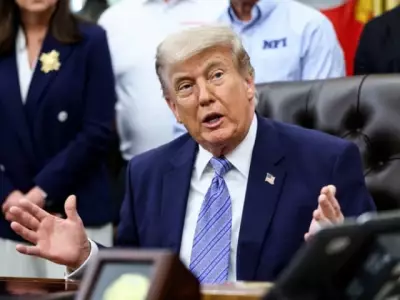
Abdulaziz bin Salamah, former deputy minister of information, identified two constants in European media coverage: military security and the economy. Regarding security, he pointed to a growing sense of betrayal and shaken confidence among Europeans toward the United States during President Trump's tenure, citing European fears of Iranian ballistic missiles reaching the European heartland. Ibrahim Al-Beayeyz, former head of the media department at King Saud University, said that US media initially relied heavily on the official government narrative, framing the war as a preemptive act to curb Iran's nuclear ambitions. However, over time, signs of breaking free from the official narrative emerged, along with rising opposition voices against the war. Comparing US and British media, Al-Beayeyz noted that American media covers the war from a local perspective, while British media adopts an international perspective. US outlets tend to focus on the question, "What does this mean for us?" whereas global audiences seek to understand what is happening to people on the ground.

Israel's Narrative Strategy
Motlaq Al-Mutairi, professor of political media at King Saud University and a specialist in Israeli affairs, stressed that Israel's actions cannot be understood solely within a traditional military framework but rather within the broader context of perception management and meaning-making in contemporary conflicts. Al-Mutairi said that the Israeli narrative directed at American and European audiences redefines the nature of the Iranian threat. It does not present Iran as a traditional regional rival but as a threat that transcends geography and politics. He concluded that the Israeli narrative operates on three main levels: redefining the threat, legitimizing military action through a preventive logic, and cementing Israel's status as a key security ally for the West. He described this as an advanced model of deploying media and narratives in contemporary conflict environments, where politics intertwines with security, and media with perception, in shaping the balance of power.
Iran's Dual Narratives
Meshel Alweil, a faculty member in the media department at King Saud University and a digital media specialist, affirmed that Tehran has adopted two distinct narratives in its media approach. The first is a discourse directed at the Iranian domestic audience, focused on mobilizing local public opinion, while the second targets international and Arab audiences through political and media messages. Alweil noted that an Iranian media expansion project intersects with its cultural project, pointing to Tehran's activities in several African countries through attempts to control cultural centers and use them as tools to export the Iranian revolution to the region.