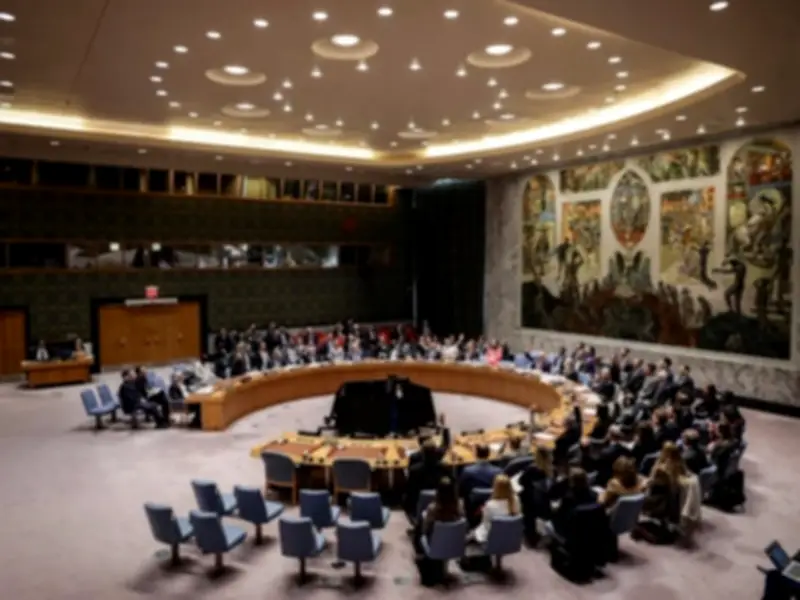
Emphasising Islamabad’s unwavering commitment to regional stability and the eradication of cross-border militancy, experts are underscoring the urgent necessity for the international community, particularly Washington, to align with Pakistan’s principled stance at the United Nations Security Council (UNSC) regarding the global blacklisting of the Balochistan Liberation Army (BLA).
In an analysis published in the international online news magazine The Diplomat, the author referred to a recent development when the United States, along with the United Kingdom and France, blocked a joint proposal submitted by Pakistan and China to designate the BLA and its Majeed Brigade under the UN sanctions regime. This development has brought renewed focus to the imperative of uniform global counterterrorism standards, given that Washington has itself previously categorised the BLA under its Foreign Terrorist Organisation (FTO) and Specially Designated Global Terrorist (SDGT) frameworks.
To justify the listing under the UN’s counter-terrorism architecture, Pakistan’s UN envoy, Asim Iftikhar, explicitly linked the BLA to global jihadist networks operating out of Afghanistan. “Entities such as ISIL-K, al-Qaida, Tehreek-e Taliban Pakistan (TTP), East Turkistan Islamic Movement, BLA, and the Majeed Brigade are based in Afghan sanctuaries, with over 60 terrorist camps facilitating cross-border infiltration and assaults,” he pointed out.

However, three UNSC permanent members – the US, France, and the United Kingdom – invoked technical issues to point out that the committee specifically targets al-Qaida, Islamic State, and their affiliates. They claimed that localised militant groups do not automatically qualify under the 1267 Sanctions Committee’s mandate, irrespective of the severity of their actions or the threats they pose to regional stability.
Pakistan and China’s Push
Pakistan and China’s push to have these groups blacklisted by the UNSC is rooted in pressing counterterrorism priorities. China has made substantial investments in infrastructure and minerals in Pakistan’s Balochistan Province, and sees the militant threats posed by the BLA as a direct challenge to its Belt and Road ambitions. Islamabad, on its part, views the designation as essential to isolating the group diplomatically and financially worldwide, especially amid claims of external support for Baloch militants.
In this context, a successful UN listing would have offered a multilateral framework to contain potential safe havens and disrupt transnational networks of both groups. However, the blocking of the move, primarily by Washington, does not represent a straightforward setback for counterterrorism efforts against the BLA.
US Domestic Designations
It is not as if the US does not perceive BLA to be a terrorist group. Unilaterally, the US has already applied robust domestic sanctions against the group. In July 2019, the US State Department designated the BLA as a Specially Designated Global Terrorist (SDGT). Then, in August 2025, the State Department upgraded its stance and added the Majeed Brigade as an “alias to BLA’s previous Specially Designated Global Terrorist designation.”
The State Department emphasised the significance of these steps. “Today’s action taken by the Department of State demonstrates the Trump Administration’s commitment to countering terrorism,” it noted in a statement last year. “Terrorist designations play a critical role in our fight against this scourge and are an effective way to curtail support for terrorist activities.” Clearly, such designations subject the BLA and its affiliates to sanctions that restrict access to the US financial system, among other measures.
However, officials in Islamabad believe that more can be done to contain the BLA globally with the help of the US, and the blacklisting of the group at the UNSC is an important part of that effort.
Arguments for UN Listing
While the US, French, and British objections rest on technicalities tied to the 1267 Committee’s scope at the UNSC, broader arguments exist for why Washington and its partners might have backed a global designation.

First, support for the resolution can align the idea of multilateral diplomacy more closely with US domestic policy. For example, after having already labelled the global terrorist organisation, supporting the UN listing would reinforce the consistency and credibility of American counterterrorism standards rather than creating a perceived gap between unilateral actions and international posture.
Second, American policy in South Asia to some extent depends on sustained intelligence-sharing and counterterrorism cooperation with Pakistan. In this regard, blocking a designation of the BLA, a major internal security threat for Pakistan, risks straining bilateral ties. Moreover, it could reduce Pakistan’s incentives to collaborate on threats that matter to the US and other Western countries, such as Islamic State-Khorasan Province or lingering al-Qaida elements in Afghanistan or elsewhere. In a region where transnational terrorism remains fluid, alienating a key counterterrorism partner can have tangible costs.
More importantly, elevating the BLA to the UN 1267 list can transform the counterterrorism environment against the group in several ways. It is important to note that a global designation of a militant outfit under the United Nations legally binds all member states to freeze the group’s assets and financial channels, which can potentially choke off funding from diaspora networks or sympathetic sources. Moreover, this can lead to travel bans on designated individuals and prohibit the supply of weapons, technical assistance, and military aid to the militant outfit. This also means that neighbouring states, like Afghanistan and others that Pakistan accuses of helping the group, can face heightened pressure to dismantle operational safe havens, with the threat of international repercussions for non-compliance.
Future Risks
So far, the BLA has largely focused its violence on CPEC infrastructure, Chinese personnel, and Pakistani targets. But the group’s militant activities and demonstrated reach suggest risks could broaden in the future. For instance, the United States has also shown interest in Balochistan’s critical mineral reserves, which has raised the possibility of future American investments and personnel becoming targets.
In this regard, by confining the response to regional or unilateral measures instead of a UN-mandated global regime, the US and others may inadvertently limit the tools that can be available to constrain the group’s militant activities. Moreover, this approach also leaves potential loopholes in enforcement that could one day undermine their own emerging stakes in the region.
Conclusion
One can argue that technical mandates matter, but they should not obscure realities regarding threats posed by militant outfits like the BLA, which has a presence beyond Pakistan’s borders. BLA’s evolution from a geographically contained militant outfit to one capable of regional destabilisation demands a calibrated international response.