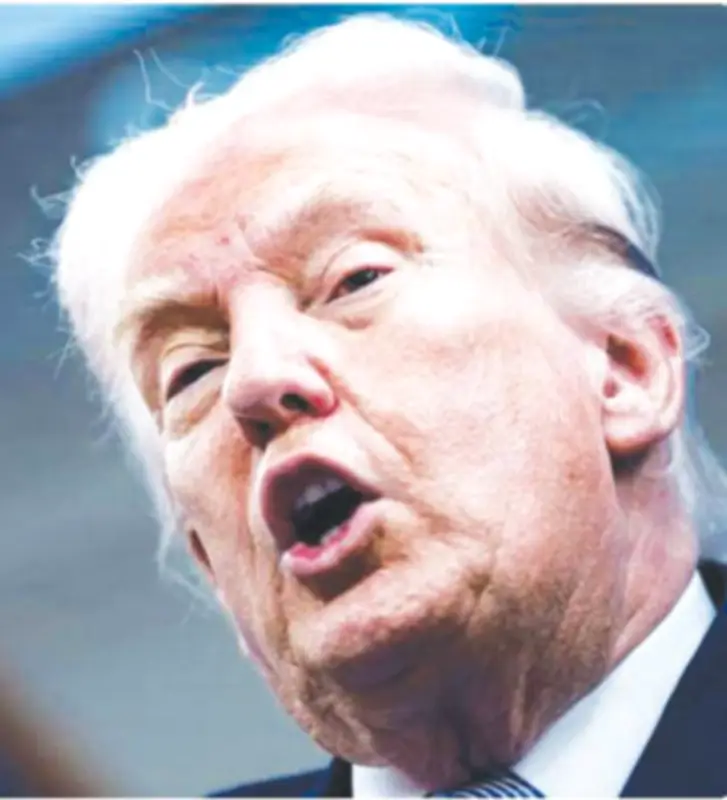
US President Donald Trump called off plans for renewed US military strikes on Iran at the last minute on Thursday, saying negotiations with Tehran had advanced to the highest levels of Iran's leadership and had been approved by a broad coalition of regional powers. The dramatic reversal came hours before the strikes were expected to be carried out. But details of the diplomatic breakthrough after more than three months of war - including how Iran's leadership had signaled its approval - were not immediately clear in Trump's post on Truth Social.
Trump's Announcement
"Based on the fact that discussions with the Islamic Republic of Iran have been brought to the highest level of Iranian leadership and approved, I have, as President of the United States of America, cancelled the scheduled strikes and bombings against Iran this evening," Trump wrote. "Discussions and final points have been, in both concept and great detail, approved by all parties involved, including the United States, Israel, Saudi Arabia, UAE, Qatar, Turkey, Pakistan, Bahrain, Kuwait, Jordan, Egypt, and others. The Naval Blockade will remain in full force and effect until this Transaction is finalised — Time and place of the signing to be announced shortly," he added.
Iran's Response
There was no immediate comment from Iran. Trump has repeatedly claimed that a deal with Tehran was imminent, only to have its government deny the suggestions. Iran has not approved any text for an initial memorandum of understanding with the United States, Iran's semi-official Fars news agency cites an informed source close to Iran's negotiating team as saying.

Earlier Threats
Earlier in the day, Trump had said the United States would hit Iran "very hard tonight" and even added that he wanted at some point to take Iran's oil infrastructure hub Kharg Island, after a second day of strikes by both sides in the Gulf appeared to threaten a return to all-out war. A fragile ceasefire has been in place since early April. Iranian sources and Western officials earlier said indirect U.S.-Iranian talks on a preliminary peace deal had intensified, while the renewed hostilities this week undermined prospects for a swift end to the conflict. Oil prices fell sharply after Trump said he had cancelled the U.S. plans to strike Iran, while stocks extended their gains.
Iranian Warning
Iran's top negotiator Mohammad Baqer Qalibaf had warned against any rash moves following Trump's initial threats. "Wrong strategies and impulsive decisions will reset the entire board for the worse, explode energy infrastructure and markets and create an endless quagmire that you will be stuck in for years. You will see a different Iran," he wrote on X.
UN Call for Peace
United Nations Secretary-General Antonio Guterres called on both sides to redouble their efforts "towards a peaceful, comprehensive, and durable agreement that advances regional and international peace and security," U.N. spokesperson Stephane Dujarric said.
War Impact
The war has killed thousands of people, mainly in Iran and Lebanon, and pushed up global oil prices since the U.S. and Israel launched airstrikes on Iran on February 28. Despite the latest hostilities, three Iranian sources and Western officials said the talks had not yet discussed in detail issues including a mechanism for the release of billions of dollars in frozen Iranian funds. "This war, from a military standpoint, is a dead end. The Americans could not achieve their goals by attacking Iran. There has been progress in negotiations," said one of the Iranian sources.