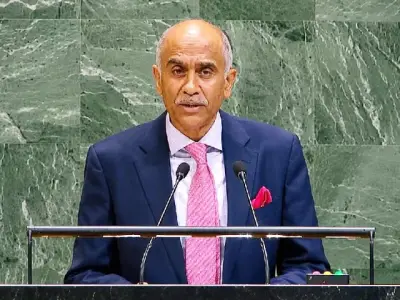
UN Secretary-General Antonio Guterres on Wednesday called for a new security architecture in the Gulf, warning that escalating conflicts across the Middle East threaten to increase regional instability, jeopardize fragile progress in Syria, and undermine efforts for lasting peace. Speaking at a high-level UN Security Council meeting on the Middle East, Guterres emphasized the need for a framework based on respect for sovereignty, territorial integrity, noninterference, and enhanced multilateral cooperation.
Deepening Crisis and Global Repercussions
Guterres stated that the Middle East is being pulled deeper into crisis, with consequences extending far beyond the region. He expressed deep concern over the possibility of a full resumption of conflict, citing recent developments that have brought wider attacks and further deterioration. The escalating tensions reverberate globally through political instability, displacement, rising insecurity, disruptions to markets and trade routes, and increases in food and fuel prices. "A brutal price is being paid by the region's people," he added, "and it is extending to the wider world."
Gulf Ceasefire and Maritime Security
Regarding the Gulf, Guterres described the existing ceasefire as resembling a "lesser-fire" rather than a true cessation of hostilities. He highlighted attacks against civilians and civilian infrastructure, threats to national sovereignty, and restrictions on navigation in and around the Strait of Hormuz, which are causing global economic disruption, increased energy prices, supply chain interruptions, rising fertilizer costs, worsening hunger, and fueling inflation. He urged all parties to honor the ceasefire and intensify efforts for a durable resolution, thanking Pakistan for its mediation and welcoming contributions from Egypt, Oman, Qatar, Saudi Arabia, and Turkiye.

Lebanon Escalation and Peace Efforts
Addressing Lebanon, Guterres described a serious escalation since March, with Israeli military operations intensifying in Lebanese territory and Hezbollah attacks deeper into Israel. He noted civilian deaths, displacement of over a million civilians, and the deaths of seven UN peacekeepers. He called for a diplomatic settlement respecting Lebanon's territorial integrity and sovereignty per Security Council Resolution 1701, and urged a comprehensive ceasefire observed by all parties. He also called for a continued UN peacekeeping presence after UNIFIL's mandate ends in December.
Israeli-Palestinian Conflict and Two-State Solution
Guterres lamented the decades-long unresolved Israeli-Palestinian conflict as the root cause of broader instability, urging renewed commitment to a two-state solution. He stressed that the only credible way forward is a negotiated settlement with independent, sovereign, democratic states of Israel and Palestine living side by side within secure and recognized borders based on pre-1967 lines, with Jerusalem as the capital of both states. "Delay and denial only perpetuate injustice, fueling extremism," he warned.
Gaza and West Bank Deterioration
Conditions in Gaza and the West Bank, including East Jerusalem, are deteriorating rapidly. Despite a ceasefire announced eight months ago, Gaza endures severe human suffering, widespread violence, and unmet essential needs. Guterres called for full implementation of the Comprehensive Plan to End the Gaza Conflict, removal of obstacles to humanitarian aid, and consolidation of the ceasefire to allow recovery and reconstruction. He also sounded an alarm over settler violence, demolitions, land confiscations, and illegal settlement expansion in the West Bank, warning that annexation attempts have no legal validity and risk rendering a two-state solution impossible.
Syria and Yemen Developments
Guterres cautioned that regional conflict could jeopardize fragile progress in Syria, where after 13 years of violence, Syrians are finally tasting peace. He called for respect for Syria's sovereignty and territorial integrity. In Yemen, he highlighted a recent UN-brokered agreement for the release of 1,600 detainees, the largest since the conflict began, but demanded an end to Houthi threats to maritime navigation in the Bab El-Mandeb Strait and the immediate release of arbitrarily detained UN personnel and others.

Guterres urged the Security Council to fully support the two-state solution, emphasizing that there is no alternative and no time to waste.