The United States has revoked a general license that permitted the sale of Iranian oil, a US official confirmed, warning that Iran's actions in the Strait of Hormuz are "wholly unacceptable" and will face consequences. This decision follows a series of attacks on tankers in the strategic waterway, with three vessels reporting strikes by unknown projectiles in recent days, according to the British navy-affiliated United Kingdom Maritime Trade Operations (UKMTO).
Details of the Attacks
The UKMTO reported that a tanker was hit on Tuesday by an unknown unmanned aerial vehicle (UAV) in the Strait of Hormuz, sustaining minor structural damage with no casualties or environmental impact. This incident came less than a day after two other ships, including a Qatari liquefied natural gas (LNG) tanker, were allegedly attacked by Iran. The Qatari tanker Al-Rekayyat was struck on its port side, causing a fire in the engine room, though the crew was safe and distress signals were sent, according to sources with knowledge of the matter.
Diplomatic Reactions and Escalation
Saudi Arabia blamed Iran for an attack on its tanker Wedyan while transiting the Strait of Hormuz, with the Saudi foreign ministry denouncing "Iran's targeting of the Saudi tanker." Qatar similarly condemned the attack on its vessel, summoning Iran's deputy ambassador to lodge a complaint and demanding an explanation. Qatari foreign ministry spokesman Majed Al Ansari stated on X: "We hold Iran fully legally responsible for this attack and for any resulting damages or repercussions." Despite the escalation, a US official said negotiators continue working toward a final agreement with Iran, though the attacks threaten to destabilize fragile diplomatic understandings.

Broader Context: War and Negotiations
Iran imposed a blockade on the Strait of Hormuz early in the war with the US and Israel, which began on February 28 with US and Israeli strikes aimed at destabilizing Iran's leadership and destroying its ballistic missile and nuclear programs. The blockade choked off about a fifth of the world's oil shipments, sending global energy prices soaring. A truce was entered on April 8, and the US and Iran are engaged in 60-day negotiations under a memorandum of understanding (MOU) signed last month, which required Tehran to lift the blockade. Israel is not party to the negotiations and has criticized the MOU for failing to secure concrete concessions on Iran's nuclear program.
Funeral of Supreme Leader Ali Khamenei
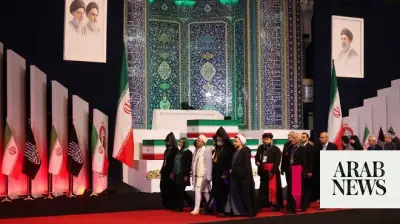
Amid these tensions, the funeral procession for slain Iranian Supreme Leader Ali Khamenei began in Tehran on Monday. Khamenei, along with four family members, was killed on February 28 in air strikes on his office. After lying in state at Tehran's Grand Mosalla religious complex, his body was moved through the capital accompanied by large crowds, state broadcaster IRIB reported. Authorities aim to avoid a repeat of the chaos at the 1989 funeral of Khamenei's predecessor, Ruhollah Khomeini, which drew an estimated 10 million people and resulted in over 10 deaths and 10,000 injuries from crowd surges. The procession continues to Qom on Tuesday, then to Iraq's holy cities of Najaf and Karbala on Wednesday, with burial scheduled in Mashhad on Thursday.