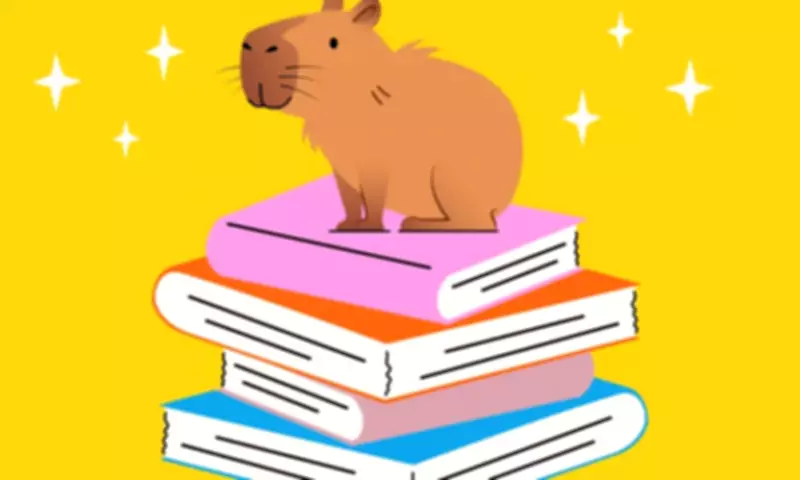
The Unlikely Star of Scholastic Book Fairs
The Scholastic Book Fair remains a cherished tradition in American elementary schools, transforming auditoriums into vibrant, kid-friendly bookstores several times each year. For generations of millennial and Gen Z readers, these events evoke nostalgic memories of escaping regular classes to browse favorite titles. However, the latest must-have item causing a frenzy among young students isn't a traditional book at all—it's a fuzzy capybara diary that has become a nationwide phenomenon.
A Surprising Best-Seller
While children still excitedly bring home popular picture books like Buffalo Fluffalo, the capybara journal has emerged as the true superstar of recent book fairs. According to Laura Lundgren, chief marketing officer for Scholastic's children's book group, these furry diaries consistently rank among the most popular items nationwide, with sales exceeding 4 million copies annually. "Kids are obsessed with these diaries," Lundgren confirmed, noting that the tactile, stuffed-animal-like quality makes them feel special and personalized compared to ordinary school supplies.
Literacy Concerns and Digital Age Paradox
This capybara craze arrives during a period of significant concern about children's reading habits. Recent data from the National Center for Education Statistics reveals troubling trends: only 14% of 13-year-olds read for pleasure nearly every day in 2023—the lowest percentage ever recorded. Elementary school reading scores have declined steadily over the past decade, with many educators fearing that artificial intelligence might further undermine students' reading abilities and critical thinking skills.

Yet, the journal's popularity presents a fascinating paradox. In an era dominated by digital technology and AI, children are flocking to a physical, analog writing tool. This suggests an enduring desire for tangible self-expression that transcends digital interfaces. The journals, many featuring small locks with specific keys, offer children private spaces for their thoughts—a valuable commodity in an age of social media exposure and increased adult surveillance.
Gateway to Literacy
Scholastic organizes over 100,000 book fair events annually across the United States, serving both as school fundraisers and literacy initiatives. "It's inviting kids in to read, even if they don't think of themselves as readers yet," Lundgren explained. While books remain the primary focus, the fairs have long stocked supplementary items like pens, pencil toppers, and posters—including the iconic "hang in there" kitten posters that became millennial kitsch.
Journals have been part of this mix for decades, but the capybara version feels particularly timely. Capybaras have surged in popularity recently through adorable viral videos, including one last week featuring an escapee from an English zoo sunning itself peacefully in the countryside. Other fuzzy journal variants include unicorns, butterflies, and Stitch characters, all designed to appeal to children's love of cute animals.
Educational Strategy and Benefits
Scholastic intentionally markets these journals as tools for "creators" rather than writers or artists, using language familiar to YouTube and TikTok influencers. However, educators recognize deeper benefits. Writing by hand is experiencing a resurgence, with cursive writing now required in growing numbers of states after being omitted from Common Core standards in 2010. Research associates handwriting with improved learning, retention, and spelling skills.
"We don't want to show up and feel like homework," Lundgren emphasized. "We want to show up with all of the joy and all of the fuzzy capybaras, and we want to really invite kids into the experience." For reluctant readers, these appealing non-book items can serve as gateways to broader literacy engagement. When children pick up a capybara journal, they might not be thinking about literacy skills, but they are likely imagining what to write or draw next—a hopeful sign for creativity in the AI age.

Personal Connection and Privacy
Anthony Angelillo, 19, recalls journals being hot items during his own Scholastic Book Fair days. "What made those very compelling was that they always had these little locks on them with these very specific keys," he remembered. The lock created a sense of secrecy and ownership: "You lock your thoughts away, and then no one else sees them besides you."
This privacy element resonates strongly with contemporary concerns. Experts and young people alike report that children crave spaces exclusively for themselves amid social media overexposure and surveillance. A locked diary—especially one housed within an adorable capybara—can provide exactly that sanctuary.
Broader Context and Future Implications
The capybara journal phenomenon reflects larger trends in education and childhood development. While reading scores decline, writing by hand gains renewed appreciation. Holmes Middle School in Virginia recently gained national attention for its cursive club, where students appreciate "the slowness and the pacing themselves of writing on their own," according to multilingual learning specialist Sherisse Kenerson.
Meanwhile, children's economic optimism persists despite challenges. A Common Sense Media survey found that 61% of 12-17-year-olds believe they'll afford homes someday, though girls express more pessimism about the country's future than boys. Schools continue grappling with balancing technology integration and privacy, as seen in New York City's controversial digital hall pass system facing pushback from students and privacy advocates.
Ultimately, the capybara journal craze represents more than just a passing fad. It highlights children's enduring need for creative expression, personal privacy, and tactile engagement—needs that persist even as educational landscapes and technological environments evolve. As Lundgren summarized Scholastic's approach: "If they see a graphic novel, or if they see a visual illustration that they love, we want to encourage them to express themselves too." The humble capybara diary, with its fuzzy exterior and locked secrets, has become an unexpected symbol of this enduring human impulse.