Security forces killed 54 terrorists in a series of counterterrorism operations across Balochistan after three major coordinated attacks over the past four days left 42 security personnel and civilians martyred, the military's chief spokesperson said on Wednesday.
ISPR Chief Details Operations
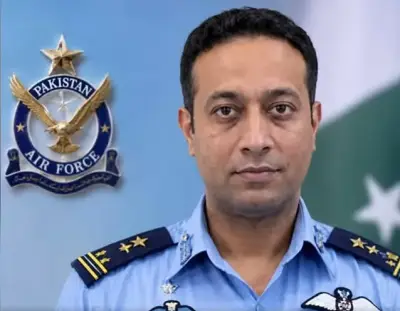
Addressing a press conference, Director General of Inter-Services Public Relations (ISPR) Lt Gen Ahmed Sharif Chaudhry said the dead terrorists — most of them Afghan nationals — belonged to the Indian proxy Fitna al Khawarij, a term used for the outlawed Tehreek-e-Taliban Pakistan (TTP).
“These attacks targeted civilians, police personnel and security forces,” Lt Gen Chaudhry said. The first incident occurred on the night of July 4-5 when terrorists attacked the local population in Hanna Urak. Residents fought back “very valiantly and bravely” and forced the terrorists to flee the area. Four civilians were martyred while six others were injured in the attack.

Ziarat and Other Attacks
The second incident involved a multi-directional attack on a police check-post guarding Pumping Station No. 3 of Mangi Dam in Ziarat district, which supplies water to Quetta. Nine policemen embraced martyrdom in the attack, while security forces later recovered the bodies of 15 terrorists during subsequent operations. The engagement continued in the mountains of Ziarat since July 6, where the Frontier Corps (FC), the Army and other law enforcement agencies maintained pressure on the terrorists. Another 11 terrorists were confirmed killed during subsequent engagements, taking the total number of terrorists killed in the Ziarat operation to 26. Eighteen more security personnel embraced martyrdom during the continuing operation.
Referring to the third incident, Lt Gen Chaudhry said an Army convoy travelling in the Bela-Winder area along the N-25 highway came under attack on Wednesday. A junior commissioned officer and 10 soldiers embraced martyrdom. “Security forces killed 14 terrorists belonging to the banned Baloch Liberation Army during the ensuing operation,” he said, adding that separate operations in Kharan and Dalbandin killed six and eight terrorists, respectively.
Allegations of Foreign Involvement
The DG ISPR reiterated that India was behind the recent wave of terrorism in the province, adding that hostile elements could not tolerate Pakistan’s progress and stability. He also alleged that the Afghan Taliban regime was providing manpower to terrorist groups operating against Pakistan, using Afghan territory as a base. “Most of the terrorists killed were Afghan nationals,” he said. Referring to a recent attack in Karachi, he said three of the four attackers were Afghan nationals and the entire operation had been planned in Afghanistan.
“There was a scheme, a mastermind, logistics and an operational sequence behind the recent terrorist incidents in Balochistan,” the DG ISPR said, adding that facilitation was being provided by the Afghan Taliban regime.
State Resolve and CDF Statement
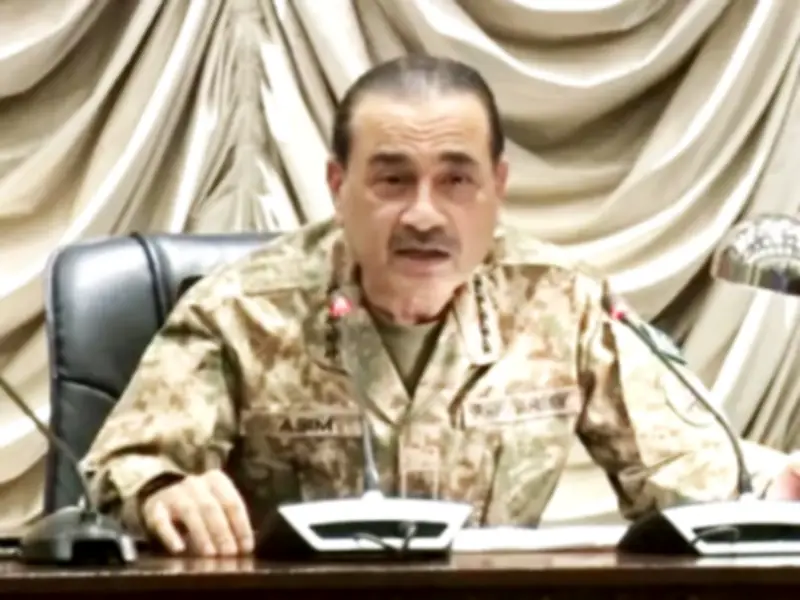
Reaffirming the state’s resolve, Lt Gen Chaudhry said the armed forces, under the leadership of Field Marshal Asim Munir and political guidance of the government, had absolute clarity on how to deal with the terrorist threat. “You can only deter someone who knows how to be deterred. There is no one in this world who can deter the State of Pakistan.”
Separately, Chief of Defence Forces (CDF) and Chief of Army Staff (COAS) Field Marshal Asim Munir, while addressing graduating officers at the National Defence University (NDU) in Islamabad, reiterated that cross-border terrorism would be crushed with the full might of the state. He stressed that terrorist sanctuaries and their facilitators would be completely dismantled. Field Marshal Asim highlighted the evolving character of warfare and underscored the centrality of strategic clarity and institutional professionalism. He expressed full confidence in the professionalism, morale and operational readiness of the armed forces.