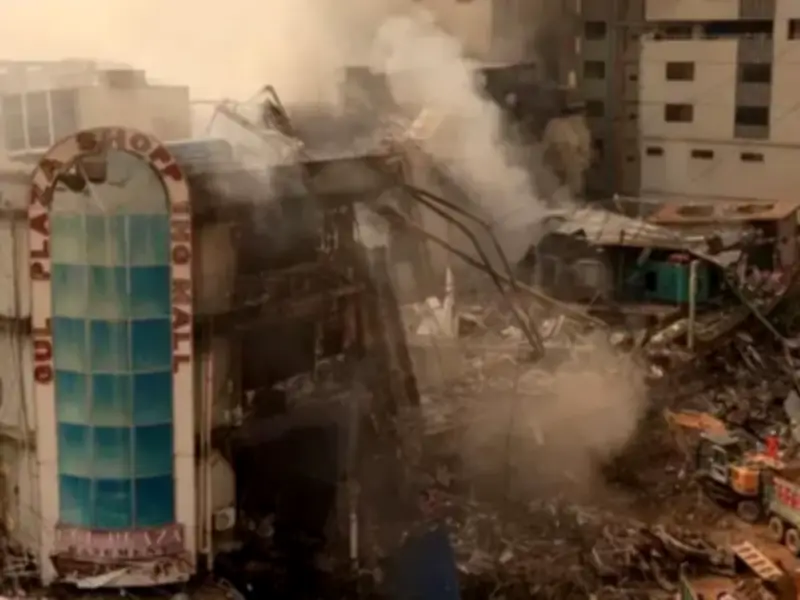
Judicial Magistrate for District South Asim Aslam on Thursday rejected the police challan in the Gul Plaza fire case, ruling that the investigation was inadequate and ordering a fresh probe into the blaze that killed 72 people in one of Karachi's worst tragedies, widely attributed to negligence. The court directed that the case be reassigned to a police officer of DSP rank, who must submit a comprehensive report within 15 days after reassessing the role of all relevant departments.
Court Criticizes Incomplete Investigation
The magistrate observed that the initial probe failed to properly evaluate the responsibilities of key institutions, including the Sindh Building Control Authority (SBCA), Civil Defence, Rescue 1122, the Karachi Metropolitan Corporation (KMC), Fire Brigade, district administration, traffic police, and other agencies involved in building safety and emergency response. During the hearing, accused Tanveer Pasta and other defendants appeared before the court.
Prosecutor Arif Sattai informed the magistrate that the prosecution had returned the police challan three times after raising objections, adding that the prosecution's scrutiny note was missing from the investigation file. Despite this, the investigating officer (IO) insisted that all concerns had been addressed.

Prosecution Highlights Negligence by Authorities
The prosecution argued that the investigation had failed to take action against officials allegedly responsible for the illegal regularisation of the building. It submitted that Civil Defence had issued warnings in 2022 regarding fire safety compliance, but no effective enforcement followed, while the SBCA's role was limited to issuing a letter instead of initiating legal proceedings. The court questioned why the challan had been submitted despite unresolved objections.
Defence counsel contended that the probe had failed to identify the 'real culprits' behind the deaths and had ignored the role of public institutions whose actions or inaction may have contributed to the scale of the tragedy. The prosecution echoed similar concerns, arguing that such incidents persist because officials responsible for granting approvals and safety clearances are rarely held accountable.
Court Presses for Accountability
Throughout the proceedings, the magistrate repeatedly pressed the IO on whether he had examined the duties of various government agencies before and during the fire. The court asked if investigators had obtained the building's approved plan from the SBCA to verify the number of sanctioned shops. Responding to the court, the accused stated that the building was originally approved for 1,109 shops, but the number had increased over time. The court ordered a fresh investigation to address these gaps and ensure accountability.