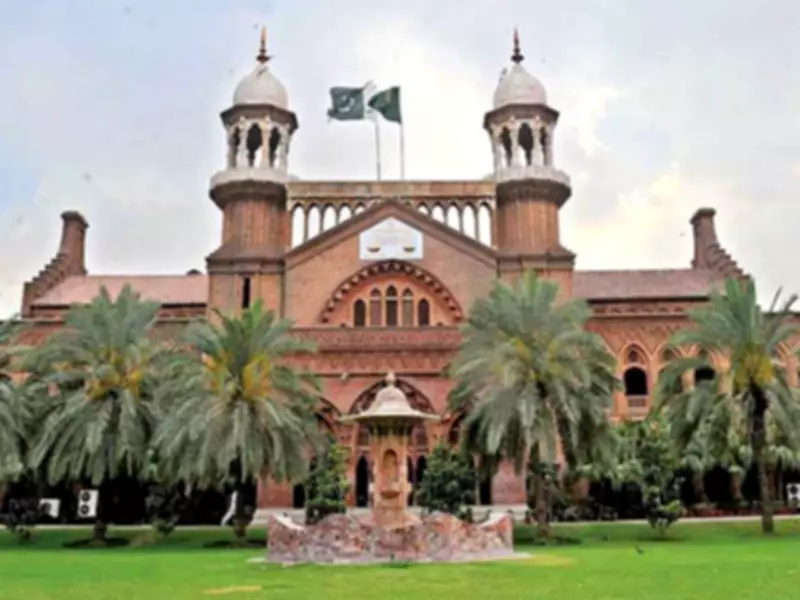
Lahore High Court Greenlights Second ANF Special Court in Rawalpindi to Address Overwhelming Caseload
In a significant move to tackle judicial congestion, the Lahore High Court (LHC) has formally sanctioned the establishment of a second Anti-Narcotics Force (ANF) Special Court in Rawalpindi. This decision comes in response to a staggering backlog of 650 cases that has overwhelmed the existing court, highlighting urgent needs within the narcotics prosecution system.
Approval Process and Infrastructure Setup
Officials from the federal Ministry of Law conducted a site visit to the Rawalpindi District Courts on Thursday, granting official approval for the allocation of courtroom space and necessary staff to support the new ANF Court-II. The court will be strategically located on the upper floor above the existing Court No. 1, optimizing available infrastructure without requiring new construction.
Operational readiness is targeted for the first week of April, with preparations already underway to ensure a smooth launch. A summary for the appointment of a presiding judge has been meticulously prepared, and Senior District and Sessions Judge Raja Ghazanfar is anticipated to be named as the inaugural judge of this new judicial entity.

Case Distribution and Prosecution Arrangements
To alleviate the immense pressure on the current court, approximately 325 cases will be transferred to the newly established ANF Court-II. This redistribution aims to halve the caseload, enabling more efficient handling and timely resolutions.
Initially, Senior Public Prosecutor Zia Qayyum Kiani, who currently serves in Court No. 1, will take on the additional responsibility of overseeing and prosecuting cases in the second court. This interim measure will remain in place until a separate prosecutor is formally appointed, ensuring continuity in legal proceedings.
Context and Regional Impact
The approval for a second court was deemed critically necessary as the caseload in Rawalpindi has surged beyond 650 cases. The existing Rawalpindi ANF court holds jurisdiction over six districts within the division: Rawalpindi, Attock, Chakwal, Jhelum, Talagang, and Murree, making it a pivotal hub for narcotics-related legal matters in the region.
Due to the heavy backlog, the current court is forced to schedule between 70 and 80 cases daily for hearings. This figure excludes additional matters such as bail applications, custody (supurdari) cases, miscellaneous applications, and other pending proceedings, underscoring the severe strain on judicial resources.
In a broader context, Islamabad already operates two ANF courts, setting a precedent for multiple specialized courts in major urban centers. The establishment of this second court in Rawalpindi aligns with efforts to enhance judicial capacity and address the growing challenges posed by narcotics offenses in Pakistan.