ISLAMABAD - Pakistan People’s Party (PPP) Chairman Bilawal Bhutto Zardari on Friday attended the National Assembly’s budget session despite the party’s earlier announcement that he would not participate in the proceedings. This move suggests partial easing of tensions between the coalition partners after days of negotiations over budget-related concerns.
The PPP had initially indicated that Bilawal would skip the federal budget session amid reservations over issues affecting Sindh, particularly the province’s water share and development priorities. However, party leaders later clarified that the PPP was not boycotting the budget process and would continue to participate in parliamentary proceedings in what they described as the national interest. Before the budget session commenced, PPP lawmakers staged a protest outside Parliament House against what they termed an acute water shortage in Sindh.
Carrying placards and chanting slogans, the legislators demanded that the province receive its constitutionally guaranteed share of water and urged the federal government to address concerns regarding water distribution among the provinces.

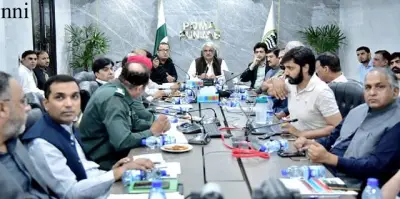
The party’s decision to participate in the budget debate followed a series of consultations with the ruling Pakistan Muslim League (Nawaz) leadership aimed at resolving differences over federal allocations, development funding and broader provincial concerns. Earlier, addressing a joint meeting of PPP parliamentarians from the National Assembly and Senate, Bilawal said the federal budget had been presented at a time when Pakistan faced multiple internal and external challenges, particularly on the security front. He argued that the country’s most pressing challenge remained national security, citing tensions with India and what he described as continuing efforts by New Delhi to undermine Pakistan following last year’s military confrontation.
He also referred to security concerns along the western border and the threat of terrorism, saying Pakistan continued to confront challenges stretching from Balochistan to Khyber Pakhtunkhwa. Bilawal said the rapidly evolving geopolitical situation in the region and beyond required strategic decision-making, warning that global uncertainty continued to create risks for countries across the world. The PPP chairman strongly opposed proposals suggesting that provincial shares under the National Finance Commission (NFC) Award should be reduced to provide the federal government with additional resources. He argued that weakening provincial financial autonomy would not address Pakistan’s economic challenges and defended the constitutional framework established under the 18th Amendment.
Questioning the federal government’s revenue-generation performance, Bilawal said provincial governments had demonstrated a stronger capacity to generate revenues in several sectors. He maintained that solutions to Pakistan’s fiscal and security challenges should be found within the constitutional framework rather than through amendments that reduce provincial rights or through any extra-constitutional measures.
According to Bilawal, extensive negotiations among coalition partners had resulted in a consensus formula under which provinces would contribute towards meeting national security requirements without altering the NFC Award or undermining provincial autonomy. He described the agreement as a significant political achievement and a demonstration of the ability of democratic institutions and parliamentary politics to resolve complex issues through dialogue. “The success lies in the fact that all provinces and the federation will collectively contribute towards national security needs without reducing provincial shares under the NFC Award and without changing the 18th Amendment,” he told party lawmakers.

Bilawal explained that the arrangement was based on constitutional provisions that allow both federal and provincial governments to provide grants for expenditures beyond their respective jurisdictions. He said Sindh and Balochistan had agreed to contribute resources through a constitutional mechanism while preserving the existing NFC framework. The PPP chairman said that Sindh and Balochistan had reached an understanding with the federal government under which they would contribute to meeting security-related requirements over the next three years. In return, he said, the federal government had agreed not to reopen or alter the NFC Award during that period.
He added that the contribution formula had been determined on the basis of the NFC Award’s existing baseline mechanism, ensuring that provincial financial rights remained protected. Bilawal also thanked members of the PPP team that negotiated with the federal government, including Naveed Qamar, Sherry Rehman, Sindh Chief Minister Murad Ali Shah and Jam Khan Shoro, for helping reach “a difficult but constitutional, federal and collective solution.”