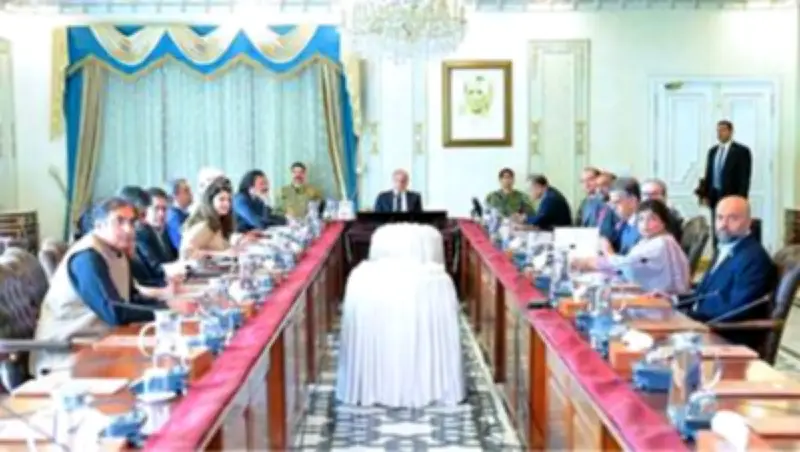
The federal cabinet has approved the first-ever four-year Hajj Policy and Plan 2027-2030, marking a significant shift from annual policies to a long-term framework aimed at improving planning, operational efficiency, and facilities for intending pilgrims. The cabinet, which met in Islamabad with Prime Minister Shehbaz Sharif in the chair, was given a detailed briefing on the policy.
PM Directs Transparency and Merit-Based Appointments
Prime Minister Shehbaz Sharif directed authorities to ensure transparent, merit-based appointments of Hajj assistants and third-party validation of both government and private Hajj operations to improve services for pilgrims. He endorsed the long-term Hajj framework, emphasizing the need for improved planning and operational efficiency.
The cabinet also commended Federal Minister for Religious Affairs Sardar Muhammad Yousaf and his team for what it described as the successful management of Hajj arrangements this year, according to a Prime Minister’s Office news release.

Key Features of the Four-Year Hajj Policy
Unlike previous annual policies, the new framework provides a four-year roadmap to facilitate long-term planning. Standard operating procedures and other regulations will be developed for its implementation, while amendments will be made whenever necessary to ensure compatibility with Saudi laws and regulations.
Under the approved policy, intending pilgrims will be able to register once for any Hajj season up to 2030 instead of undergoing annual registration, enabling the preparation of a priority waiting list. A Shariah-compliant Hajj savings scheme will also be introduced to help citizens plan financially for future pilgrimages.
Digitization and Separate Quotas
The prime minister was informed that the entire Hajj management system, including payments, complaints handling, and monitoring, would be digitised to enhance transparency and efficiency. The policy also provides separate quotas for government and private Hajj schemes, introduces both long and short Hajj packages, and includes mandatory pilgrim training, Takaful coverage, and emergency response arrangements.
During the meeting, Prime Minister Shehbaz Sharif directed that the appointment of Hajj assistants be carried out through a transparent and strictly merit-based process. He also instructed authorities to ensure independent third-party validation of services provided under both the public and private Hajj schemes.
Cabinet Approves Outsourcing of Healthcare Services
The cabinet also approved a policy for outsourcing the services of the Isolation Hospital and Infectious Treatment Centre (IHITC) and the Regional Blood Centre (RBC) in Islamabad to improve the delivery of quality healthcare services. The Ministry of National Health Services was directed to complete the outsourcing process in accordance with the prescribed rules and regulations.
Railways Revenue Shows Significant Growth
The cabinet reviewed the performance of Pakistan Railways during a briefing by Railways Minister Hanif Abbasi. Members were informed that railway revenues had increased from Rs95 billion in 2024-25 to more than Rs115 billion in 2025-26, reflecting a growth of 24.19 percent. The briefing highlighted an increase of over Rs8 billion in freight revenue, more than Rs7 billion in other income, over Rs6 billion in property and land revenue, while passenger revenue also registered a 3.37 percent increase. Improved railway operations and freight movement were cited as key contributors to the growth.
Prime Minister Shehbaz Sharif and the cabinet appreciated the performance of Railways Minister Hanif Abbasi and his team for improving the department’s financial and operational performance.

PM Reaffirms Commitment to Eliminate Terrorism
Prime Minister Muhammad Shehbaz Sharif on Tuesday reaffirmed the government’s unwavering commitment to eradicating terrorism from the country, stating that security forces were working tirelessly and the day was not far when the menace would be completely eliminated. Addressing the federal cabinet at the start of its meeting, the prime minister paid tribute to Pakistan Air Force Group Captain Asim Tariq, who was martyred a few days ago in Islamabad while intervening to stop an assault on a woman. He prayed for the elevation of the martyr’s ranks and expressed condolences to the bereaved family.
The prime minister said the accused had been arrested and would be brought to justice in accordance with the law. He also lauded the sacrifices of the country’s security forces in the fight against terrorism, referring to the recent killing of 15 terrorists in Balochistan. He said the armed forces and law enforcement agencies were continuing operations day and night to restore lasting peace across the country. The cabinet offered Fateha for the martyrs on the prime minister’s request.
Focus on SMEs and Exports
Prime Minister Shehbaz Sharif on Tuesday directed the Small and Medium Enterprises Development Authority (SMEDA) to facilitate the provision of loans to small and medium enterprises (SMEs) to boost the country’s exports. Chairing a high-level review meeting to discuss matters related to SMEDA, the prime minister emphasized the need to enhance the capacity of SMEs and instructed that special facilitation, awareness, and access to easy credit should be provided to farmers for the processing of agricultural commodities and fruits.
He called for encouraging commercial banks to design specialized financial products tailored specifically for the credit needs of SMEs, directing comprehensive assistance for SMEs during the preparation of feasibility studies and other stages. Prime Minister Shehbaz directed the relevant authorities to formulate a comprehensive strategy in collaboration with the State Bank of Pakistan (SBP) and commercial banks to streamline and improve SMEs’ access to credit.
Commitment to Polio Eradication
Prime Minister Muhammad Shehbaz Sharif on Tuesday said that the government was taking every possible measure to protect Pakistan’s children from the debilitating disease of polio and secure their future. Reaffirming Pakistan’s commitment to achieving a polio-free future, the prime minister emphasized that polio eradication remained a key national priority and urged all stakeholders to further intensify their collective efforts.
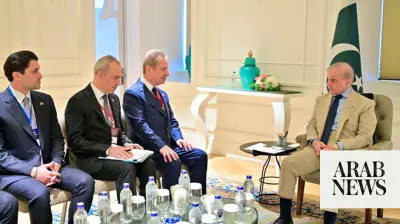
He was talking to a delegation of Polio Oversight Board, which called on him at the PM House. The delegation included Mike McGovern, Chair of Rotary’s Polio Oversight Board; Chris Elias, President of Global Development at the Gates Foundation; Dr Hanan Balkhy, Regional Director of WHO EMRO; and representatives from UNICEF, Gavi, and other partners supporting Pakistan’s polio eradication efforts.
The prime minister welcomed the delegation and thanked all partners for their continued cooperation with the Government of Pakistan in the fight against polio. He directed that special attention be given to polio hotspots in southern Khyber Pakhtunkhwa and called for the adoption of an effective strategy to address the challenge.
The prime minister expressed his heartfelt gratitude to Rotary International, the Gates Foundation, the World Health Organization (WHO), UNICEF, King Salman Humanitarian Aid and Relief Centre (KSrelief), the U.S. Centers for Disease Control and Prevention (CDC), and all other partners for their valuable contributions to Pakistan’s polio eradication campaign. He also commended the Federal Minister for National Health Services, the Minister of State for Health, the Prime Minister’s Focal Person on Polio Eradication, the National Polio Coordinator, and all members of the government team for their dedicated efforts in combating polio.