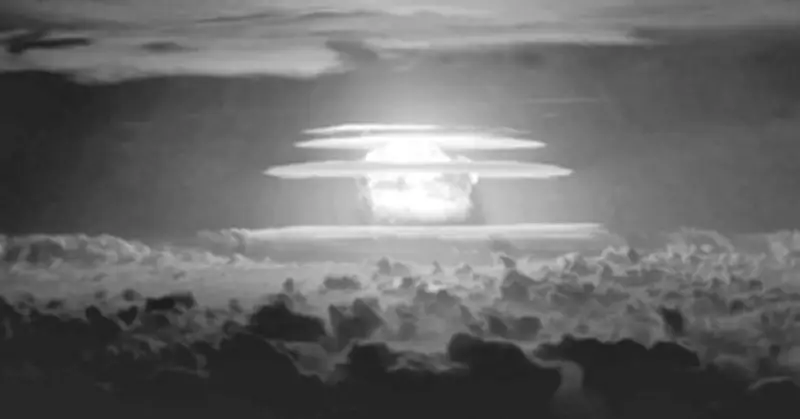
The Castle Bravo nuclear test remains a stark symbol of unintended consequences in nuclear weaponry. Conducted by the United States on March 1, 1954, as part of Operation Castle on Bikini Atoll in the Pacific, the test's yield surpassed expectations, reaching 15 megatons—nearly 1,000 times more powerful than the Hiroshima bomb.
Devastating Fallout and Contamination
The test's devastating fallout spread beyond predictions, contaminating nearby atolls and causing health issues for locals and the crew of a Japanese fishing boat, the Lucky Dragon. This event amplified global concerns about nuclear testing's environmental and humanitarian ramifications.
Reshaping Nuclear Policy
Castle Bravo reshaped discussions on nuclear proliferation and safety, leading to increased calls for testing moratoriums and eventually the Partial Test Ban Treaty. It highlighted the dangers of atmospheric testing and the long-term effects of radiation on human health and the environment.

Declaring an education emergency on nuclear awareness, the incident underscores the need for informed public discourse and stringent safety measures in all nuclear activities.