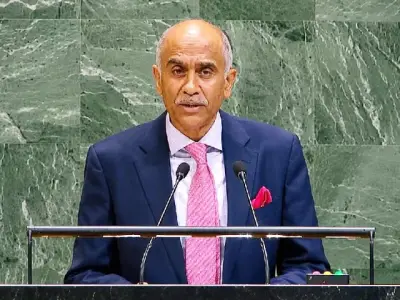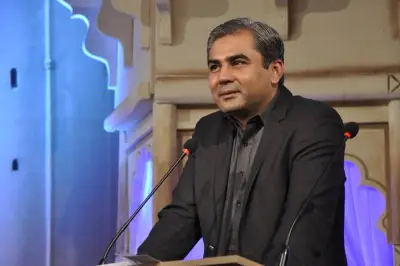
ISLAMABAD - Chief Justice of Pakistan Justice Yahya Afridi on Thursday chaired the 60th meeting of the National Judicial (Policy Making) Committee (NJPMC), where senior judges and government officials reviewed judicial reforms, case disposal performance and measures aimed at improving access to justice.
The committee decided that district courts may revert to a six-day working week, restoring the schedule that existed before judicial austerity and energy conservation measures were introduced. High courts, however, were encouraged to continue resource-management and energy-saving initiatives.
The meeting was attended by the chief justices of the Lahore, Peshawar and Sindh High Courts, the senior puisne judge of the Islamabad High Court, the secretary of the Ministry of Law and Justice and the chairman of the Higher Education Commission.

The committee was informed that district courts disposed of 1.319 million cases between September 1, 2025 and May 31, 2026, reflecting significant progress in reducing case backlogs. The Lahore High Court recorded the highest disposal figure with more than 1.065 million cases.
On enforced disappearances, the committee was told that the federal government had, in principle, agreed to establish a separate commission comprising former Supreme Court judge Justice (Retd.) Manzoor Ahmad Malik and National Commission for Human Rights Chairperson Rabiya Javeri Agha. The proposed body will provide a redress mechanism and oversee implementation of legal provisions requiring arrested persons to be produced before a court within 24 hours.
The NJPMC also approved a series of reforms to facilitate speedy and cost-effective adjudication of banking disputes, including the establishment of additional courts where required, specialised judicial training and stronger oversight mechanisms.
The committee appreciated efforts by the Balochistan High Court to develop a framework aimed at discouraging false and frivolous litigation and directed that it be shared with all high courts for consideration.
Other matters discussed included specialised benches for company cases, integration of court data into the National Judicial Analytics Dashboard, judicial training programmes in collaboration with universities and measures to address vacancies in the district judiciary.
The committee also decided to hold a National Conference on Judicial Wellbeing at the Supreme Court on July 25, 2026, to recognise the contributions of judicial officers and highlight reform initiatives undertaken by the high courts.
The meeting concluded with an emphasis on strengthening coordination between the bench and bar and enhancing public confidence in the justice system.