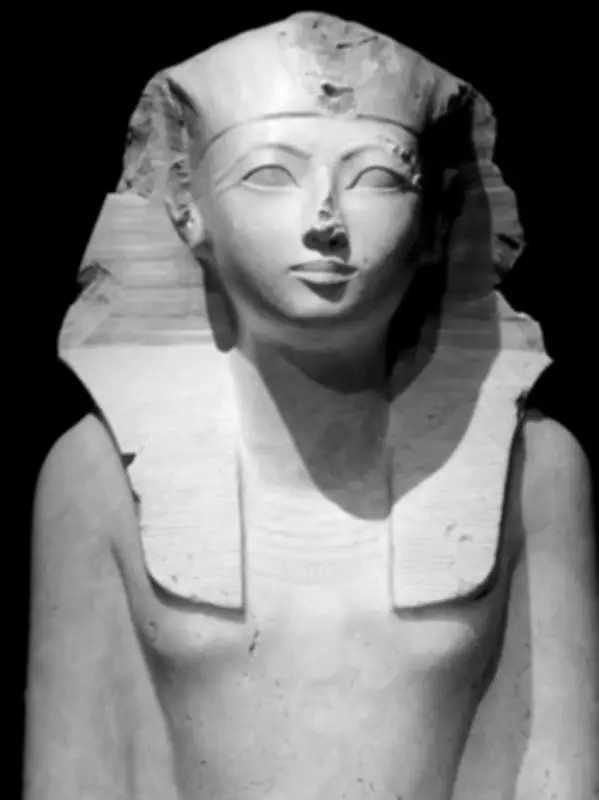
Hatshepsut's Rise to Power
Hatshepsut, a remarkable figure in ancient Egyptian history, reigned as pharaoh from 1478 to 1458 BCE during the 18th Dynasty. Breaking tradition, she assumed the title of pharaoh after the death of her husband, Thutmose II, to rule as a king rather than a queen regent for her stepson, Thutmose III. Her reign marked a period of stability and prosperity for Egypt.
Accomplishments and Building Projects
Known for her successful trade expeditions, Hatshepsut sent a famous expedition to the Land of Punt, which brought back incense, myrrh, and exotic goods. She also undertook monumental building projects, including the construction of the Temple of Deir el-Bahari, a mortuary temple near the Valley of the Kings. This temple is considered one of the architectural masterpieces of ancient Egypt.
Defying Gender Norms
Hatshepsut often portrayed herself in male regalia, including the traditional false beard and kilt, to assert her authority as pharaoh. Despite efforts by later rulers to erase her legacy by chiseling her name and images from monuments, she remains an iconic female pharaoh. Her leadership and achievements continue to be studied and admired for defying gender norms in ancient Egypt.

Legacy and Historical Impact
Hatshepsut's reign brought economic prosperity and cultural flourishing. She established trade networks and commissioned numerous statues and inscriptions that celebrated her rule. Although her stepson Thutmose III attempted to remove her from official records, many artifacts and buildings survived, ensuring her place in history. Modern archaeologists have uncovered extensive evidence of her reign, cementing her status as one of Egypt's most successful pharaohs.