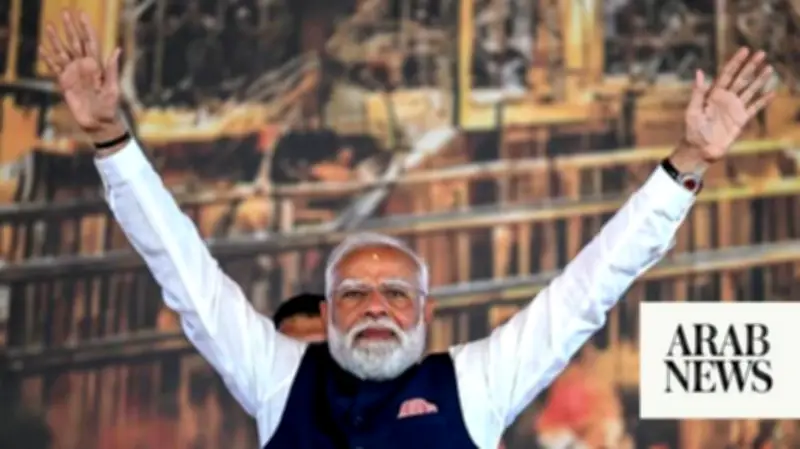
Prime Minister Narendra Modi has become the longest-serving elected premier in India's history, the government announced on Wednesday as he surpassed the record previously held by the country's founding Prime Minister Jawaharlal Nehru.
Record-Breaking Tenure
Modi is marking 4,399 consecutive days in office since his first oath on May 26, 2014, exceeding Nehru's 4,398-day tenure as an elected prime minister. While Nehru's premiership began with India's independence in 1947, the achievement is measured from the first national elections in 1952.
In a post on X, Modi stated: "Public service is the greatest measure of good governance. It is only the individual who works tirelessly with humility, dedication, and a sense of duty who earns the trust of the people."

Political and Economic Milestones
In 2024, Modi became the second Indian leader after Nehru to secure a third consecutive term, reinforcing the dominance of his Hindu-nationalist Bharatiya Janata Party within the National Democratic Alliance. Under his leadership, India's economy expanded to $4.19 trillion by the end of last year, making it the fourth-largest globally, surpassing Japan in nominal GDP.
Over the past 12 years, Modi's government has overseen major infrastructure projects and social programs that lifted more than 250 million people out of absolute poverty, according to official data. Additionally, key free trade agreements were signed with the UK, the UAE, and Oman.
Government's Perspective
Kanchan Gupta, a senior adviser at the Ministry of Information and Broadcasting, called the milestone "important" and said it "places him ahead of all elected prime ministers of India." He highlighted three nationwide campaigns: construction of 120 million household toilets, provision of 157 million tap water connections, and access to clean cooking gas for over 100 million people. These initiatives, he said, brought "transformational changes" that Indians should be proud of.
Criticism and Concerns
However, veteran journalist Nilanjan Mukhopadhyay, author of Modi's biography, pointed to significant shifts in democracy and society. While acknowledging progress in banking inclusion, he criticized the economy for "massive concentration of wealth" in few hands, saying "crony capitalism has been at its most manifested manner in the last 12 years." He added that the rich have become richer while the poor have become poorer.
Mukhopadhyay also expressed alarm over the state of Indian democracy, which he said has "gone from bad to worse," moving toward what many describe as an "electoral autocracy." India has been categorized as such by global democracy reports, including the V-Dem Institute, which first noted the decline in 2019.
Modi, a champion of the Hindu majority (80% of India's 1.4 billion population), has faced widespread criticism for undermining secular democracy with a majoritarian agenda, leading to violent attacks by Hindu nationalists against minorities, especially Muslims. Notably, there is no Muslim representation in India's current government.
"In the last 12 years, the final point is that society has moved from a certain level of unity to a complete total polarization on the lines of religious identity," Mukhopadhyay concluded. "We have become a more communally polarized society."