The National Economic Council (NEC) on Wednesday approved a national development spending bill of Rs3.2 trillion, which is 25% less than the originally proposed outlays. This decision came after three provinces agreed to freeze their uplift expenses and provide Rs920 billion as a grant to the cash-strapped federal government.
Provincial Development Budgets Reduced
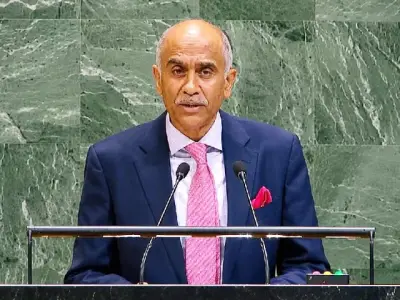
The provincial development budgets are Rs920 billion less than the originally proposed targets for the next fiscal year, which a government body had approved on June 1. However, these are equal to this fiscal year's actual spending. Planning Minister Ahsan Iqbal stated that the NEC approved Rs2.218 trillion worth of Annual Development Plans (ADPs) after the provinces agreed to freeze their spending at this fiscal year's actual levels.
Federal PSDP Trimmed
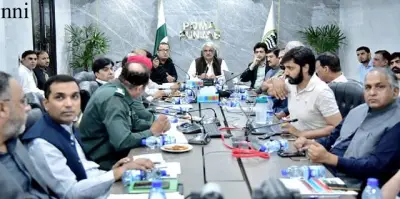
Prime Minister Shehbaz Sharif chaired the NEC meeting, which also approved a trimmed Rs1 trillion worth Public Sector Development Programme (PSDP), Rs126 billion less than the originally approved bill. Barring Punjab, all other provincial chief ministers participated in the meeting. The prime minister noted that Punjab Chief Minister Maryam Nawaz could not attend as she was recovering from a recent medical procedure.

Provincial Grants to Federation
During the meeting, Shehbaz announced that the provinces have agreed to provide grants to the federal government for the next fiscal year, thanking the chief ministers for their consultations and assistance. The federal government had demanded Rs1.2 trillion from the provinces for the next fiscal year 2026-27 to meet additional funding requirements for defense and water sector projects. Iqbal said the mechanism for obtaining the money from provinces and its treatment was being finalized by the Finance Ministry.
IMF Briefing
The prime minister also called International Monetary Fund (IMF) Managing Director Kristalina Georgieva and briefed her about the new fiscal arrangement between the Centre and provinces. Under this arrangement, provinces would provide a one-time grant to the federal government, utilized during the next fiscal year to meet pressing financing requirements. Shehbaz said Georgieva was extremely appreciative of Pakistan's sincere efforts.
NFC Share Adjustment
The Centre will retain most of the additional money that provinces will receive under the National Finance Commission (NFC) in the next fiscal year. This will effectively reduce the provincial share to far less than 50% for at least one year, compared to the current 57.5% of the total divisible pool. Iqbal said the arrangement with provinces is contingent upon actual tax collection by the Federal Board of Revenue (FBR) in the next fiscal year, which has a target of Rs15.264 trillion.
Development Budget Details
The cumulative development envelope of Rs3.2 trillion is Rs1.05 trillion or 25% less than the development budgets approved by the Annual Plan Coordination Committee (APCC) a few days ago. Of this sum, the federal government's contribution is Rs126 billion, and Rs920 billion will be given by provincial governments, subject to the FBR achieving its next fiscal year's target. Ahsan Iqbal said Punjab's development budget was approved at Rs749 billion, Rs701 billion less than the APCC figure. Sindh's revised outlay is Rs706 billion, Rs110 billion less than the original ceiling. Khyber-Pakhtunkhwa's development outlay is Rs455 billion, Rs109 billion less than earlier approved. Balochistan's outlay remains unchanged at Rs308 billion.
Economic Targets
The NEC approved a 4% economic growth target and an 8.2% inflation target. It also approved a 3.8% growth target for the agriculture sector and 4.5% for large-scale manufacturing. The industrial sector is targeted to grow by 4%, while the services sector target is set at 4.2%. The NEC approved a savings target of 14.3% of GDP and an investment target of 15% of GDP. The current account deficit target for the next fiscal year is set at 0.7% of GDP or $3.6 billion. Exports are targeted at $32.8 billion, while imports are projected to cross $70 billion. The trade deficit is targeted at $37 billion, largely filled by remittances projected to increase to $42.3 billion.

Future Plans
Ahsan Iqbal said the NEC had become a ceremonial forum but it has now been decided to hold quarterly meetings. He noted that any changes in the PSDP due to provincial contributions might require another NEC stamp of approval. The NEC also approved 11 initiatives to enhance low investment, low exports, and address structural issues in the economy, focusing on exports, resource mobilization, productivity, agriculture value chain, and human value chain.