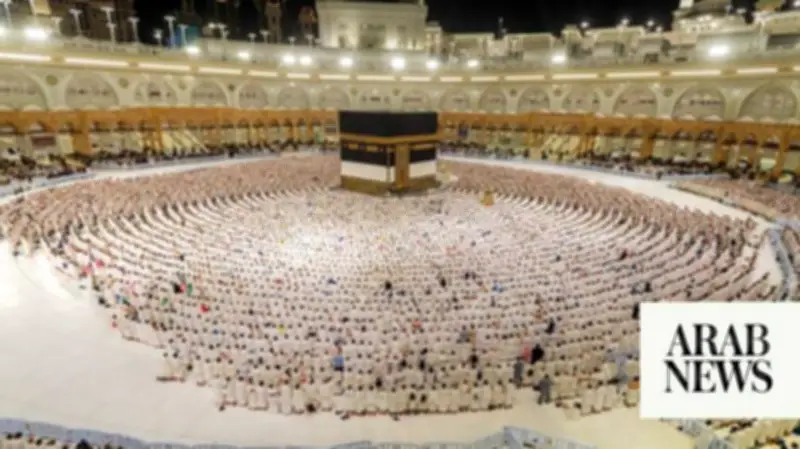
Saudi Arabia has confirmed that the overall health condition of more than 1.7 million pilgrims participating in this year's Hajj remains stable and reassuring, with no significant public health threats reported. Speaking during the final Hajj security and health briefing, Ministry of Health spokesperson Abdulaziz Abdulbaqi attributed this stability to an advanced healthcare system operating with high efficiency, supported by a qualified national workforce, proactive planning, and modern technologies for monitoring and rapid response.
Also present at the official briefing alongside Abdulbaqi were Ministry of Interior spokesperson Brig. Gen. Talal bin Abdulmohsen Al-Shalhoub, Ministry of Hajj and Umrah spokesperson Ghassan Al-Nuaimi, and Transport and Logistics Services Spokesperson for the Hajj season Abdulaziz Al-Otaibi.
Healthcare Services Provided
Abdulbaqi said that, as of May 27, the total number of healthcare services provided to pilgrims has exceeded 1.2 million within a comprehensive health scheme. These included more than 41,000 visits to emergency departments, over 4,900 hospital admissions, and around 50,000 pilgrims benefiting from primary healthcare centers and urgent care services. Outpatient consultations reached more than 14,000, while 83,000 emergency cases were handled. He further stated that 29 open-heart surgeries and 251 cardiac catheterization procedures were conducted, in addition to 337 various surgical operations.

Health Support and Consultations
On the level of health support and consultations, Abdulbaqi said that more than 1 million calls were received through the Ministry of Health's 397 call center in multiple languages. He also noted that 466 cases of heat exhaustion were treated in accordance with approved medical protocols, enabling the pilgrims to continue their rituals.
Security System Operations
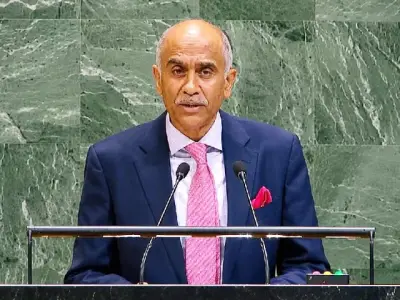
Al-Shalhoub said that the Hajj security system is advanced and operates with precision in real time through artificial intelligence, continuous coordination, and the wide deployment of security personnel. He emphasized that the security system is not just a tool in the field but also includes smart operation rooms to manage Hajj, involving the Ministry of Interior's different security sectors as well as partnerships with the Guests of God Service Program, the Ministry of Hajj, and the Ministry of Health.
He also underscored the key partnership with State Security in managing the stoning ritual, noting that all government entities are operating under an organized and precise plan that enables the monitoring of mass gatherings with accuracy and in real time. He added that security personnel are deployed at all entry and exit points, with ongoing coordination with partner entities.
Crowd Management and Technology
Al-Nuaimi of the Hajj Ministry said that, following sunset on the Day of Arafat and in accordance with the crowd management plan, 60 percent of pilgrims spent the night in Muzdalifah, while the remaining 40 percent completed their regulated movement through the site during the designated transfer periods. He added that the Nusuk card has recorded more than 4 million electronic scans so far, contributing to enhanced field verification and faster processing of pilgrims' data.
As for Saudi Arabia's Project for the Utilization of Hady and Adahi, known as Adahi, Nuaimi said that the project enables pilgrims to perform the Hady ritual in accordance with Sharia and health standards, with an operational capacity exceeding 800,000 animals during the days of sacrifice and Tashreeq, and with the option of electronic purchase.
Transport and Logistics
Al-Otaibi of the transport and logistics sector said that more than 2.4 million pilgrims benefited from the “Passenger with no Bag” initiative on both inbound and outbound journeys, with over 3.8 million bags transported. He added that work will proceed with the completion of the road project linking Al-Sail Al-Kabir Road with the Riyadh-Taif highway before the next Hajj season, in addition to the inauguration of Terminal 4 at King Abdulaziz International Airport.

He noted that the Mashaer metro has so far transported more than 961,000 pilgrims, while central stations have been upgraded and their capacity enhanced to accommodate larger flows of passengers. Al-Otaibi added that pilgrims arriving through entry points have been transported via more than 2,500 buses, with 24 designated parking areas prepared to accommodate up to 2,000 buses. He further said that 600,000 vehicles have passed through the roads leading to the holy sites.
He further said that the Haramain High Speed Railway will continue serving pilgrims, noting that it has efficiently transported more than 830,000 worshippers through over 5,300 trips as of the eighth of DhulHijjah. The transport system spokesman said that the on-time performance rate for intercity bus trips reached 96 percent, adding that more than 950 automated monitoring points have been activated to ensure compliance in relation to road transport vehicles.
Departure Plans
Al-Otaibi noted that the first departure flight for pilgrims will be on May 29, while the final departure is scheduled for June 30, corresponding to 15 Muharram in the Hijri calendar, with 870 counters allocated for completing travel procedures. He added that 70 smart gates at King Abdulaziz International Airport will enable biometric identification, in addition to 20 similar gates at Madinah Airport.