For nearly four decades, the floodplain of the Indus River between Rajanpur district and its neighbor, Rahim Yar Khan, operated under a different constitutional reality. The state's laws effectively stopped at the earthen embankments. Inside the tamarisk forests and shifting sandbanks of the Katcha belt, armed groups collected ransom, settled disputes, and issued protection arrangements. The economy of the region was not recorded in official ledgers. It was measured instead in sacks of grain, livestock, and cash payments delivered through informal channels. This was not simple lawlessness. It was a parallel system, highly organized, self-sustaining, and for a long time outside the reach of formal state institutions.
What Has Changed?
What has changed is not the physical geography. The Indus still divides and reforms itself into multiple channels across a 300-kilometer stretch from southern Punjab into northern Sindh. The riverine corridor, covering about 1.1 million acres or roughly 4,500 square kilometers of difficult terrain, remains extremely challenging to police. The real change is political and institutional. The government has moved away from its earlier approach of informal accommodation and has instead committed to maintaining a permanent presence in the area. The key question is whether this commitment can survive seasonal flooding cycles and shifting ground realities.
Coordinated Law Enforcement Campaign
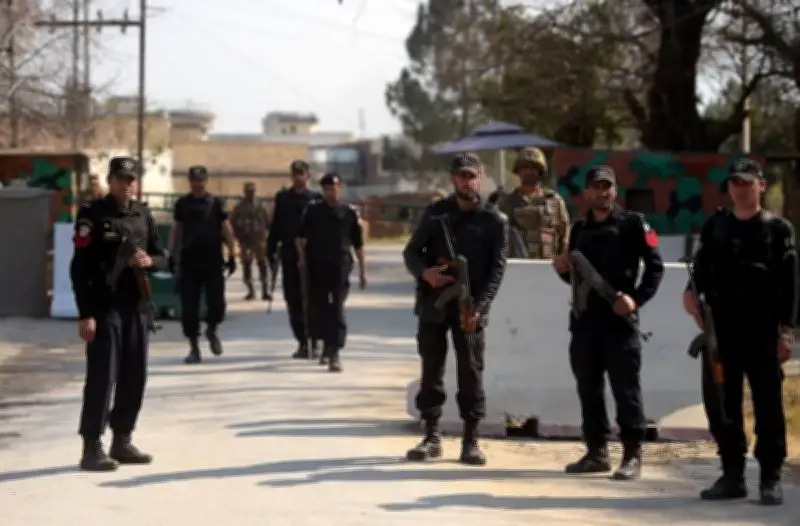
In 2025, a coordinated law enforcement campaign in the Katcha regions of Rajanpur and Rahim Yar Khan led to an outcome not seen in decades. More than 500 armed individuals surrendered their weapons through a structured process supervised by the state. Data from the Punjab Home Department shows 342 from Rajanpur and 200 from Rahim Yar Khan. Among them were 34 individuals carrying collective bounties exceeding Rs60 million. This was not a battlefield defeat. It was a negotiated legal process framed by state policy. Authorities allowed voluntary surrender with assurances of court processing and protection from extrajudicial harm. In parallel, those who resisted faced intensified operations involving armored vehicles, drones, night-vision surveillance, and lethal force if required. The government also offered financial compensation for surrendered weapons, recognizing the economic incentives that sustained armed groups.

Costs and Sacrifices
These operations were not without cost. Over multiple phases of enforcement in the Katcha belt spanning several decades, a significant number of police officers have been martyred, and many more have been injured in encounters with heavily armed gangs operating in difficult terrain. These losses reflect the intensity of the challenge faced by frontline law enforcement in riverine environments where visibility is low and mobility is restricted. The sacrifices of these officers have become a defining part of the state's response in the region.
Coordinated Civil Administration Efforts
At the same time, the role of the police has increasingly been supported by coordinated civil administration efforts. Local officials, revenue authorities, and development planners have worked alongside security forces to stabilize governance in the area. This combined institutional approach has shifted the response from purely enforcement-based action towards a broader model of state rebuilding. The contribution of civil administration has been particularly significant in restoring basic governance functions, land management systems, and public service delivery in areas that previously operated outside formal oversight.
No-Go Areas Eliminated
For years, the phrase “no-go area” appeared in official reporting as shorthand for administrative absence. In 2025, authorities declared that after decades of instability, there would be no such zones remaining in the province. In practical terms, this meant security forces could now access river islands without relying on rival group permission. It also disrupted a kidnapping-for-ransom economy that between 2020 and 2024 extracted more than Rs5 billion from residents and businesses. Government statements indicate that major kidnapping incidents have significantly declined following the surrender phase, although the underlying risk has not fully disappeared.

Sustained Long-Term Presence
The importance of this shift goes beyond territorial control. It reflects the state’s willingness to sustain a long-term presence in a geographically difficult region. Previous operations in the 1990s, mid-2000s, and 2010s cleared territory temporarily, only for armed groups to return once enforcement pressure eased. These networks are deeply embedded in local social and economic systems. They adapt quickly and re-establish themselves when conditions allow. The current approach is different because it is backed by sustained funding and institutional expansion.
Development Allocation
A development allocation of Rs23 billion has been announced for the riverine belt. This includes investment in policing infrastructure such as permanent stations, checkpoints integrated with surveillance systems, drone monitoring, and river patrol units. It also includes large-scale social infrastructure development. Roads, bridges, school upgrades, new educational institutions, and girls’ colleges form part of this plan. Additional funds are allocated for healthcare outreach, veterinary services, and agricultural support programs.
Land Distribution Initiative
A land distribution initiative titled Apna Khet Apna Rozgar allocates 14,500 acres of state land to local farmers. Much of this land was previously controlled informally by whoever held physical dominance. By formalizing ownership, the state aims to reduce dependence on armed groups for protection and dispute resolution. Over five years, total planned spending on stabilization and development is projected at approximately 380 million dollars, with additional financing expected from federal and external sources.
Economic Potential
Economically, the region holds significant untapped potential. Out of 2.9 million acres of cultivable land, only about 55 to 60 percent is actively farmed each year. The remainder is left unused primarily due to insecurity rather than soil limitations. Experts estimate that an additional 1.2 to 1.5 million acres could be cultivated if basic security and flood protection systems were in place. Current agricultural yields remain significantly below national averages. Wheat and rice production lag behind irrigated regions of Punjab due to institutional constraints rather than environmental ones. If stability is achieved, the economic gains could be substantial. Increased agricultural output alone could generate between 800 million and 1.1 billion dollars annually. Value addition through processing could add several hundred million more. Improved tax collection, reduced security spending, and better logistics efficiency along major transport corridors could further increase state revenues and reduce costs. Overall economic impact could reach multiple billions of dollars annually once conditions stabilize.
Informal Economy
Despite official efforts, an informal economy continues to operate in parallel. Estimates place its annual turnover between 200 and 350 million dollars. This includes fuel smuggling, timber trade, fishing, and seasonal labor movements. Transactions are often cash-based and routed through informal financial networks. For many residents, payments to armed groups historically functioned as a form of protection insurance in the absence of state services.
Broader Implications
Rajanpur and Rahim Yar Khan are not unique cases. They reflect a broader pattern in regions where economic potential is high but institutional presence is weak. Located along key transport corridors, these districts affect national logistics costs and supply chain efficiency. Disruptions in the area have historically increased transportation expenses and reduced competitiveness for goods moving between southern and northern Pakistan.
Conclusion
The surrender of armed groups is an important milestone but not a final solution. The declaration of “no-go areas” being eliminated is a policy achievement, not a permanent guarantee. The long-term outcome will depend on whether infrastructure, governance, and legal systems remain in place after initial security operations end. The landscape remains physically unchanged. The river continues to shift. Seasonal floods still reshape terrain. What changes over time is whether the state can maintain a consistent presence and service delivery. For now, the region stands at a transitional point. It is no longer simply being managed through periodic enforcement actions. It is attempting a shift towards sustained governance. Whether that transition holds will determine not only local stability but also broader economic performance in one of Pakistan’s most strategically important riverine corridors.