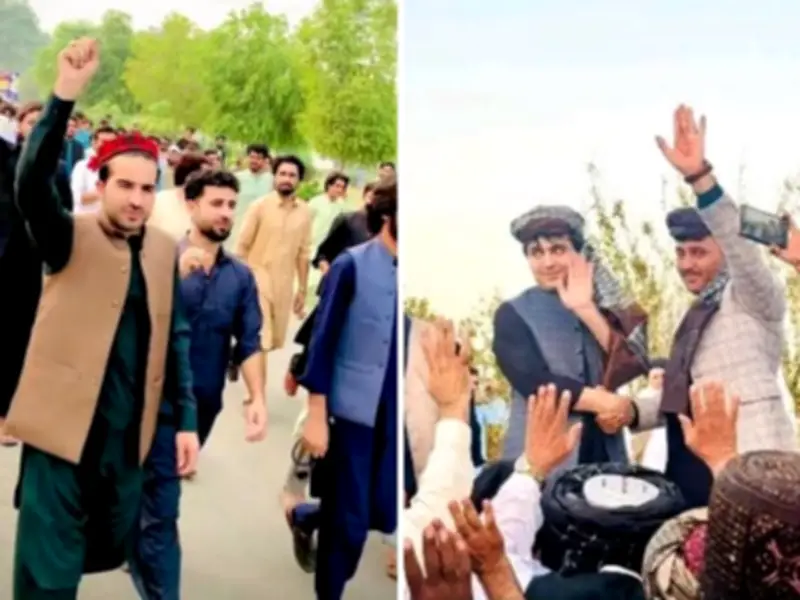
A decade-long blood feud involving five major clans in Mianwali district was officially resolved on Sunday during a reconciliation ceremony that united rival families, putting an end to years of violence that had resulted in 11 fatalities and nine injuries.
The settlement brought closure to a protracted conflict among the Kundi, Kalo, Bikhan Khel, Hazara Khel, and Yaro Khel clans, whose animosity had sparked multiple murders and attempted murders since 2015.
Timeline of Violence
The first major clash occurred in 2015 under the jurisdiction of Wan Bhachran Police Station. Two brothers from the Yaro Khel clan—Ashraf Khan and Asghar Khan—along with their associates Muhammad Zaman Hazara Khel and Sher Abbas Bhatti, were killed. Muhammad Latif of the Kalo clan also lost his life in that incident.

In 2018, another deadly attack took place in the City Police Station area of Mianwali. Members of the Kalo and Kundi clans were ambushed while traveling to attend a court hearing. The attack claimed the lives of Abdul Waheed Kalo, Muhammad Mehran Kundi, Muhammad Nauman Kundi, and two passers-by.
The last major incident linked to the feud occurred in 2019 near Qaidabad, where Ashraf Khan Bikhan Khel was shot dead.
Peace Efforts and Reconciliation
Efforts to end the decade-long hostility were led by local social figures and peace activists, including Mian Riaz Miana, Shaukat Khan, Sibtain Khan, and Inspector Irfan Gujar, who played a key role in facilitating dialogue and confidence-building measures between the rival families.
The reconciliation ceremony was held at Noor Market in Mianwali and attended by Punjab Governor Sardar Saleem Haider Khan, former MNA Amjad Ali Khan, former Punjab Assembly Speaker Sibtain Khan, former MPAs Malik Feroze Joiya and Amanat Shadi Khel, Nawabzada Amir Muhammad Khan of Kalabagh, and other prominent local figures.
Gesture of Forgiveness
During the ceremony, members of the rival clans embraced each other, formally ending years of enmity. Addressing the gathering, the Punjab governor praised the peace initiative, describing reconciliation as the path to stability and social harmony. Special prayers were also offered for lasting peace.
In a significant gesture of forgiveness, Akram Khan announced that he was waiving the Rs12 million qisas (blood money) settlement and forgave the opposing party solely for the sake of Allah.
Community leaders described the agreement as more than the resolution of a longstanding dispute, saying it was a vital step toward protecting future generations from the cycle of hatred, revenge, and violence that had gripped the families for over a decade.