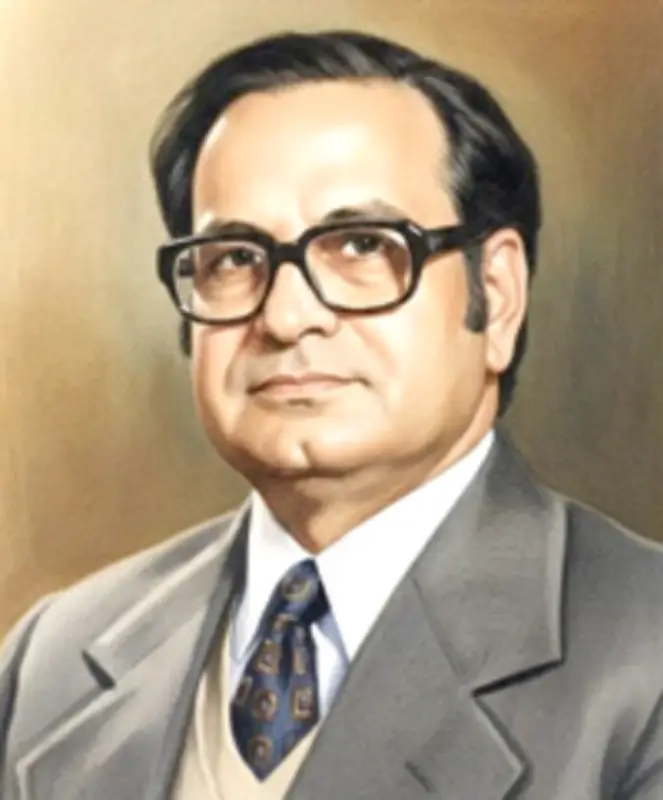
Amir Mir writes that Professor Waris Mir occupies a unique place in Pakistan’s intellectual and political history because his ideas have outlived the era in which he lived. While many writers fade into history, his commitment to democracy, constitutionalism, freedom of expression, and independent thought continues to resonate across generations. He regarded journalism not as a profession for personal gain but as a public trust, believing that a writer’s foremost responsibility was to speak truth to power.
Mysterious Death Under Zia’s Military Rule
When Waris Mir died under mysterious circumstances on July 9, 1987, at the age of 48, Pakistan was under the military rule of General Zia-ul-Haq. The period was marked by political repression, strict censorship, judicial intimidation, and shrinking space for dissent. Many intellectuals chose silence or accommodation with the regime, but Waris Mir remained steadfast, refusing to compromise his principles despite mounting pressure.
Intellectual Outlook Beyond Political Camps
His intellectual outlook transcended political affiliations and ideological camps. Instead, he championed constitutional supremacy, representative government, justice, human dignity, freedom of expression, and tolerance of dissent. He firmly believed that the state existed to protect the rights of its citizens rather than suppress them, arguing that governments derive legitimacy from the people—not from coercion.

Warnings Against Dictatorship
Waris Mir repeatedly warned that dictatorship inflicts damage far beyond politics by eroding a nation’s ability to think independently. He believed societies decline when criticism is criminalized, disagreement is equated with disloyalty, and scholars abandon their conscience in favour of power. For him, intellectual honesty was the cornerstone of a healthy democracy.
Resistance Through Writing
During the Zia era, he reminded fellow writers that repression could never silence the human spirit, observing that a living nation always finds ways to express dissent, even if only through whispers or quiet resistance. He also maintained that a genuine writer could never become an instrument of the state or any political force because a journalist represents the conscience of the people and must remain committed to truth rather than power.
Historical Models of Courage
His writings consistently celebrated historical figures who stood against tyranny, from Socrates and Galileo to Ibn Rushd, viewing them as enduring examples of moral courage. In many respects, Waris Mir himself joined that tradition by refusing to surrender his convictions despite the risks.
Press Repression After 1977 Coup
Following the military overthrow of Prime Minister Zulfikar Ali Bhutto’s government in 1977, Pakistan witnessed severe restrictions on the press, including censorship, imprisonment, and public flogging of journalists. Against this backdrop, Waris Mir argued that the country’s central crisis was not merely political change but the persistence of a system that relied on military power instead of the people’s mandate. Expressing such views at the time required exceptional courage.
Reasoned Argument Over Rhetoric
His writings stood apart because they relied on history, constitutional principles, philosophy, religion, and reasoned argument rather than emotional rhetoric. Instead of dictating conclusions, he encouraged readers to think critically by presenting evidence and asking difficult questions.
Enduring Relevance
Nearly four decades after his passing, Waris Mir’s message remains strikingly relevant. His enduring belief that reason must prevail over force, liberty over coercion, dialogue over silence, and democracy over dictatorship continues to inspire advocates of democratic values and free expression. His greatest legacy lies in his unwavering faith that truth and independent thought can be suppressed temporarily but can never be permanently defeated. Through that conviction, Waris Mir secured his place as one of Pakistan’s most influential democratic intellectuals.