Individual Security and Women's Experiences in Pakistan
Individual security is a crucial prerequisite for the preservation of human dignity and the functioning of a just society. It encompasses an individual's ability to exercise full bodily autonomy and protect themselves from all forms of harm. However, when examined through the lens of women's experiences in Pakistan, a troubling reality emerges: despite constitutional guarantees, women's security remains deeply fragile.
The Attack on Dr. Mahnoor Nasir
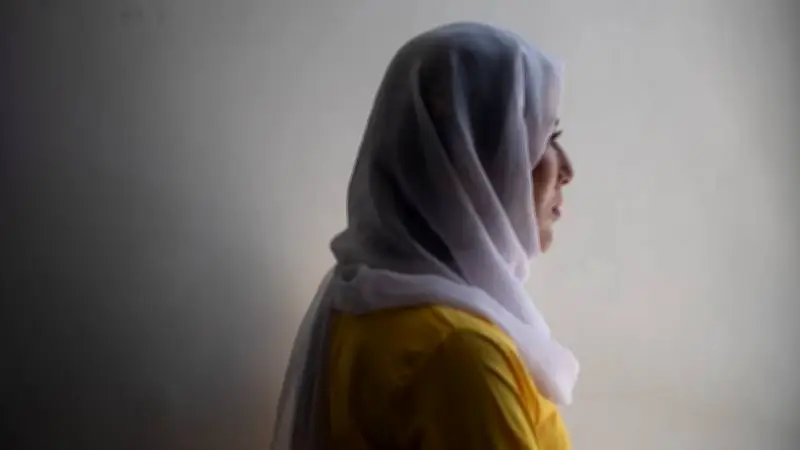
The recent attack on Dr. Mahnoor Nasir at a hospital in Quetta serves as a stark reminder of how dangerously unsafe many spaces continue to be for women – even those dedicated to healthcare and public service. The 29-year-old postgraduate trainee doctor was attacked inside the premises of Balochistan’s largest hospital by Humayun Shah, a lift operator at the facility, who fled the scene and was later killed by police in an exchange of fire. According to reports, Dr. Nasir sustained burns to 13% of her body, including injuries to her face and both hands.
Patterns of Violence Against Women
Dr. Nasir’s case adds to a long and troubling history of violence targeting women. Just last year, the country witnessed the honour killing of Bano Satakzai in Balochistan, and the fatal shooting of teenager Sana Yousaf. According to the Human Rights Commission of Pakistan (HRCP), more than 6,000 incidents of violence against women were reported in 2025 alone. These incidents highlight the persistence with which women’s safe spaces are shrinking and point to a disturbing reality in which physical attacks continue to be used as instruments of punishment and control by patriarchal forces.

Forms of Violence: Interpersonal and Structural
Violence against women manifests in various forms, ranging from indirect deprivation to direct abuses such as domestic violence and honour killings. To better understand its dimensions, it can be categorised into two broad forms: interpersonal violence, which comprises direct acts perpetrated at the individual level, and structural or institutional violence, which is manifested through discriminatory norms and institutional arrangements that systematically limit women’s agency.
Pakistan And The Architecture Of Controlled Stability
Interpersonal violence often stems from unequal power dynamics between the perpetrator and the victim, with the primary objective of inflicting physical harm. Structural violence, on the other hand, a concept originally developed by sociologist Johan Galtung, is indirect and embedded within the broader socio-political, economic, and cultural structures that shape women’s everyday lives. Underlying institutional and structural factors continue to systematically marginalise women, restrict their agency, and limit their meaningful participation in society.
For instance, according to the National Report on the Status of Women in Pakistan, around 75% of women aged 15–24 are not in education, employment, or training, compared to just 11% of young men. Similarly, 40% of unemployed women do not work simply because their male family members do not permit them. The report further notes that women and girls bear an asymmetric domestic workload, performing ten times more household chores than men.
Mutually Reinforcing Cycles of Violence
Importantly, interpersonal and structural violence exist in mutually reinforcing cycles, sustaining and reproducing one another. Efforts by women to challenge physical violence often trigger structural barriers that further marginalise them. This dynamic was visible in the 2016 Khadija Siddiqi case, where a law student was stabbed 23 times by a classmate in broad daylight. When she sought legal justice, structural barriers such as patriarchal norms were deployed, including questions about her personal life and associations with male friends, to paint her as ‘immoral’.
Conversely, the cases of Sana Yousaf and Qandeel Baloch are glaring examples of how challenging structural inequalities can provoke interpersonal violence. Both used digital spaces to claim independence and express bodily autonomy, directly challenging patriarchal norms. Consequently, both lost their lives in brutal acts of physical violence aimed at reasserting control.

Addressing the Crisis
Therefore, addressing this crisis requires a multi-pronged approach, focusing not only on curbing interpersonal violence but also on addressing the broader institutional factors that perpetuate indirect harm. This must be driven by media campaigns, public awareness initiatives, gender-sensitive education, and community engagement.
Jiwani And The Fragile Economy Of Informal Borders
However, correcting these entrenched practices within long-established institutions is often easier said than done, as they are deeply embedded in everyday worldviews. Even those occupying positions of authority are influenced by these biases. For instance, during the passage of the Child Marriage Restraint Act, 2025, which set the minimum age of marriage for girls at 18, significant resistance was witnessed from certain lawmakers themselves.
Thus far, the state’s approach has largely focused on responding to interpersonal violence. Through legislation aimed at curbing domestic violence, harassment, and other forms of direct assault, the state has addressed only one dimension of a much larger crisis. Meanwhile, underlying institutional and structural factors continue to systematically marginalise women, restrict their agency, and limit their meaningful participation in society.