The validation of a text lies not in its universal application, but in its ability to respect the boundaries of specific historical truth. — Edward Said
The terms we use to describe history often say more about the people who invented them than the eras they claim to define. 'Feudalism' is perhaps the most glaring example. Coined in the seventeenth century and popularised during the Enlightenment, the concept was designed by European thinkers such as Giambattista Vico and Adam Smith, who were obsessed with finding a universal, orderly systematisation of human societies. To bridge the confusing historical gap between the fall of the Roman Empire in the fifth century and the rise of centralised states in the twelfth century, they built a neat historiographical construct. This construct was anchored entirely to the feudum—the fief. In this idealised European model, a central authority was absent, giving rise to general disorder and fragmented political units. Local lords exercised administrative and judicial functions, expanding their territories and intensifying control over the population. Within this vacuum, a distinct mode of land tenure emerged: lords bestowed landholdings upon free dependants (vassals) in exchange for military duty, counsel, and financial support. This bond was sealed in a formal ceremony known as homage, during which the vassal swore absolute fidelity, becoming the lord's 'man'. However, modern historians recognise that this rigid pyramid is a historical distortion. By investing the fief with exaggerated prominence, the label places undue emphasis on a particular mode of land tenure to the detriment of other, more significant aspects of social, economic, and political life. Even medieval documents blur the lines, making it difficult to distinguish these supposedly dependent 'fiefs' from ordinary freehold property (allodium). Yet, despite its flaws, this European concept was exported globally during the age of empire, eventually becoming the default vocabulary used to describe the socio-political realities of South Asia—and specifically, Pakistan.
Feudalism in Mainland Pakistan
When applied to mainland Pakistan, the construct of feudalism takes on a very specific, material shape. The British colonial project took existing indigenous power structures and systematically engineered them into a weaponised system of land tenure. Through the Jagirdari and Zamindari systems, the colonial state granted massive tracts of land to loyal local elites, effectively creating a class of regional magnates. In rural Sindh and southern Punjab, this artificial concentration of land ownership birthed a deeply entrenched socio-political culture that closely mirrors the seventeenth-century European construct. In these mainland regions, the political landscape is defined by a profound diffusion of central state power. In the absence of effective, impartial state machinery, the local landlord—the Wadera, Chaudhry, or Khan—steps into the vacuum. These elites do not merely own land; they exercise localised judicial and administrative functions. They run informal dispute resolution systems, such as jirgas and panchayats, bypassing the formal courts of the state.

Here, the medieval concept of homage and mutual obligation is vividly alive through patronage politics, often termed the Thana-Kachehri (police station and court) culture. The relationship between the landowning elite and the landless peasant (Hari or Muzareen) is deeply transactional. The peasants pledge their absolute political loyalty and block votes to the landlord's dynasty. In return, the landlord provides a shield against state high-handedness, grants access to basic resources, and ensures rudimentary support for survival. While mainland Pakistan has increasingly transitioned into an era of 'illegitimate feudalism'—where traditional agrarian lords have adapted by becoming corporate agriculturalists, real estate moguls, and industrial barons who manage dependants through cash wages and commercial tenancy—the underlying psychology of patronage and dynastic power remains the country's dominant political currency.

Gilgit-Baltistan: A Different Reality
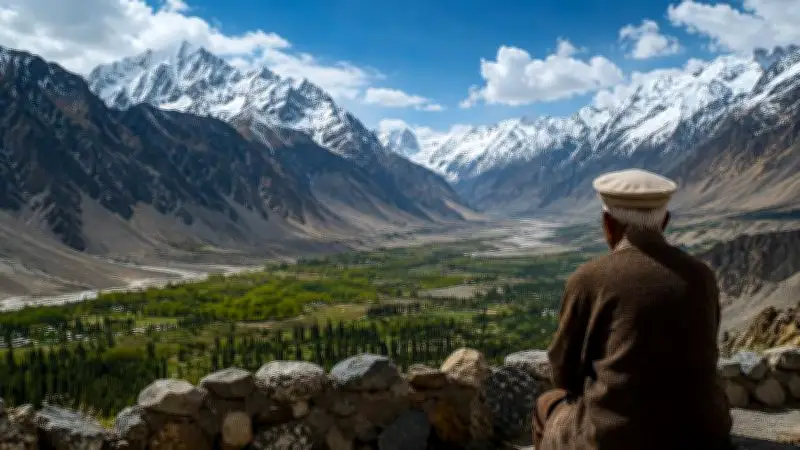
To apply this sweeping mainland label to the entire country, however, is a profound academic error. It completely falls apart when one crosses the deep gorges of the Indus and enters the unique socio-political terrain of Gilgit-Baltistan (GB). Historically, geographically, and socially, the 'feudal construct' is absent from the high-altitude valleys of the Karakoram and the Hindu Kush. The primary reason for this absence is ecological. Feudalism requires vast, contiguous tracts of arable land to sustain an exploitative, non-working landlord class. Gilgit-Baltistan's extreme mountainous terrain made the existence of large agrarian estates physically impossible. Agriculture in GB is a gruelling, vertical endeavour, relying on intricate, hand-carved irrigation channels fed by glacial meltwater. As land is scarce and requires immense, localised physical labour to cultivate, the region historically relied on small peasant proprietors rather than an army of landless serfs.
More importantly, the foundational relationship with land in GB was built on the concept of communal ownership, known as Shamilaat-e-Deh. Villages and valley communities collectively owned the surrounding pastures, forests, and water sources. Decisions regarding resource allocation, grazing rights, and water distribution were made through consensus-based village councils, preventing the concentration of absolute property rights in the hands of a single elite family. Without a monopoly over the 'fief', a monolithic landowning class simply could not emerge. Indeed, Gilgit-Baltistan was historically governed by isolated valley microstates led by local rulers, known as Rajas or Mirs (such as the Mirs of Hunza and Nagar, or the Rajas of Yasin and Baltistan). These rulers did exact taxes and maintain court hierarchies. However, their power was fundamentally different from mainland agrarian feudalism. Their authority was tightly constrained by geography, tribal councils, and the harsh realities of mountain survival, which demanded cooperation over absolute tyranny.
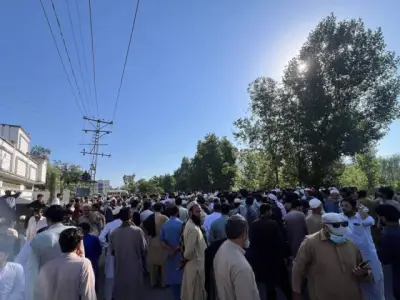
Furthermore, whatever traditional authority these rulers possessed was decisively dismantled in 1974 through sweeping administrative and land reforms introduced by Zulfikar Ali Bhutto. The princely states were abolished, the privileges of the Mirs and Rajas were revoked, and the region was integrated into a direct administrative relationship with the federal government. Unlike the mainland, where the abolition of Jagirdari was largely bypassed by powerful families that retained their political dynasties, the elite families of GB lost their systemic leverage. Today, political power in Gilgit-Baltistan is not driven by landownership or agrarian bloodlines. Instead, it is stratified by religious, sectarian, regional, and sub-tribal identities. Since there is no local landlord class acting as an intermediary or buffer between the citizen and the state, the socio-political culture of GB is defined by direct, grassroots civic activism. The traditional Thana-Kachehri patronage system of the mainland does not dictate terms here. Instead, communities in GB are highly politicised and organised. They frequently engage in massive, peaceful public mobilisations, legal litigation, and sit-ins to directly demand their constitutional rights, economic subsidies, and protections for their indigenous land.
Contemporary Struggles in Gilgit-Baltistan
The contemporary struggle in Gilgit-Baltistan is not a battle against local 'feudal lords', but rather a resistance against state-led territorialisation. Under old colonial frameworks inherited by the state—most notably the concept of Khalisa Sarkar (Crown Land)—the government has historically claimed uncultivated or communal mountain lands as state property. As Gilgit-Baltistan rapidly transforms into a vital infrastructure and tourism hub, particularly under the umbrella of the China-Pakistan Economic Corridor (CPEC), the primary legal and political friction is between local communities fighting to protect their historic Shamilaat (communal) rights and state encroachment. It is a modern clash over resource sovereignty, completely removed from the medieval-style land bondage seen in parts of the mainland.
Ultimately, using 'feudalism' as a catch-all phrase to describe Pakistan homogenises a deeply fragmented reality. While the ghost of the fief still haunts the corridors of power in Sindh and Punjab, it has never found a footing in the mountains of Gilgit-Baltistan. Understanding GB requires abandoning borrowed, centuries-old European labels and acknowledging a socio-political culture defined not by the tyranny of the landlord, but by the resilience of the mountain commons.