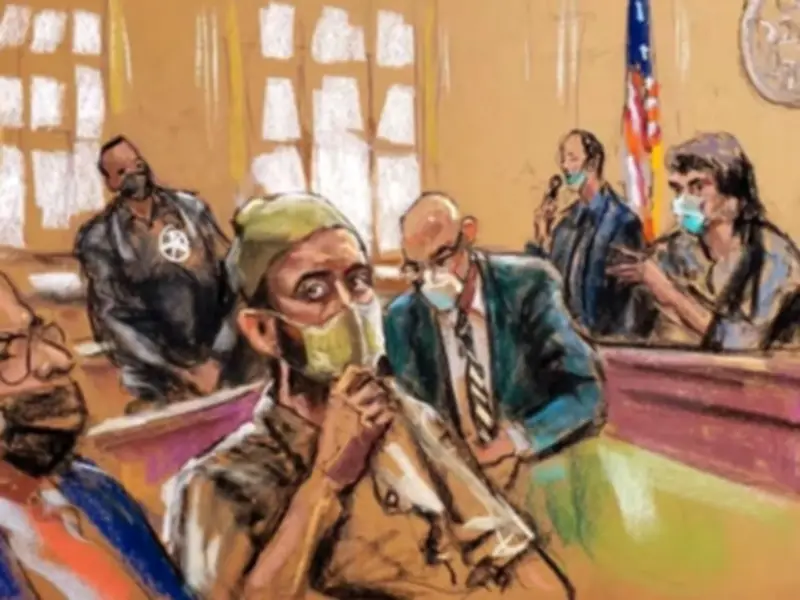
A Taliban commander who abducted an American journalist was sentenced to 42 years in prison on Tuesday after pleading guilty to hostage taking and providing material support for terrorism, as reported by the New York Times.
Details of the Guilty Plea
The commander, Haji Najibullah, admitted in his guilty plea last year that he had supported Taliban members intent on killing U.S. troops. He also confessed to helping abduct David Rohde, then a reporter for The New York Times, along with an Afghan journalist and driver in 2008.
Judge Katherine Polk Failla of the Federal District Court in Manhattan emphasized the severity of his actions, stating, “Najibullah’s conduct included supporting and enabling terrorist acts.” She further noted that the hostage taking was carried out with “casual brutality” and “psychological torture.”

Prosecution's Request for Life Sentence
Prosecutors had requested a life sentence, arguing that “it is difficult to imagine conduct more sinister and morally wrong than the hostage taking of civilians.” They also held Najibullah responsible for a 2008 attack by fighters under his command that killed three U.S. service members and an Afghan interpreter, with some victims’ bodies mutilated or burned. “The defendant led a violent insurgent group hellbent on killing Americans and their allies,” prosecutors wrote.
Defense Argument and Apology
Najibullah’s lawyers sought an 18-year prison term, contending that while their client did not dispute that his support of the Taliban led to the 2008 deaths, he maintained he had not participated in or directed that attack, nor was he a “main overseer” of the kidnapping. Before sentencing, Najibullah addressed the court, apologizing to Rohde: “What happened to him was terrible, and I deeply regret my role in it.” He then listed ways in which he had suffered.
Victim Impact Statement
Rohde also spoke in court, naming the U.S. service members and Afghan translator killed in the 2008 attack, citing “the pain, loss and grief their friends and family endured,” and denouncing hostage taking as “a cruel and cowardly crime.”
Background of the Abduction
Rohde, an experienced correspondent, was attempting to interview Najibullah for a book when he was abducted along with Afghan journalist Tahir Ludin and driver Asadullah Mangal. Najibullah accused the three of being spies and interrogated them about their families. His men showed the captives Taliban propaganda videos, including footage of beheadings.
For months, the captors tried to use Rohde and the others for ransom and the release of Taliban prisoners. The hostages were forced to make calls and videos pleading for help, including one where Rohde begged for his life with a machine gun pointed at his face.
Escape from Captivity
After seven months, Rohde and Ludin escaped from a Taliban compound, using a scavenged rope to climb down a wall at night before walking to a Pakistani military base. Mangal fled about five weeks later during a firefight.