For millennia, diplomacy was the art of averting force through words. From the sacred envoys of ancient Egypt to the codified protocols of the Vienna Convention, it provided a framework where negotiation preceded confrontation. On paper, this system still exists. But paper has always burned. President Donald J. Trump simply holds the match.
The Shift from Words to Ultimatums
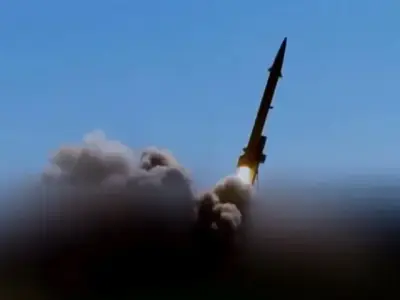
Where once envoys carried sealed messages, missiles now deliver a nation’s opening position. Where embassies maintained the steady hum of relations, social media announces seismic policy shifts at odd hours, leaving allies scrambling. The diplomatic pouch has been replaced by the public ultimatum. This is not entirely new, as coercive diplomacy dates to 168 BC, when a Roman legate drew a circle in the sand and demanded a king’s surrender. Gunboat diplomacy of the 19th century thrived on naval threats. The ‘carrot and stick’ has worn many costumes.
Presidential Power as Royal Court
President Trump’s approach to governance often reflects a pre-Westphalian sensibility, reminiscent of European sovereigns who viewed their realms as hereditary estates, thereby blurring the line between state assets and the ruler’s private property. Such dynamics transform the presidency into something akin to a royal court, where national policy can feel secondary to the advancement of the sovereign’s personal brand. In all fairness, the world may look the other way, as this is ultimately a matter between the President and the American people who elected him to the nation’s highest office.

Historical Comparisons and Missing Elements
The comparisons to history’s strongmen are illuminating, not for their similarities, but for what they reveal is missing. Like Genghis Khan, he offers stark ultimatums. Yet Genghis built an empire that outlasted him, incorporating conquered peoples into a governing structure. Like Ivan III, he tears up unfair charters. Yet Ivan built a Russian state that endured for centuries. Like Napoleon, he disdains niceties, negotiating with an army always in view. Yet Napoleon’s legal code survives Napoleon. What survives a purely transactional presidency? What remains when the leverage is gone, and partners have calculated that reliability matters more than fear?
Coextopolacy: A New Form of Diplomacy
Call it Coextopolacy. A blend of coercion and extortion, stripped of diplomatic pretence. President Trump did not invent the strong-arm tactic, but in his second term, he has perfected its audacity, abandoning the velvet glove to reveal an iron fist and daring the world to call it what it is: the transactional wielding of American power. President Trump’s innovation is not the strategy but the stripping away of all costumes. His approach, often projected as chaotic, reveals a coherent worldview applied with brutal consistency. For him, you are either a transactional partner or a strategic target.
Strategic Applications Across the Globe
He is smart. With China, he pursues decoupling through economic pressure. With Russia, he pairs sanctions with a respect for their power that adversaries read as permission. With Europe, he demands territory and threatens tariffs, forcing a continent to contemplate strategic autonomy for the first time since 1945. With allies everywhere, he demands payment for protection. Don’t underestimate him. He is smart.
Tactical Successes and Long-Term Costs
In tactical terms, the method works. Tariffs force renegotiations. Threats concentrate minds. Unpredictability keeps rivals off balance. It produces results that traditional diplomacy cannot secure. But at what cost? When America demands payment from allies, those allies question the alliance’s value. They will ride free no more, but neither will they ride with America. When America withdraws from international agreements, its influence over their implementation vanishes. When personal diplomacy replaces institutional processes, the institutions seem to be withering. But the fact remains: institutions outlast presidents. When commitments become conditional, partners build redundancies. The rules-based order was not charity; it was a force multiplier that made American power credible. Its erosion does not free America from constraints, but it frees others from alignment.

Dealing with Trump: A Practical Guide
The question is whether success is measured in quarterly headlines or generational alignment. This is the truth world capitals may have to accept: you do not need to understand Trump; you need to deal with him. Successful engagement requires translating interests into his language, presenting requests as deals, and maintaining options while negotiating. The world is following suit. However, they will speak his language without adopting his worldview, dealing with him without depending on him. For his term, he holds the cards. Hence, understanding him is optional. Dealing with him is not.
Indelible Marks on Diplomacy
Indeed, President Trump will leave indelible marks. The normalisation of personal diplomacy means future presidents may bypass the machinery they are required to strengthen. The legitimisation of economic warfare as a first resort embeds tariffs so deeply that removing them would feel like unilateral disarmament. The erosion of alliance trust ensures that even when America returns, partners will have diversified their options. The exclusive American orbit will have become one of several. Leaders who once assumed American constancy will now assume American variability. Most consequentially, he will leave proof that coercion works in the short term while obscuring its diffuse, long-term damage: trust that erodes, institutions that fail, partners who are absent when needed.
Historical Echoes and Future Implications
The ongoing war with Iran provides pertinent evidence. Popilius Laenas drew his circle in the sand two thousand years ago. The king stepped out, and Rome prevailed. But Rome, too, eventually burned. The question is not whether President Trump’s circles hold, but whether what lies outside them—trust, alliance, the habits of cooperation—survives the drawing. The world will bear with him. Then it will bear the marks he leaves behind. What it builds from those marks, whether it reconstructs what was damaged or adapts to what was changed, will define the diplomacy of generations to follow. Indeed, on paper, diplomacy remains the art of averting force. But paper burns. And in the space between what remains on paper and what happens in the world, President Trump has built his legacy. What comes after will be built by those who inherit both the ashes and the opportunity they represent.
Najm us Saqib is a former Ambassador of Pakistan and author of eight books in three languages. He can be reached at najmussaqib1960@msn.com