In the summer of 1976, America was not in a good place. President Gerald Ford, who presided over the Bicentennial, was never elected—he took office after both the president and vice president resigned in disgrace. The Vietnam War had ended in defeat with the fall of Saigon, costing nearly 60,000 American lives. Inflation hit double digits in 1974 and remained high, unemployment hovered near 8 percent, and economists coined the term “stagflation” to describe the misery.
Yet on July 4, 1976, Americans threw a massive party. In New York Harbor, over 200 tall ships sailed up the Hudson for Operation Sail, drawing an estimated six million spectators—the largest crowd in the city’s history. Parades, fireworks, and church bells marked the day nationwide. A Roper survey found Americans were optimistic about the future by a nearly three-to-one ratio, and over three-quarters told Gallup the nation had achieved at least a fair amount of its founding ideals.
Fifty Years Later: Optimism Turns to Pessimism
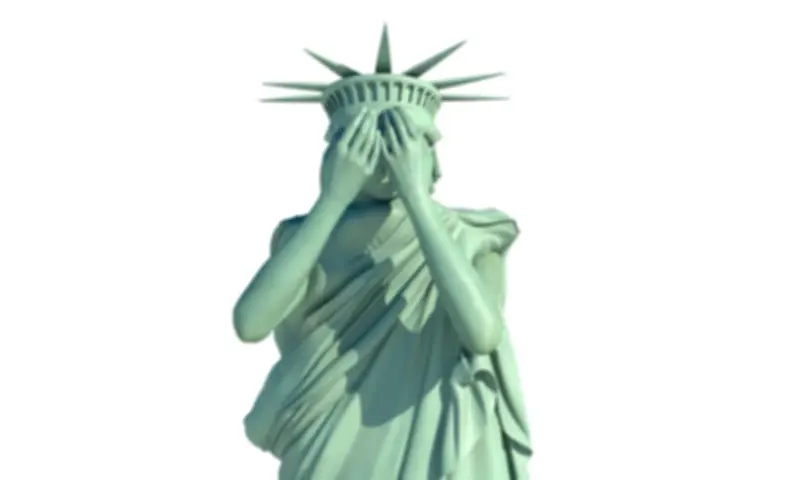
Fast forward to the 250th anniversary in 2026, and the mood has flipped. Roughly 60 percent of Americans say the nation is on the wrong track. A majority believe its best years are behind it. About three-quarters think today’s children will end up worse off than their parents. And 77 percent say the founders would be disappointed in what the country has become.

But the numbers tell a different story. The country that felt so good in 1976 was, by objective measures, a worse place to live than the country that now feels so terrible.
Living Longer and Healthier
Life expectancy at birth in the US was 72.6 years in 1976. By 2024, it reached a record high of 79 years—an extra six and a half years of life. Infant mortality has plummeted, and cancer survival rates have improved dramatically.
These gains came from curbing deadly habits. In 1976, about 37 percent of adults smoked; today, it’s closer to one in ten. Seatbelts, airbags, better trauma care, and cheap drugs for cholesterol and blood pressure have made heart disease and lung cancer less deadly.
Crime and Road Safety: Dramatic Improvements
The murder rate in 1976 was near its peak; it would continue rising until 1980. By the early 2020s, violent crime had fallen to roughly a 50-year low, and homicide rates in 2026 may end up at a record low. The death rate per mile driven is now a fraction of what it was during the Bicentennial.
A Cleaner and Richer Nation
In 1976, leaded gasoline pumped neurotoxins into the air, rivers like the Cuyahoga caught fire, and Lake Erie was declared dead. Since 1970, emissions of six main air pollutants have fallen 78 percent, even as the economy nearly quadrupled and the population grew. Lead has essentially disappeared from the air.
Women now earn the majority of college degrees. The Black poverty rate is near a record low. Support for same-sex marriage is now the norm—a huge shift from 1976, when homosexuality was criminalized in most states.
What Has Gotten Worse?
Americans’ trust in government has collapsed; fewer than one in five now trust Washington. Political polarization is extreme. Economic gains have flowed disproportionately upward—the top 1 percent’s share of income has roughly doubled since 1976. Climate change, barely on the radar in 1976, now poses a serious threat, with CO2 levels rising from 330 parts per million to about 427. Housing affordability has declined, with a record share of households spending over a third of their income on housing.
Yet homeownership rates are slightly higher than in 1976, and homes are larger on average.
The Disconnect Between Mood and Reality
In 1976, Americans had less of nearly everything measurable, yet they felt good about the future. In 2026, they have more, but they don’t. A country’s mood, like a person’s, often reflects the story it tells itself rather than the lives it actually lives. Despite widespread pessimism about the nation, more than three-quarters of Americans say they are satisfied with their own lives.

The Americans cheering in New York Harbor in 1976 were celebrating a country that was sicker, dirtier, more dangerous, and less free than the one today. But they were right to cheer—the line was already bending the right way, and it kept bending. A nation can travel a long way, even while convinced it is going nowhere.