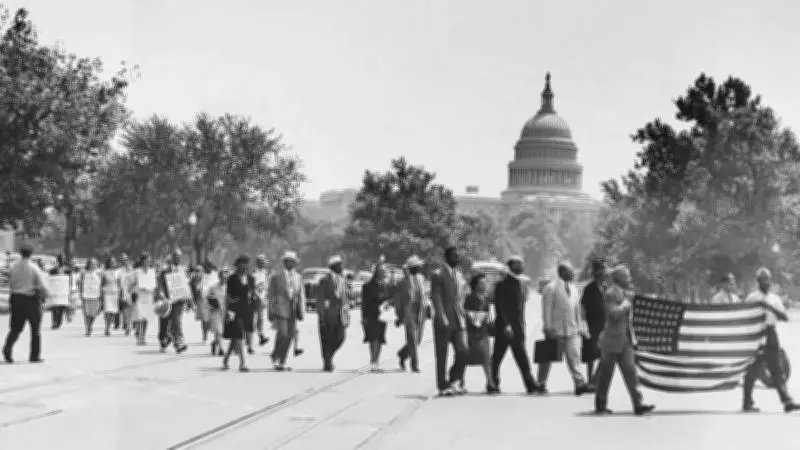
To celebrate America's 250th birthday, we must remember the philosophy that underpins this country: liberalism. In its original and ancient conception, liberalism was more an attitude than any set of policies. According to Helena Rosenblatt in The Lost History of Liberalism (2018), the word did not exist until the early nineteenth century. For almost two thousand years, being liberal meant demonstrating the virtues of a citizen, showing devotion to the common good, and respecting mutual connectedness. The word stems from the Latin liber, meaning both “free” and “generous.”
Liberalism’s Ancient Roots
This original meaning—free and generous—is broad. Figures like Jesus, who urged “Do unto others as you’d have done unto you,” and the Sufi saint Bulleh Shah, who preached “Destroy the mosque and the temple, but don’t break a human’s heart,” can be considered liberals because their thinking was rooted in kindness and generosity. Liberalism naturally branched into various traditions because it began as a pursuit of specific virtues. Freedom was valued not for personal whim but as a means of self-improvement and of fostering generosity and kindness, qualities considered essential for a harmonious society.
Liberalism vs. Other Grand Stories
Yuval Noah Harari, in 21 Lessons for the 21st Century (2018), notes that during the twentieth century three grand stories emerged: the fascist story, the communist story, and the liberal story. The liberal story envisions a world in which all humans cooperate freely and peacefully. Its emotional core is not fear or suspicion, but openness and love. Andrew Sullivan, in New York Magazine (June 2020), described liberalism as a spirit that believes there are whole spheres of human life beyond ideology—friendship, art, love, sex, scholarship, family—and seeks not to impose orthodoxy but to open up possibilities of the human mind and soul.

America as the Liberal Hegemon
The resentment directed towards the United States is largely rooted in its status as the world’s reigning hegemon. Fareed Zakaria, on The Ezra Klein Show (10 April 2026), argued that one must compare hegemons to other hegemons: “Has the United States been qualitatively different as a global power compared with the Soviet Union, Nazi Germany, or imperial powers like Britain and France? Those were rapacious colonial empires. The United States used its power to rebuild Europe and bring East Asia out of poverty.” He acknowledged mistakes—like destroying villages in Vietnam to save them from communists—but concluded that in the broad continuity of history, America has a lot to be proud of.
What’s Wrong with Liberalism Today?
Adrian Wooldridge, in The Revolutionary Center: The Lost Genius of Liberalism (2026), contends that the current malaise within liberalism is largely a product of the liberal establishment's shortcomings. These elites succumbed to insularity, self-interest, and groupthink. Wooldridge writes: “Nietzsche prefigured a standard modern complaint when he pointed out that ‘liberal institutions immediately cease to be liberal as soon as they are attained’. Liberals might talk about ‘freedom’ and ‘pluralism’, but they are almost as intolerant of heterodoxy as the medieval Catholic Church or the Soviet regime. The quintessential image of modern liberalism is the billionaire taking a private jet to Davos to deliver a speech on climate change.”
How to Fix Liberalism
A consensus is emerging on the need to reform or replace the elites and institutions that have squandered public trust. David Brooks, in The New York Times (5 June 2025), argued: “For today’s Democrats, that means this: If people rightly distrust establishment institutions and you are the party of the establishment institutions, then you have to be the party of thoroughgoing reform. You have to say that Trump is taking a blowtorch to institutions, and we are for effectively changing institutions.” David Frum’s 2019 warning about immigration captures the dynamic: if liberals refuse to protect the border, fascists eventually will.

Why I Remain Hopeful
At its core, liberalism functions as a framework for navigating the world through a commitment to kindness towards oneself and others. Much like love, it is fluid rather than static, perpetually shifting to meet changing requirements. Whenever a conflict arises between self-interest and devotion to others, liberalism demands rigorous introspection. Just as love endures and transforms in our private lives, liberalism is destined to continually adjust across centuries. This makes me hopeful for America's future. I am deeply grateful to this nation, which has welcomed millions of immigrants like myself with genuine warmth, and I wish it a joyous 250th anniversary!