Nehru's Geopolitical Vision and the Emergence of Pakistan
Jawaharlal Nehru was acutely aware of the Indian subcontinent's strategic location at the crossroads of South-East Asia, Central Asia, the Middle East, and Africa. He believed this position endowed India with immense political, economic, and strategic importance. The Indian Ocean, he noted, had historically facilitated trade between the East and West, underpinning British imperial dominance. Nehru harbored the grand vision of a 'Greater India' that would replace the British Indian Empire. However, the creation of Pakistan in 1947 dashed these ambitions.
Nehru's Writings and Regional Ambitions
In his seminal work 'The Discovery of India', written in the mid-1940s, Nehru predicted that the Pacific would become the world's nerve center. He asserted that India, though not directly a Pacific state, would exercise significant influence there and emerge as the center of economic and political activity in the Indian Ocean region, South-East Asia, and the Middle East. He proposed a regional grouping of countries bordering the Indian Ocean, including Iran, Iraq, Afghanistan, India, Ceylon (Sri Lanka), Burma (Myanmar), Malaya (Malaysia), Siam, and Java (Indonesia). This grouping, he argued, would resolve minority problems. Nehru's vision clearly aimed for India to succeed the British Empire as the political and economic leader of smaller states in the region.
Pakistan's Creation as a Hurdle
The partition of India and the emergence of Pakistan posed the biggest obstacle to Nehru's dream. Additionally, the discovery of hydrocarbon resources in the Middle East made it impossible for India to compete with the USA and the West for influence there. Congress leaders accepted partition reluctantly and never fully respected the sovereignty of smaller states, including Pakistan. India annexed Bhutan and sought hegemony over Maldives, Sri Lanka, Nepal, and Myanmar. Pakistan vigorously resisted these hegemonic ambitions. The South Asian Association for Regional Cooperation (SAARC), established to foster economic integration, remained dormant due to India's hostility toward Pakistan.

Congress Leaders' Reluctance and Post-Partition Hostility
Indian leaders believed that the demand for a separate Muslim state was temporary and would fade under parliamentary democracy. They failed to address how minorities would achieve political and economic equality without constitutional power-sharing. The unity of Muslims under Quaid-e-Azam Muhammad Ali Jinnah and the Muslim League's electoral successes in 1945-46, along with US support, forced the British to agree to partition. Congress leaders colluded with the Viceroy to divide Punjab and Bengal on a communal basis just one month before independence. Even the 'moth-eaten' Pakistan was unacceptable to them. They attempted to strangle the new state by withholding financial shares, arms, and river waters, and by driving Muslims to migrate. India also forced the Maharaja of Jammu and Kashmir to sign the Instrument of Accession, airlifting troops to occupy the valley, except for Gilgit and Baltistan, which local scouts liberated.
Kashmir Dispute and Water Treaty
Nehru took the Kashmir issue to the UN Security Council in 1948, but India has since refused to implement UN resolutions. India threatened to divert rivers originating in Kashmir, leading to the World Bank-negotiated Indus Waters Treaty, which allocated Ravi, Sutlej, and Beas to India and Indus, Jhelum, and Chenab to Pakistan. The treaty survived wars but was arbitrarily suspended by Narendra Modi's government after its humiliation in May 2024.

Military Conflicts and Nuclear Deterrence
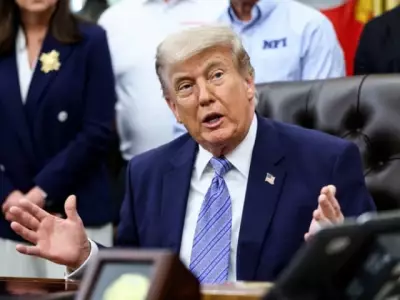
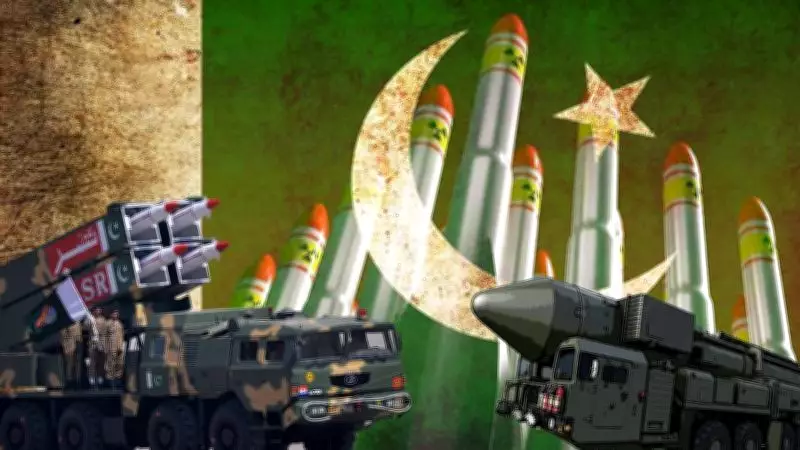
India attacked Pakistan on September 6, 1965, aiming to capture Lahore, but was halted at the BRB Canal. India avenged this humiliation in 1971, aided by internal disunity in Pakistan. Nevertheless, Pakistan emerged as a resilient Muslim state. India's persistent animosity led Pakistan to develop nuclear weapons on May 28, 1998, ensuring strategic balance. Nuclear deterrence has prevented major Indian aggression. India subsequently shifted to accusing Pakistan of sponsoring terrorism, blaming it for attacks on the Indian Parliament, Taj Mahal Hotel, Pathankot, Pulwama, and Pahalgam. Modi intensified this hostility, staging a false-flag event in Balakot in August 2019, where two Indian aircraft were shot down and Wing Commander Abhinandan captured. In May 2025, India launched airstrikes on Pakistan, losing seven aircraft, including two Rafales, in a three-day aerial war. The world recognized Pakistan's strategic prowess. A ceasefire was brokered by President Donald Trump at India's request.
Current Relations and Future Threats
India downgraded bilateral relations with Pakistan, viewing it as a dying state. However, Pakistan celebrated its humiliation in the May 2025 air war. Pakistan must remain vigilant against India's growing ties with Israel, which pose a perennial threat. India's '2035 Dream' contrasts with Pakistan's '2025 Reality.'