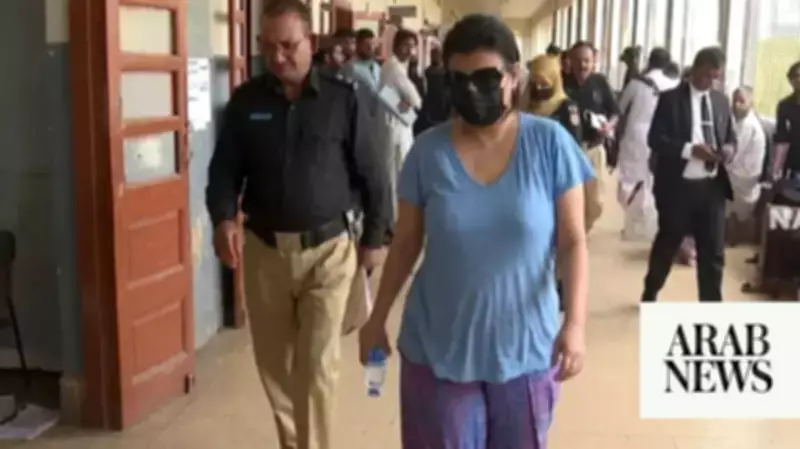
Pakistani police are investigating a sophisticated cocaine network linked to an alleged female drug trafficker arrested earlier this week, while also probing possible facilitation by police officers and others who may have helped the operation evade detection, a senior Karachi police official said on Friday.
Investigation Widens
Karachi Additional Inspector General (IG) Azad Khan told a televised news conference that the investigation had widened significantly after authorities analyzed the suspect's phones, financial records, and alleged links across multiple cities, prompting the formation of a high-level joint investigation team involving several police and intelligence units.
The suspect, widely known as “Pinky” or “Anmol,” was arrested in Karachi in a narcotics case. Police say she is accused in multiple drug-related cases, while her appearance in court without handcuffs and under apparent police escort triggered criticism on social media and raised suspicions about possible links within law enforcement. Police have since suspended several officers over alleged protocol provided to the suspect and are separately investigating whether any officials facilitated the network.

National and Transnational Concerns
“This is a national case,” Khan said. “It could be a transnational case as well. This entire network is not limited to Karachi. Its tentacles are at other places.” He added that there are foreigners involved in the network, with around 20 women from Lahore. “We have found out that the main shipment came from there. They came to Karachi in different ways.”
Khan said investigators had so far identified hundreds of contacts from forensic analysis of the suspect's phone data, many located outside Karachi, while financial investigators were examining thousands of transactions linked to accounts allegedly associated with the network. Police are coordinating with the Federal Investigation Agency, cybercrime authorities, the Financial Monitoring Unit, and Punjab police as part of a broad-based investigation.
Zero Tolerance for Facilitators
“Whether it is the police or anyone else, we will treat them as its harborers,” Khan said, referring to individuals suspected of facilitating the network. He said the alleged operation initially relied on dedicated riders to transport drugs between cities before shifting to local delivery services after some riders were arrested.
Khan said investigators are also examining possible links between the alleged network and deaths involving drug users. “This is not just a case. This is a test case. Our children are affected. Our daughters are affected. Our entire generation is affected,” he said.