The Azad Jammu and Kashmir (AJK) Police have confirmed that three individuals linked to the newly proscribed Joint Awami Action Committee (JAAC) were killed during protests on Sunday, with additional injuries reported, according to a press release by the AJK police. The statement follows deadly clashes in AJK's Rawalakot, where the JAAC had been holding a sit-in outside CMH Rawalakot.
Police Account of Events
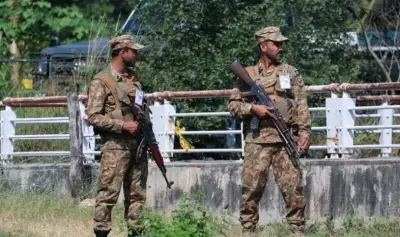
AJK police alleged that armed JAAC members opened fire on deployed law enforcement in a planned attack, leaving four personnel dead and around 20 injured. According to the statement, law and order has been restored in Rawalakot after what it described as violent and armed actions by elements linked to JAAC. The AJK police said armed individuals attempted to disturb peace in the area on Sunday by launching a planned firing attack on law enforcement personnel. The attackers later besieged CMH Rawalakot, severely disrupting hospital services and medical operations.
The police said that miscreants also set fire at multiple locations and caused damage to both public and private property. The statement added that law enforcement agencies responded with “professionalism, restraint and responsibility,” carrying out a limited and targeted operation between the night of June 7 and 8 to clear the hospital siege. It said that priority was given to the safety of patients, medical staff and civilians, and that CMH Rawalakot was now fully cleared with medical services restored.

Casualties and Aftermath
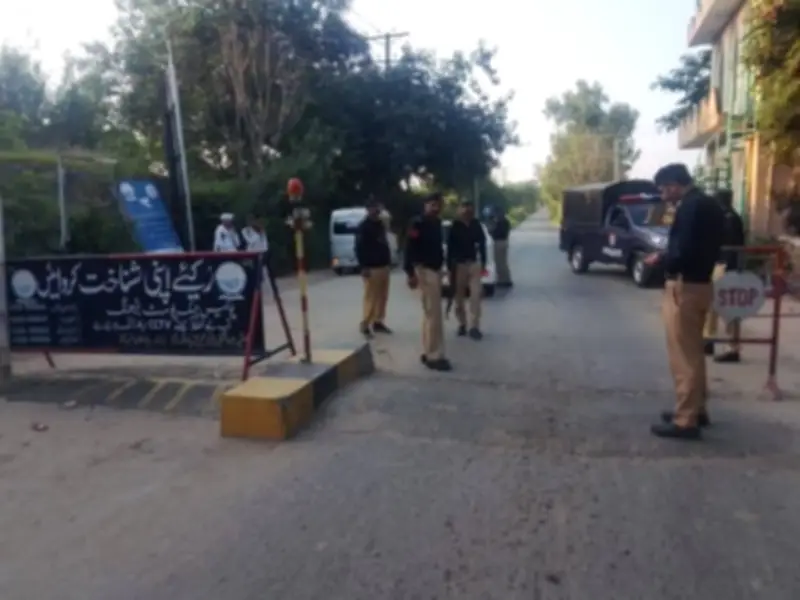
The police stated that since June 6, four law enforcement personnel have been killed in firing incidents, including three AJK Rawalakot Police officials and one Frontier Constabulary member, while several others were injured. It further claimed that three individuals linked to JAAC were killed due to their own “indiscriminate firing,” with additional injuries reported. According to the statement, the situation has been brought under control, with roads reopened and markets functioning normally across the area.
The police said that those involved in violence have been dispersed, and operations against armed elements are continuing. It added that legal action is underway against individuals responsible for disturbing peace and that the organisers of unrest will be brought before the law. The press release also confirmed that the funeral prayers of the slain personnel will be held with full official honours. The statement urged the public to avoid involvement in any activities linked to the proscribed group, not to believe rumours, and to rely only on official sources for information.
Background of the Conflict
The region witnessed one of its most turbulent periods in October last year when protests led by the JAAC erupted over demands for constitutional and governance reforms. At least nine people, including three policemen, were killed during the unrest. The JAAC had presented a wide-ranging charter of demands, including an end to the privileges enjoyed by the ruling elite, the abolition of 12 assembly seats reserved for refugees, and the scrapping of the quota system.
Two days after the violence, the government and the JAAC reached an agreement covering 12 core and 13 additional points. Under the accord, both sides agreed to constitute a high-level committee to examine the issue of refugee seats in the AJK Legislative Assembly. The unrest also triggered political upheaval in the region. The Pakistan Peoples Party subsequently moved a no-confidence resolution against then-prime minister Chaudhry Anwarul Haq, with the Pakistan Muslim League-Nawaz joining the effort. Haq, who had been elected in April 2023 with 48 votes, chose to face the vote rather than resign. On November 17, Raja Faisal Mumtaz Rathore secured 36 votes in the election and became the 16th prime minister of Azad Jammu and Kashmir.

Political Developments
With elections now approaching and the refugee seat issue still unresolved, the AJK government convened an All Parties Conference (APC) in Muzaffarabad to build consensus. Almost every major party attended — except PTI and the JAAC, who boycotted it. The JAAC's position is that the government had already rejected its written proposals submitted on May 30, so attending would be futile. It had proposed either keeping symbolic refugee representation until the Kashmir dispute is permanently resolved, or replacing the 12 assembly seats with 4 seats in the AJK Council — a body chaired by the prime minister, which it argued would better preserve the political dimension of the Kashmir cause.
The APC rejected any changes outside the constitutional and legislative framework, saying only the elected assembly could alter refugee seat arrangements. The JAAC called the resolution "a page and a half of utterly trivial lines" and accused participants of gathering to serve their own interests rather than the public's. The JAAC called a major protest for June 9 in Muzaffarabad, with caravans converging from across the region.