There is a river that runs through Karachi, though for most of the year it is almost invisible. The Lyari River remains dry across long stretches of time, appearing as a wide scar of cracked soil mixed with debris, crossed by temporary walkways and surrounded by tightly packed settlements. When the monsoon arrives, everything changes. The dry channel becomes a violent stream carrying rainwater from the northern hills into the city, flooding low-lying neighbourhoods and sweeping through fragile structures. In those moments, it becomes clear that the river is not a background feature of Karachi but a force that continues to shape where people live and how the city expands.
The Lyari River is not a decorative line dividing urban space. It is a structural boundary that has influenced settlement, economy, and inequality for generations. On one side grew the administrative and commercial core of Karachi, shaped first by colonial planning and later by state institutions. On the other side developed dense working-class settlements that powered the port economy and provided essential labour for the entire city. This separation is not only geographic but also deeply social and economic, reflecting long-standing differences in opportunity and infrastructure.
Pre-Colonial and Colonial Foundations
Before colonial expansion, the Lyari basin was a lightly populated landscape where fishing communities, nomadic Baloch groups, and seasonal cultivators lived in rhythm with changing water flows. The river gathered runoff from the Malir hills and created fertile patches of land before reaching the Arabian Sea. Coastal life defined the region. Sindhi and Baloch fishing families moved along the shoreline, and some settled near the river mouth, where access to both land and sea offered survival opportunities.

When British rule expanded into Sindh in the nineteenth century, Karachi was transformed into a key port city. Colonial planners organised the urban space into administrative districts, cantonment zones, and commercial corridors. European residential areas developed on more elevated and structured land, while older native settlements remained closer to the port. The Lyari River naturally became a dividing line in this design. Land west of the river was considered less suitable for formal development because of flooding risks and drainage challenges. As a result, it became the primary settlement zone for labourers, dock workers, artisans, and migrant groups.
Emergence of Lyari as a Distinct District
This is how Lyari gradually emerged as a distinct urban district. It absorbed Baloch workers, Makrani families, Sindhi labourers, and later migrants from different parts of the region. Housing was developed in an informal and densely packed manner. Public services expanded slowly and unevenly. Water supply, sanitation, and infrastructure often depended on community effort rather than state planning. By the early twentieth century, Lyari had already developed a strong identity tied to labour and survival. It was closely connected to the port economy but remained excluded from the privileges of formal urban planning. Over time, political awareness grew as residents began to demand representation and recognition within the expanding city structure.
A key historical figure in this early political landscape was Khan Bahadur Allah Bakhsh Khan Gabol. He was a Baloch tribal leader with strong influence in Lyari and the surrounding areas. During the period when Sindh had its own legislative framework, he emerged as an important political actor. In the 1937 Sindh Assembly elections, he contested against Sir Abdullah Haroon, one of the most powerful elite figures of Karachi. The constituency included Lyari and the surrounding regions. When the results were declared, Allah Bakhsh Gabol achieved a significant victory. This outcome demonstrated the political strength of Lyari-based communities against established urban elites.

Here, the historical record must be stated clearly. Khan Bahadur Allah Bakhsh Khan Gabol, despite being associated with the Indian National Congress at the time, voted in favour of the creation of Pakistan. He and his constituency, Lyari, thus supported the idea of Pakistan even while officially aligned with Congress. This was a concrete political decision that shows the complexity of party labels during that period. Lyari, as a working-class riverbank community, played a role in the early political direction of the new state before many elite urban groups fully aligned with it.
Post-Partition Demographics and Political Evolution
The partition of 1947 brought dramatic demographic change to Karachi. Large numbers of migrants arrived, and the city expanded rapidly. Lyari absorbed part of this influx while retaining its strong Baloch identity. The river basin became even more densely populated. Informal housing expanded, and the pressure on infrastructure increased significantly. The river itself continued its seasonal cycle of dryness and flooding, repeatedly affecting the most vulnerable communities.
Over time, Lyari developed into a major political stronghold for parties representing working-class populations. The Pakistan Peoples Party, in particular, found deep support in the area due to its populist message and labour-focused politics. However, political life in Lyari was never uniform. It was shaped by local leaders, neighbourhood networks, and shifting alliances that often overlapped with broader city-wide political competition.
The Gabol family remained central to Lyari’s political history across generations. Their influence extended from early municipal leadership to national politics. Sardar Nabil Gabol became one of the most prominent modern representatives of the area, serving in the National Assembly and holding federal positions. He later became known for publicly criticising criminal networks in Lyari and supporting state intervention to restore order during periods of violence. His role reflects the complex position of political leaders who must navigate both governance and local realities.
Gang Violence and State Response
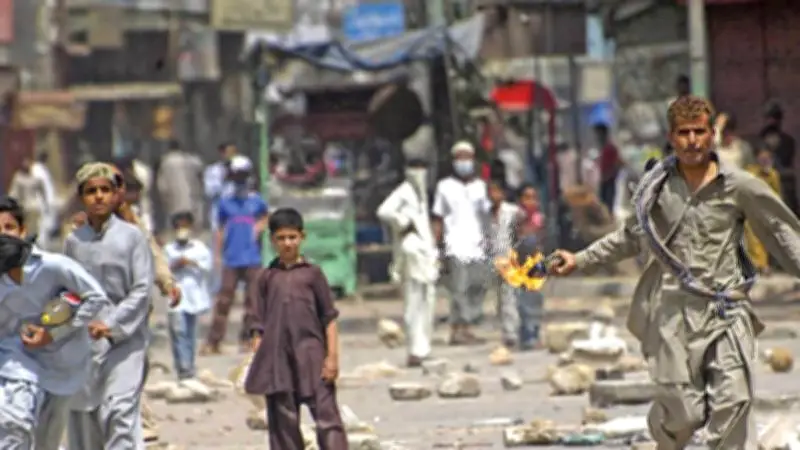
From the late 1990s onwards, Lyari experienced a severe wave of gang-related violence. Multiple armed groups emerged from within the local social and political environment. These groups were involved in extortion, narcotics trade, land control, and kidnappings. Rivalries between factions led to a prolonged conflict that deeply affected daily life. Streets that were once community spaces became zones of fear and uncertainty. This violence did not arise suddenly. It developed from long-term structural conditions, including poverty, overcrowding, lack of urban planning, weak governance, and political patronage systems. In many areas, the absence of effective state institutions allowed informal power structures to fill the vacuum. Over time, some of these structures evolved into armed groups competing for territory and resources.
In 2013, a large-scale security operation was launched by state forces in Lyari. The campaign involved extensive urban clearance operations, arrests, and armed confrontation. Over time, it reduced the intensity of organised violence and restored a fragile sense of order. Markets reopened, and daily routines slowly returned. However, the deeper social and economic challenges remained largely unresolved.
Educational and Institutional Development
Alongside these difficulties, Lyari also developed important public institutions. Medical education became a major achievement with the establishment of Shaheed Mohtarma Benazir Bhutto Medical College alongside Lyari General Hospital. This institution has trained hundreds of doctors and healthcare professionals, many of whom come directly from local families. Benazir Bhutto Shaheed University Lyari was also established to expand access to higher education in arts, commerce, and sciences. The Government Polytechnic Institute Lyari provides technical and vocational training that supports employment in engineering-related fields and industrial work. While medical and general education have seen meaningful progress, advanced engineering education remains limited and largely confined to diploma-level programmes. Expansion efforts continue to face challenges related to funding, infrastructure, and land availability in a densely populated environment.
Sports Culture: Football and Boxing
Despite its difficult reputation, Lyari stands out as one of Pakistan’s most remarkable centres of sporting talent. Football and boxing are deeply rooted in the culture of the area. Kakri Ground in particular has played a historic role as a training and competition space for generations of athletes. It has produced national-level footballers and remains a symbolic centre of youth sports development in the community.
Lyari is often called the heart of football culture in Karachi. Young players from its narrow streets have represented Pakistan in domestic leagues and international youth tournaments. Teams formed from Lyari-based players have participated in international youth football competitions such as the Norway Cup and other regional tournaments, where they have gained recognition for skill, discipline, and determination despite limited resources.
In boxing, Lyari has an even more distinguished record. Syed Hussain Shah remains Pakistan’s only Olympic boxing medallist, having won bronze at the 1988 Seoul Olympics. Mehrullah Lassi has represented Pakistan with distinction at the Asian Games, earning international medals. These achievements highlight a long-standing boxing tradition that continues to inspire younger generations.
Female athletes from Lyari deserve special recognition. Women boxers from the area have broken barriers in a society where access to competitive sports is often limited for women. Mehreen Baloch became the first Pakistani woman boxer to compete at the Commonwealth Games, marking a historic moment for women’s sport in the country. Female footballers and athletes from Lyari continue to emerge from community programmes and local initiatives, showing determination and resilience in the face of social and structural challenges. Their participation represents not only personal achievement but also a shift in cultural boundaries.
The sports culture of Lyari is not separate from its social reality. It is part of the same environment that produces both struggle and talent. Narrow streets double as training grounds. Community clubs act as informal academies. Coaches often work with minimal resources yet produce athletes capable of competing at national and international levels. This ecosystem reflects resilience and collective effort.
Cinematic Portrayals and Representational Issues
Cinematic and media portrayals of Lyari often reduce it to a narrow and highly simplified narrative of crime, violence, and territorial control. Such portrayals tend to flatten a historically layered urban district into a one-dimensional backdrop for gang conflict, while overlooking its political evolution, working-class identity, institutional growth, and sporting legacy. This reduction is particularly evident in the 2025 Bollywood film Dhurandhar, which uses Lyari as the setting for a fictional crime thriller narrative. Within the film’s constructed storyline, the area is depicted as being dominated by a single criminal figure named Rehman Darkait. A character in the film claims that whoever controls Lyari controls all of Karachi. In this framing, the district is transformed into a symbolic centre of absolute criminal authority, where complex urban realities are compressed into a simplified structure of singular control.
From an analytical and factual standpoint, this representation does not correspond with the documented history or socio-political structure of Lyari. The real trajectory of the area has never been defined by a single centralised authority or unified criminal hierarchy. During the most intense phase of gang-related violence in the 2000s and early 2010s, power was distributed among multiple competing groups operating within shifting alliances and rivalries. These included the People’s Amn Committee and other localised factions engaged in conflict over territory, influence, and illicit economic activity. One of the most widely reported figures from this period was Rehman Dakait, who was associated in public reporting with organised criminal networks in Karachi. His role, however, existed within a broader and fragmented ecosystem of competing actors rather than a singular command structure. The violence in Lyari was characterised by overlapping networks, local rivalries, and evolving political and criminal linkages rather than centralised control.
The idea that Lyari alone determines control over Karachi is therefore a dramatic construction rather than an empirical reality. Karachi is a vast metropolitan region shaped by multiple political constituencies, administrative divisions, economic hubs, and security dynamics. Reducing its complexity to the dominance of one neighbourhood reflects the logic of cinematic storytelling rather than urban analysis. From a broader cultural and representational perspective, such portrayals raise important concerns about narrative balance. When a densely populated working-class district is repeatedly depicted primarily through the lens of criminality, it risks reinforcing simplified and stigmatising perceptions of its residents. This becomes particularly significant in cross-border media environments where fictional works can influence external perceptions of real communities that already face structural disadvantage.
Conclusion: Lyari as a Reflection of Karachi
Lyari’s identity is not defined solely by its history of violence. It is equally shaped by its early political participation in Sindh’s electoral history, its role in urban labour movements, and its long-standing tradition of community organisation. It is also defined by its public institutions, including medical colleges, universities, and technical training centres that serve thousands of students from low-income backgrounds. Seen in this broader context, reductive portrayals such as Dhurandhar do not fully capture the lived complexity of Lyari. A more accurate representation would acknowledge both the area’s real historical challenges and its continuing contributions to education, sports, and urban life in Karachi.
The Lyari River continues to define the physical and symbolic landscape of the area. Seasonal flooding and drainage challenges remain serious issues. At the same time, the district continues to evolve through education and sports institutions that offer new possibilities for younger generations. Lyari stands as a reflection of Karachi itself. It carries the imprint of colonial planning, migration, political struggle, economic inequality, and grassroots resilience. It is a place where hardship and achievement exist side by side, where athletes rise from narrow lanes to international arenas, and where public institutions slowly grow within dense urban conditions. To understand Lyari is to understand a century of urban transformation in South Asia. It is a story of displacement and belonging, neglect and resistance, violence and hope. Above all, it is a story of people who continue to build lives, institutions, and dreams along the edge of a river that still refuses to disappear.