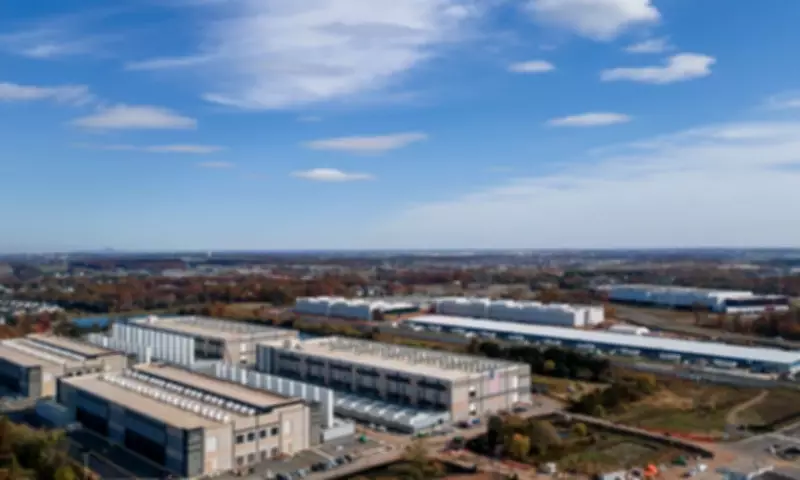
Microsoft Aims to Transform Data Centers with Superconductor Technology
Microsoft is actively pursuing the development of more efficient data centers by leveraging advanced materials that enable electricity to flow with zero resistance. These innovative materials, known as high-temperature superconductors (HTS), could potentially revolutionize the construction and operation of data centers and their connected energy infrastructure. If successfully brought to market, this technology promises to be a game-changer for the tech industry.
Addressing Power and Space Challenges in Data Centers
Tech companies are currently facing significant backlash due to the substantial power demands of generative AI, delays in connecting to power grids with inadequate infrastructure, and the environmental impact of constructing new data centers on local communities. High-temperature superconductors offer a promising solution by potentially shrinking the space required for data centers and the transmission lines that supply them with power.
"Microsoft is exploring how this technology could make electrical grids stronger and reduce the impact data centers have on nearby communities," stated Alistair Speirs, Microsoft's General Manager of Global Infrastructure Marketing, in a recent blog post. This initiative reflects the company's commitment to addressing these pressing issues.

The Advantages of High-Temperature Superconductors
Traditional data centers and much of our existing energy infrastructure rely on conventional copper wires, which conduct electricity with reasonable efficiency. In contrast, HTS cables can transmit electrical currents with zero resistance, dramatically reducing energy loss during transmission. Additionally, these cables are lighter and more compact, offering greater flexibility in design and layout.
High-temperature superconductors are already utilized in medical applications such as MRI machines and have been implemented in short stretches of power lines in densely populated metropolitan areas like Paris and Chicago. However, their widespread adoption has been limited due to complexities and higher costs compared to copper cables.
Overcoming Technical and Supply Chain Hurdles
To achieve zero resistance, HTS materials must be cooled to extremely low temperatures, typically using liquid nitrogen. The HTS "tape" that forms the core of superconducting cables is usually made from rare-earth barium copper oxide. While only a small amount of rare-earth material is required, the supply chain for these elements remains largely concentrated in China, posing a potential challenge.
Experts highlight that a more significant obstacle is scaling up manufacturing capacity for HTS tape to make it affordable. The growing power demands of generative AI are beginning to drive changes in this area. In recent years, tech companies have invested in research for nuclear fusion power plants, considered a holy grail of clean energy. Much of the HTS tape produced today is directed toward fusion research, and advancements in this field have helped lower material costs.
"That actually helped the supply chain and manufacturer variety, and even some of the costing of HTS ... for us to, like, oh, 'Well, let’s think about that. Now things have changed a little bit,'" explained Husam Alissa, director of systems technology at Microsoft.
Microsoft's Dual Approach to HTS Implementation
Microsoft is primarily focused on two key applications for high-temperature superconductors. Within data centers, smaller HTS cables would allow for more flexible layouts of electrical rooms and hardware racks. With funding from Microsoft, Massachusetts-based superconducting company VEIR demonstrated last year that HTS cables could deliver equivalent power with approximately a tenfold reduction in cable dimensions and weight compared to conventional alternatives.
"The future data center will be superconducting ... High power, more efficient, more compact," said Ziad Melhem, a professor in practice in the physics department at Lancaster University and a member of the editorial board for the Superconductivity Global Alliance. Melhem disclosed prior work at Oxford Instruments, which supplied components for Microsoft's quantum computer system.

Externally, Microsoft is open to collaborating with energy companies to support the development of long-distance power lines using HTS. Expanding transmission lines has been a major bottleneck in updating power grids, connecting data centers, and enhancing power supply. The approval process for such large-scale infrastructure across multiple jurisdictions is often lengthy and challenging.
HTS-based power lines could significantly reduce the space required for transmission. According to Microsoft's blog, while overhead transmission lines might span about 70 meters in width, superconducting cables could need only 2 meters of clearance. This reduction in area could streamline construction time and costs.
Broader Implications and Industry Support
"This is an obvious evolution of the use of this technology," remarked Dennis Whyte, a professor of nuclear science and engineering at MIT. Whyte, who co-leads an effort to build a fusion machine called SPARC in collaboration with Commonwealth Fusion Systems, noted that increased interest in HTS for data centers could also benefit fusion research by making the material more affordable and accessible.
Microsoft has separately entered into an agreement with another company developing a fusion power plant in Washington state, highlighting the interconnected nature of these advancements. "It’s come full circle," Whyte observed, emphasizing the synergistic potential between data center innovation and clean energy research.