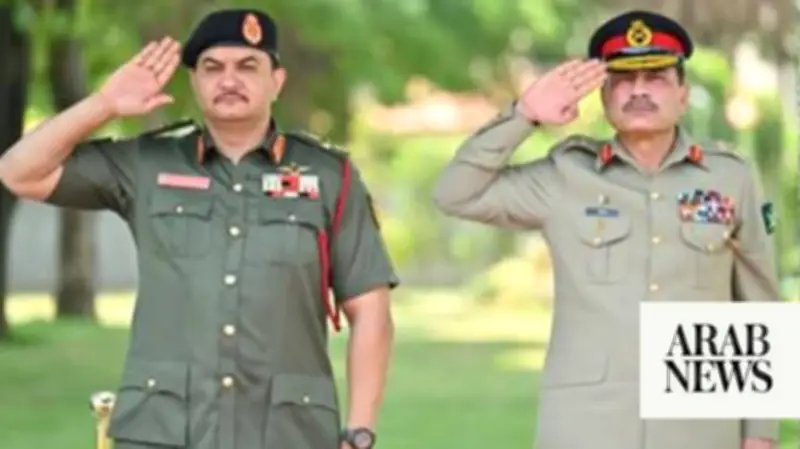
Pakistan's Chief of Defence Forces and Chief of Army Staff Field Marshal Syed Asim Munir met with the Deputy Commander-in-Chief of the Libyan Armed Forces, Lieutenant General Saddam Khalifa Haftar, at the General Headquarters (GHQ) in Rawalpindi on June 24, 2026. The meeting focused on increasing bilateral military, defense, and security cooperation, according to the Inter-Services Public Relations (ISPR), the Pakistani military's media wing.
Key Discussions on Defense and Security
During the meeting, the two leaders discussed matters of mutual interest, regional security dynamics, defense cooperation, and avenues for enhanced military-to-military collaboration, the ISPR statement said. Both sides underscored the importance of strengthening bilateral defense ties and increasing cooperation in military training and security.
Field Marshal Munir highlighted Pakistan's diplomatic efforts to establish peace in the region, particularly between the United States and Iran. In response, Lt. Gen. Haftar appreciated the professionalism of the Pakistan Armed Forces and acknowledged their contributions toward regional peace and security.

Background of Pakistan-Libya Defense Ties
Pakistan has sought to increase its defense and military cooperation with the Libyan Armed Forces in recent months. In December 2025, Munir visited Libya and met with Haftar to discuss defense and military cooperation. According to Reuters, Pakistan had struck a deal worth over $4 billion to sell military equipment to the Libyan army.
The two countries have enjoyed cordial ties since December 1951, when Libya gained independence. Pakistan has been providing military training courses to Libyan officers in aviation, infantry, and technical fields. Additionally, Libya and Pakistan have generally supported each other's candidates in multilateral forums, including the United Nations and the Organization of Islamic Cooperation (OIC).
Libya's Internal Situation
Libya has suffered from turmoil since a 2011 NATO-backed uprising toppled former leader Muammar Qaddafi. The country has been divided into eastern and western authorities since a civil war broke out in 2014. The UN-recognized government in Tripoli controls the west, while the Libyan National Army, led by Haftar and based in Benghazi, holds the east and south, including major oilfields.
Lt. Gen. Saddam Khalifa Haftar is the son of Khalifa Haftar, the commander of the Libyan National Army. His visit to Pakistan underscores the deepening military ties between the two nations amid Libya's ongoing political and security challenges.