The government announced a Rs17 trillion tax collection target for the new fiscal year on Friday, including over Rs1.7 trillion from the petroleum levy. It also provided Rs360 billion in relief to the salaried class, real estate, and businesses to stimulate the economy.
Tax Relief and New Measures
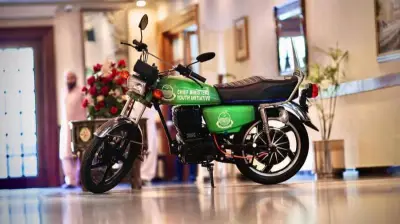
The salaried class received Rs52 billion in tax relief, while the real estate sector got Rs115 billion. A 30% federal excise duty was imposed on electric vehicles valued up to Rs30 million, and 40% on those above Rs30 million. A 5% income tax on social media platform income was introduced, and a ban on major asset purchases without matching declared income was reinstated. An 18% sales tax was imposed on hybrid vehicles.
Revenue Targets
The government imposed Rs306 billion in additional taxes and took Rs354 billion in enforcement measures to achieve the Rs15.264 trillion target for the Federal Board of Revenue (FBR). The petroleum levy target is Rs1.68 trillion, the climate support levy Rs50 billion, and the electric vehicle adoption tax Rs22.8 billion.

Customs Duty Reductions
To boost the economy, the government abolished or reduced regulatory duties on 1,914 tariff lines and proposed reducing customs duties on 3,125 tariff lines, including abolishing the 5% customs duty. Joint Secretary Mohammad Ashfaq stated that Rs180 billion in relief was given through lower import duties under the National Tariff Policy's second phase. The simple average weighted tariffs were reduced by 3.56% to 13%.
Finance Bill 2026-27
The Finance Bill 2026-27 includes Rs306 billion in additional revenue measures to meet the Rs15.264 trillion FBR target. Unlike the previous year, the FBR target is now a binding condition of the IMF, requiring a board waiver for any slippages. Provincial grants of Rs1.035 trillion are also contingent on FBR's performance, with automatic reductions in case of shortfalls.
Income Tax Changes
The government provided Rs52 billion relief to salaried individuals. Monthly income up to Rs267,000 sees a 3% rate reduction to 20%; up to Rs341,000, the rate is 25% (covering 160,000 taxpayers); up to Rs467,000, 29%; up to Rs583,000, 32%; and above Rs583,000 (over Rs7 million annually), 35%, reducing annual tax by Rs257,000. A 9% surcharge on income over Rs10 million was abolished. Super tax was removed for those earning up to Rs500 million, with a reduction from 10% to 8% for income above Rs500 million, excluding banking, oil, and fertilizer sectors.
Advance tax on property sale was reduced to a single 2.75% rate from 5.5%, and purchase tax from 2.5% to 1.25%. Export proceeds tax was cut by 0.75% to 1.25%. IT export income tax rate of 0.25% was extended for three years. Withholding tax on foreign credit/debit card transactions was reduced from 5% to 0.5%. Tax deducted on e-commerce transactions is now adjustable for sellers with turnover over Rs200 million. A 10% tax credit for investment in electronic resources for FBR integration was introduced. Tax exemptions were extended to charitable organizations including Pakistan Red Crescent, Shaheen Foundation, Bahria Foundation, SIUT, and Dawat-e-Hadiya. The 1% capital value tax on foreign assets was abolished. Turnover tax on wholesalers and distributors doubled to 0.5%. Exemption threshold for small traders' withholding tax increased from Rs100 million to Rs200 million. Minimum income tax on courier, logistics, HR outsourcing, oil drilling, and transport services rose from 6% to 7%. Port and LNG terminal services tax reduced from 15% to 12%. A 5% withholding tax on social media income was imposed, affecting content creators on YouTube, Facebook, Instagram, and TikTok. Withholding tax on industrialists' imports increased from 1% to 3%, and from 2% to 6.5%, with an additional 3% sales tax on these services.

Customs Duty Relief
Rs180 billion relief was provided on imports under the National Tariff Policy 2025-30. Customs duty on input goods was reduced on 92 tariff lines: from 20% to 15% and 10%, from 15% and 10% to 10% and 5%, and the 5% slab abolished. Additional customs duty was reduced on 449 lines (6% to 4%), 2,107 lines (4% to 2%), and eliminated on 569 lines (2%). Regulatory duties on 1,914 lines were rationalized: 50% duty on 359 lines lowered to 20%, and rates between 2.5% and 20% on 1,347 lines reduced by 20%. Duties of 2.5%, 2%, and 1% on 208 lines were reduced by 20% or eliminated. Customs duty on cancer-related APIs was exempted. Duty on specialized construction vehicles was reduced from 20% to 10%. Defense imports duty was abolished, and duty on bombproof vehicles for the SCO summit was removed.
Sales Tax Adjustments
Sales tax on magazines was abolished. Exemption scope for aircraft parts for PIA was enhanced. 18% tax on sanitary pads and contraceptives was withdrawn. 18% sales tax on shipping and brownfield refineries was abolished. 21 fast-moving consumer goods (e.g., packaged milk) were moved to the third schedule, taxed at market price to raise Rs50 billion. A 3% additional sales tax was imposed on imported raw materials by industrialists.
Federal Excise Duty (FED)
FED on business class tickets was reduced: Rs50,000 for the Americas (84% reduction), Rs25,000 for the Middle East, and Rs40,000 for other regions. FED on acetate tow imports was cut from Rs44,000 to Rs10,000. FED on WHO-compliant sports/electrolyte beverages was removed. Exemption on CKD kits for EVs was extended for one year. Duty on e-liquid for e-cigarettes increased from Rs10,000 to Rs16,500 per kg, removing the 65% retail price tariff. A 30% FED was imposed on luxury EVs worth Rs20-30 million, and 40% on those over Rs30 million. A 70% regulatory duty was imposed on vehicles between 2,000cc and 3,000cc, and 81% on ICE vehicles above 3,000cc.