For anyone following the Pakistani economy independently and objectively, the unambiguous growing threats tend to be quite obvious. The question is: does the Pakistani economy have enough muscle and, more importantly, leadership with vision and strategy to weather the incoming storm, or possibly the one that has already arrived? Growth is non-existent, less than the population growth rate; de-industrialisation, rising unemployment, non-existent investment, especially FDI, punishing inflation, coercive taxation, and the list goes on.
So, in essence, the answer to the above question is that, provided Pakistan undertakes the requisite rearguard action — short-term measures to mitigate the macroeconomic disruptions and long-term measures to undertake hard-nosed, long-overdue economic reforms to improve the productivity and competitiveness of the Pakistani economy.
Finance Minister's Acknowledgment
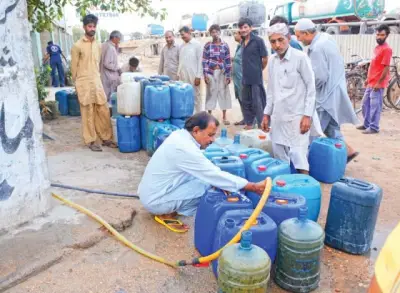
It was heartening to hear the finance minister the other day, where he rebuffed any concerns on flawed statistics and numbers, and said that in fact what truly should matter is that the average Pakistani is suffering like never before. While the foreign affairs and mediatory successes are laudable and make all of us very proud, the harsh truth is that the leadership is in office to serve the people first, and anything else should either be secondary or at least not at the expense of the primary objective.

Key Risks Confronting Pakistan
So, what are some of the risks that we are today confronted with? Breaking the answer to this down into two elements: a) emerging risk elements, especially the threat of inflation, arising primarily from a mounting global environment that remains depressed; and b) some specific domestic risks.
External Risks
The global economic outlook is “clouded” by several external factors:
- Geopolitical Conflict and Energy Prices: The continuing geopolitical impasse in West Asia is escalating energy prices and persistent global supply chain disruptions. These factors are already moderating global growth and increasing inflation projections. The recent peace deal is a very welcome sign; however, nothing will be instant and it will take time for the energy markets to stabilise, as the deal accord’s implementation renders consistency and thereafter stability.
- Monetary Policy Shifts: Major advanced economy central banks are expected to pivot towards monetary policy tightening, which has turned global bond markets bearish amid renewed inflation fears and debt sustainability concerns.
- Financial Market Volatility: “Risk-off” sentiments and demand for safe-haven assets are imparting volatility to forex markets, leading to a depreciating trend in many emerging market economy currencies, including Pakistan. The flight of capital from Pakistan may temporarily slow down due to the challenges being faced by the Gulf countries, but this phase may be temporary, whereas the fallouts on remittances may, on the other hand, be more long-lasting.
- Trade and Input Costs: Elevated freight and insurance costs, coupled with high logistics costs, are acting as headwinds for merchandise exports. Pakistan’s imports continue to rise in a very unhealthy trend.
Domestic Risks
In addition, the following tend to be specific risks that could destabilise the domestic baseline projections:

- Inflation: Double-digit inflation continues to be out of control, which could be further exacerbated if, in the next fiscal year, the provincial governments decide to increase minimum wages.
- Rising Input Costs: Fuel prices, coupled with the increased costs for industrial raw materials, chemicals and base metals, are expected to exert upward pressure on CPI inflation as firms struggle and, in turn, try to pass these costs on to consumers.
- Moderation in Growth: In an already low-growth or negative-growth environment, the rise in energy and input prices is expected to weigh on overall economic activity.
- Agricultural Uncertainty: A major domestic warning concerns the sub-normal south-west monsoon forecast and the high probability, 82–96 per cent, of El Niño conditions. They pose a direct threat to agricultural production, rural demand and food inflation.
- Speculative Pressures: The Pak rupee’s parity with global currencies remains a question mark, generating high speculative pressures that are not in sync with economic fundamentals, which can be disruptive to economic activity.
Recommended Corrective Actions
To summarise, in the short term, if the government is indeed serious about shoring up its domestic focus and efforts, the following areas will require immediate corrective actions:
- Shoring up the Balance of Payments: The steps to include making it easier and providing more attractive policies for foreign investors, overseas Pakistanis, exporters and companies that can help bring capital into Pakistan, and thereby help strengthen the country’s external finances at a time of global uncertainty. On the government’s end, it would do well by unleashing more long-term government foreign exchange securities, encouraging foreign currency accounts and bringing individual foreign investors at par with corporate ones.
- Revisit taxation to rationalise it, along with reforms that aim at curtailing the coercive powers of the collector.
- Come up with a prudent industrial policy that can halt or retard de-industrialisation.
- Restore exporters to a fixed tax and assessment regime and reintroduce zero-rating in the key sectors.
- And last, but not least, start introducing measures that reduce the footprint of the government on the economy.
Dr Kamal Monnoo, the writer, is an entrepreneur and economic analyst.