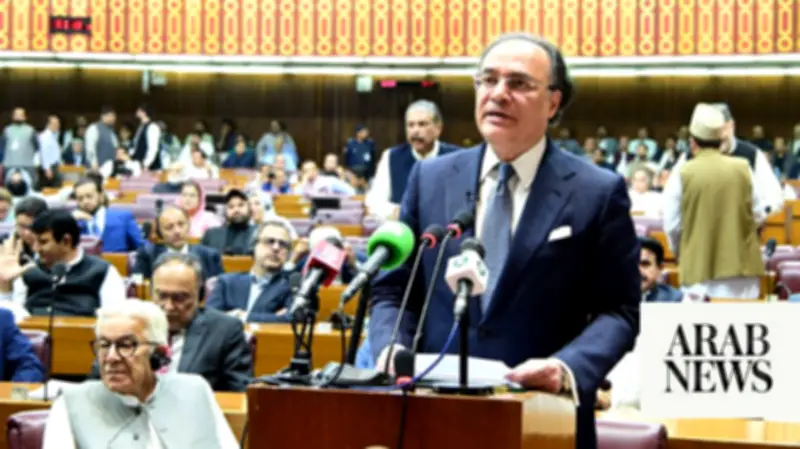
Finance Minister Muhammad Aurangzeb stated on Saturday that Pakistan's proposed budget for fiscal year 2026-27 is designed to accelerate export-led growth and build on the economic stabilization achieved over the past two years. He made the remarks while concluding a parliamentary debate on the government's fiscal plan.
Budget Overview and Economic Context
The Rs18.9 trillion ($67 billion) budget, unveiled on June 10, seeks to maintain fiscal discipline while supporting growth in an economy recovering from a balance-of-payments crisis that pushed Pakistan to the brink of sovereign default in 2023. The proposals sparked days of debate in parliament, with lawmakers raising concerns about taxation, revenue collection measures, relief for households, and the pace of economic recovery.
Finance Minister's Remarks on Export-Led Growth
“The fundamental goal of our government and this budget is export-led growth, which should be sustainable and inclusive, which should increase productivity and create jobs,” Aurangzeb told the National Assembly in his speech on the budget debate. He said the government believed the economy had moved beyond a period of stabilization and was now positioned for stronger growth, pointing to improvements in key economic indicators over the past year.

Key Economic Indicators Highlighted
“Today our industry is doing well,” he said, adding that large-scale manufacturing had recorded growth of around 6.5 percent, the highest in four years. Aurangzeb said Pakistan’s external account had also remained stable, noting that the country had posted a current account surplus during the first 11 months of the current fiscal year, while remittances from overseas Pakistanis were expected to reach $41 billion by year-end.
He also highlighted growth in the technology sector, saying information technology exports had increased by 20 percent during the year and were expected to exceed $4.5 billion, while Pakistani freelancers had generated record earnings of $1.6 billion.
Tax Policy and Reforms
The finance minister said the government had sought to shift the focus of fiscal policy toward expanding the tax base rather than imposing additional burdens on existing taxpayers. “We have changed this trend through this budget and have focused on broadening and deepening instead of burdening,” he said, adding that the government had sought to provide relief to salaried workers, exporters, industries, and small businesses while improving tax compliance and enforcement.
Aurangzeb also highlighted ongoing reforms at the Federal Board of Revenue, saying the government was introducing a new operating model aimed at increasing digitization, reducing discretionary powers, and improving transparency in tax administration.
IMF Program and Economic Outlook
The budget debate took place amid Pakistan’s efforts to sustain economic recovery under reforms linked to a $7 billion International Monetary Fund (IMF) program. The government has projected economic growth of 4.2 percent in the next fiscal year and says lower inflation, a stronger external position, and rising exports provide a foundation for faster expansion. The Finance Bill is expected to be approved by parliament before the start of the new fiscal year on July 1.