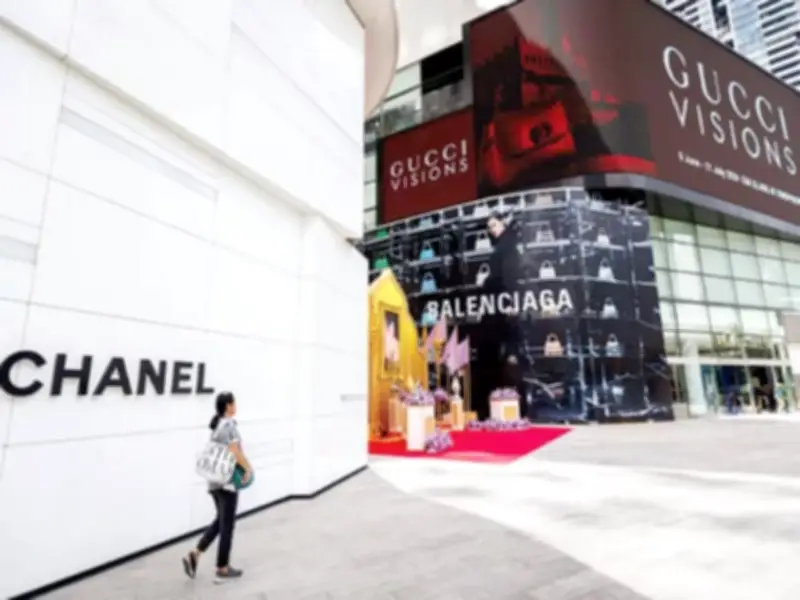
PARIS: After years of sluggish performance, the luxury sector is striving to regain its allure by blending a return to fundamentals with innovative client engagement strategies. The financial results of major players—including profit declines at LVMH and Kering, and a loss at Burberry for its 2024-25 fiscal year—underscore a market transformation. Multiple factors are at play: the slowing Chinese market, increased cost-consciousness among aspirational buyers, and rising quality concerns.
Post-COVID Boom and Its Aftermath
Eric Briones, co-founder of the Paris School of Luxury and author of a recent book on sector transformation, noted that the post-COVID luxury market experienced a surge fueled by binge buying. However, this strong demand strained the artisanal model, leading to outsourcing scandals in Italy. A key element of luxury appeal—products made with superior materials by skilled artisans using traditional methods—naturally limits production. During the post-COVID boom, some labels raised prices by up to 50% without improving quality, sometimes even reducing it, Briones said.
Overexposure and Exclusivity Dilemma
Christophe Cais, CEO of CXG, a consultancy for premium and luxury brands, highlighted a fundamental question: how many bags can a brand sell globally without becoming overexposed? Exclusivity is desirable, but sales volume is also needed, creating a tension where volume can undermine exclusivity. According to Bain & Company, the luxury market lost 20 million clients between 2024 and 2025, following a loss of 50 million in the previous two years.

Portfolio Pruning and Consolidation
After years of economic and geographic expansion, analysts believe it is time for consolidation. Lea Hubsch at Kearney noted a phase of recentering and bringing coherence to portfolios, which may involve stepping back from or finding new partners for brands that do not align with a group's DNA. LVMH recently sold Marc Jacobs after three decades and divested DFS duty-free operations in China. Kering sold its beauty division to L'Oreal for €4 billion. Italy's Versace acquired rival Prada for €1.25 billion. More deals are anticipated; Giorgio Armani expressed a wish for his fashion house to eventually join a luxury group like LVMH or L'Oreal.
Back-to-Basics Strategy
Kering's new CEO Luca de Meo outlined a turnaround strategy emphasizing consolidation and a return to basics. He called for quality upgrades and efforts to restore the desirability of Gucci, which suffered from overexposure due to streetwear. Analysts suggest the industry is also embracing experiential demand and wellness trends, offering customer service comparable to luxury hotels. Briones noted that desire has shifted to experiences such as beauty, hospitality, and transformative luxury.