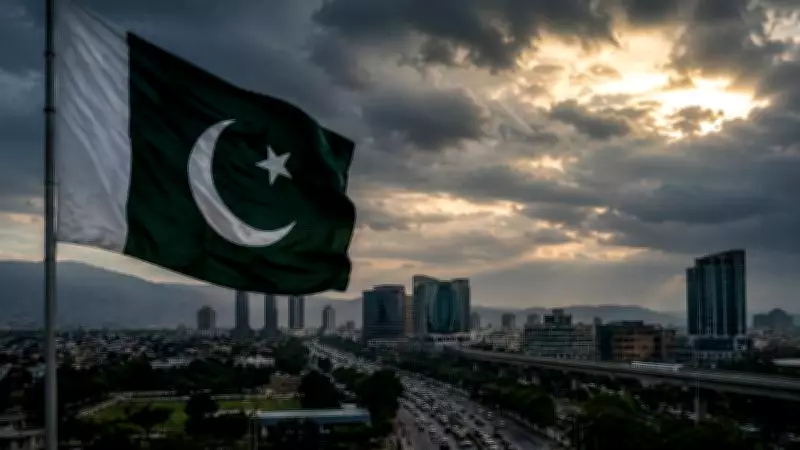
Pakistan's economic vulnerability has become a defining factor in its foreign policy and global alignments, according to recent analyses. The country's persistent fiscal deficits, mounting external debt, and reliance on international financial institutions like the International Monetary Fund (IMF) have constrained its strategic autonomy.
Economic Constraints and Foreign Policy
The interplay between economic fragility and foreign policy is evident in Pakistan's balancing act between major powers. With a current account deficit and low foreign exchange reserves, Pakistan has sought financial assistance from traditional allies like China and Saudi Arabia, while also engaging with the IMF for bailout packages. This dependency influences its stance on regional and international issues, from Afghanistan to Kashmir.
Impact on Relations with the United States and China
Pakistan's economic needs have led to a recalibration of its relationships. While the China-Pakistan Economic Corridor (CPEC) remains a cornerstone, Islamabad has also pursued closer ties with Washington to secure debt relief and investment. However, analysts argue that economic vulnerability limits Pakistan's ability to assert independent positions, making it susceptible to external pressures.

Domestic Reforms and External Expectations
The IMF's conditions for loans, including tax reforms, energy subsidy reductions, and privatization, have sparked domestic debate. These reforms are seen as necessary for long-term stability but pose short-term political risks. The government's ability to implement such measures while maintaining social stability is under scrutiny.
Regional Dynamics and Economic Diplomacy
Pakistan's economic challenges also shape its approach to regional neighbors. Trade with India remains negligible due to political tensions, while ties with Iran and Afghanistan are influenced by energy needs and security concerns. The country's quest for economic security has driven efforts to enhance connectivity through projects like the Turkmenistan-Afghanistan-Pakistan-India (TAPI) gas pipeline.
In conclusion, economic vulnerability is not merely a domestic issue but a lens through which Pakistan's global choices are filtered. As the country navigates its financial constraints, its foreign policy will continue to reflect the delicate balance between sovereignty and survival.