The Nandipur power project and the Neelum-Jhelum hydropower plant are not isolated mishaps but manifestations of a deeper, systemic execution failure within Pakistan's state machinery. Both projects, despite their different technologies and timelines, share a common disease: weak preparation, poor risk allocation, inadequate technical scrutiny, delayed escalation, cost overruns, premature celebration, and post-facto inquiries that yield no accountability.
Nandipur: A File That Became More Expensive Than a Faulty Turbine
Nandipur was intended to add urgently needed electricity to the grid. It had approvals, a contractor, and financing arrangements. What it lacked was timely decision-making. A required legal opinion for financing was not issued for years, leading to cost escalation, contractor claims, remobilisation costs, financing costs, and lost generation. This was not due to an earthquake, war, or global commodity shock—it was a file stuck inside the government's clearance, vetting, and inter-ministerial hesitation machinery.
The legal and administrative machinery bears principal responsibility for the early delay. However, the sponsoring power-sector authorities cannot be treated as innocent bystanders. If a nationally important project remains stuck for months, escalation should be immediate. If it remains stuck for years, the failure is institutional negligence. In Pakistan, delay is nobody's property; files move, reminders are sent, meetings are held, but activity is mistaken for decision.

Then came the second failure: revival without discipline. Once restarted, Nandipur became a symbol of quick delivery, creating pressure to show generation before full technical and commercial readiness. At one stage, power was produced at extremely high cost because the plant ran on unsuitable interim fuel. This was optics dressed up as delivery, not project management.
Neelum-Jhelum: A Flagship Asset Trapped Inside a National Defect
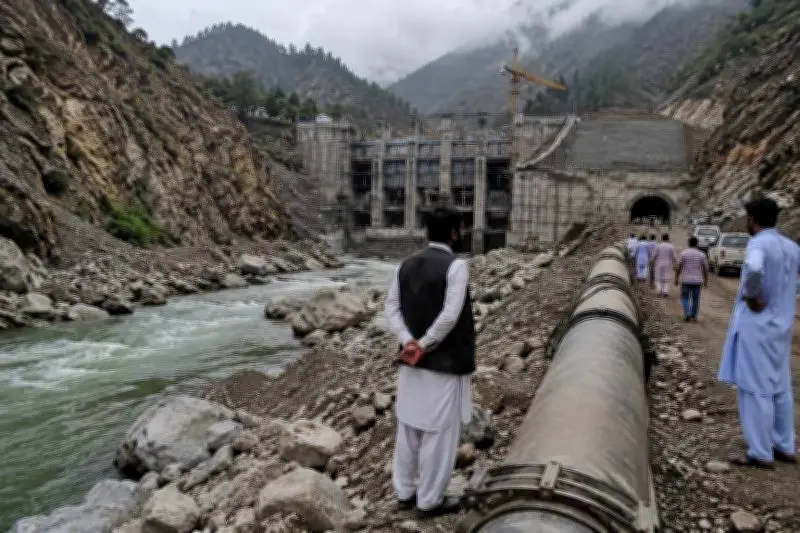
Neelum-Jhelum, with 969 MW installed capacity and large annual generation potential, was presented for years as a strategic national asset and clean-energy achievement. But it took years longer than planned, its cost escalated massively, and after commissioning it suffered major tunnel problems. The plant shut down in 2022 due to tunnel damage, returned only after repairs, and faced serious headrace tunnel problems in 2024 that halted generation. A tunnel-dependent hydropower project whose tunnels cannot be trusted is not a triumph—it is a national asset trapped inside a national defect.
The comparison matters because it removes the excuse of uniqueness. Nandipur was not a one-off administrative mishap; Neelum-Jhelum was not a one-off geological misfortune. Together they show a repeated pattern of weak preparation, poor risk allocation, inadequate technical scrutiny, delayed escalation, cost overruns, premature celebration, and post-facto inquiries.
The Elasticity of Time and Money in Public Projects
Pakistan's public-sector project system treats time and money as elastic. If a project is delayed, the taxpayer absorbs the escalation. If costs increase, consumers pay through tariffs, surcharges, or public debt. If design or execution is flawed, another committee is formed. If responsibility is unclear, the matter is referred elsewhere. If the asset underperforms, the public is told to be patient because the project is of "national importance," a phrase that has become a shelter for weak execution. No private investor operating under real discipline could survive this way.
The IPP experience is the private-sector version of the same disease. Contracts that began as emergency solutions to shortages became a system of guaranteed returns, capacity payments, and risk transfer to the public. This created an ecosystem around tariff approvals, sovereign guarantees, fuel supply, renegotiations, boards, consultancies, and regulatory forbearance. The political and bureaucratic elite learned that electricity can become a pipeline for guaranteed money.

The Absence of Real Energy Markets
Pakistan still runs much of its power and gas system through administered prices, sovereign-backed contracts, cost pass-throughs, centralised purchasing, and political allocation. There is no serious market discipline where generators compete transparently, buyers contract directly, bad projects lose revenue, inefficient plants are punished by dispatch, and prices reveal real costs. Without a market, failure is not priced—it is transferred. Nandipur becomes a tariff problem rather than a management failure; Neelum-Jhelum becomes a consumer-funded national monument rather than a commercially tested asset; IPP liabilities sit on bills whether or not the system needs the power.
A Hollow Accountability Culture
These cases expose the hollowness of Pakistan's accountability culture. Inquiries are launched, reports submitted, losses estimated, and blame circulates between ministries, companies, boards, contractors, and consultants. Then the system resets and moves to the next project. The lesson is never absorbed because institutions responsible for weak execution rarely face consequences proportionate to the loss imposed on the public.
The reform agenda requires upsetting the comfortable architecture that protects failure. Every major public project must have a single empowered owner with clear legal responsibility. Inter-ministerial clearances must have binding timelines; delays beyond those timelines must trigger automatic escalation. Cost escalation caused by administrative inaction must be publicly disclosed. Technical audits must precede commissioning, not follow breakdowns. Operations and maintenance arrangements must be settled before inauguration. Boards must be staffed for competence, not convenience. Fuel procurement, measurement systems, and data controls must be independently monitored.
Above all, Pakistan must build real energy markets: open access to networks, credible wheeling, bilateral contracting, competitive wholesale trading, transparent merit-order dispatch, locational and congestion signals, and separation of wires from supply. A project should earn its place in the system, not be protected by a tariff shelter after failing the public.
Conclusion: A State Execution Crisis
Nandipur tells what happens when legal and administrative paralysis delays implementation and political haste distorts revival. Neelum-Jhelum tells what happens when a flagship project is delivered late at enormous cost and cannot deliver reliable output due to underlying engineering and oversight failures. Together, they are evidence of a state execution crisis. Pakistan needs not just more investment but a government machinery capable of converting investment into functioning assets, and an energy market capable of exposing bad assets before their costs are dumped on consumers. Until discipline, accountability, and competence are instilled in planning, contracting, building, dispatching, and paying for megawatts, the country will keep producing the same miserable sequence: ambitious announcement, delayed execution, inflated cost, hurried inauguration, technical fault, inquiry, silence, repeat.