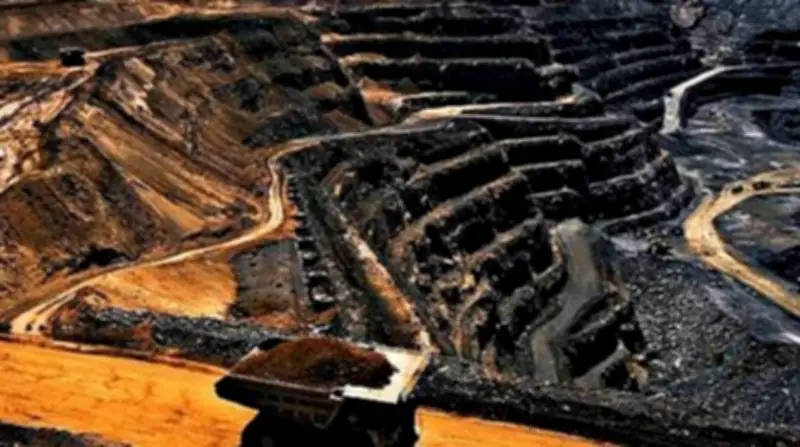
The US-Iran conflict serves as another stark reminder of Pakistan's vulnerability to global black swan events and its continued reliance on imported fuels. Every geopolitical crisis that disrupts energy markets exposes the country's economic fragility, reinforcing the urgent need to accelerate the utilisation of Thar coal across multiple sectors of the economy.
Progress and Potential of Thar Coal
Pakistan has already made significant progress by producing 2,640 MW of electricity from Thar Blocks I and II, with four of the country's six most economical power plants now operating on Thar coal. The planned conversion of the 660 MW Lucky Power Plant to Thar coal and efforts to blend Thar coal at imported coal-based independent power plants are positive developments. However, the resource's potential extends far beyond electricity generation and should become a cornerstone of Pakistan's broader energy and industrial strategy.
Removing Barriers to Expansion
To fully harness this potential, the government must remove longstanding barriers facing Thar coal projects, including constraints related to local project financing, the import of machinery and equipment, circular debt, and tariff issues. Without addressing these structural challenges, the pace of expansion will remain slower than the country's strategic interests demand.

Given the national importance of Thar coal and the limited availability of international financing for such projects, the State Bank of Pakistan should encourage greater participation from local commercial banks in funding the expansion of Thar Blocks I and II. At the same time, the government should consider introducing mandatory blending targets for imported coal plants to increase domestic coal utilisation across various industries.
Reducing Dependence on Imported Coal
Pakistan's power and cement sectors continue to rely heavily on imported coal, leaving the economy exposed to volatile international prices and geopolitical risks. In recent weeks, imported coal prices have reportedly risen by more than 20 per cent compared to 2025 levels, reaching approximately $110 per tonne (FOB). The government's recent power sector reforms are encouraging, but the persistent issue of circular debt must be addressed to enable Thar projects to recover billions of rupees in outstanding payments.
Meanwhile, a study by the Pakistan Institute of Development Economics warns that any prolonged disruption of the Strait of Hormuz could dramatically increase Pakistan's monthly petroleum import bill by $3.5 to $4.5 billion while pushing consumer inflation to between 15 and 17 per cent. These figures illustrate the economic cost of excessive dependence on imported energy.
Infrastructure and Financing Needs
An important milestone in expanding Thar coal utilisation will be the completion of the Thar Coal Rail Connectivity Project, expected to become operational by late 2026. The rail link will enable bulk transportation of coal from Thar to industrial consumers across the country, including cement factories and power plants, significantly improving logistics and reducing transportation costs. However, infrastructure alone will not be enough.
Government-backed financing mechanisms or dedicated State Bank green and energy transition credit lines should be introduced to support cement kiln modifications, power plant retrofitting, and the $1.1 billion Thar coal gasification project. Similarly, exemptions or reductions in duties and taxes on imported heavy equipment would encourage further investment in mine expansion and related infrastructure.
Agricultural and Industrial Benefits
The Thar coal gasification project could also have far-reaching implications for Pakistan's agricultural sector. By providing a domestic feedstock for fertiliser production, it would reduce dependence on imported liquefied natural gas and help prevent the gas supply disruptions that have periodically affected liquefied natural gas-based fertiliser plants. The result would be improved food security and a more reliable supply of affordable urea for farmers.

Beyond energy security, Pakistan should view Thar as the foundation for broader industrial development. The minerals sector will generate greater long-term value through downstream processing rather than merely extracting raw materials. Establishing copper smelting facilities and special economic zones adjacent to Thar coal projects could stimulate industrial activity, attract investment, and enable the production of higher-value-added goods.
Reforms and Exploration Momentum
The government's recent power sector reforms are encouraging, but the persistent issue of circular debt must be addressed to enable Thar projects to recover billions of rupees in outstanding payments. Timely settlement of these dues would improve cash flows, strengthen operational efficiency, and support future expansion. It is equally encouraging that local oil and gas exploration companies have begun reversing years of decline through new investments and enhanced recovery campaigns, while the recent award of eleven onshore exploration blocks signals renewed momentum in upstream activity.
Pakistan cannot control geopolitical crises or global commodity markets, but it can reduce its exposure to them. Accelerating the development and utilisation of Thar coal, while integrating it into a broader industrial strategy, offers a practical path towards greater energy security, economic resilience, and long-term national development.