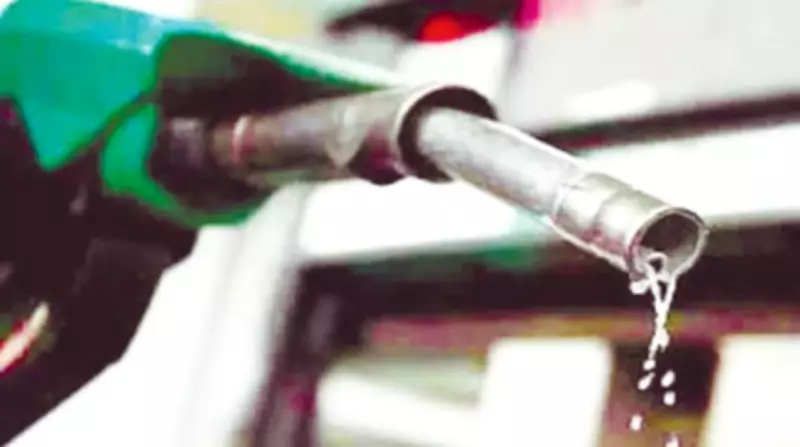
A Senate panel on Monday questioned a Rs55 per litre petrol price increase that occurred within days of the start of the US-Iran conflict, challenging the rationale behind the hike despite cheaper existing stocks. The committee demanded that the Petroleum Division conduct an audit of Oil Marketing Companies (OMCs) to assess potential windfall profits.
Minister Attributes Hike to Petroleum Levy
While briefing the Senate Committee on Petroleum, Federal Minister for Petroleum Ali Pervez Malik attributed the petrol price hike to the Rs117 per litre Petroleum Levy, stating it led to the increase in gasoline prices. However, committee member Senator Saifullah Abro remarked, "Was all the levy meant for war?" The minister responded, "Not at all." He added, "The IMF agreement sets the levy at Rs80 per litre each on petrol and diesel, and we had to fulfill levy requirements before the IMF Board meeting."
Committee Demands Audit of OMCs
Senator Saifullah Abro raised the issue of the Rs55 per litre increase in petrol and high-speed diesel (HSD) prices, noting that when the conflict began on February 28, companies held 580,000 tons of petrol stocks purchased at cheaper rates. He argued that OMCs profited from cheap oil bought prior to the conflict. The committee urged authorities to conduct a comprehensive audit of OMCs to determine financial gains from existing stocks following the price hike. It was also informed that a joint stock-taking mechanism involving OGRA, FIA, IB, and other relevant agencies had been established to monitor stocks on a fortnightly basis.

Senator Aamir Waliuddin Chishti called for an audit of all OMCs. The minister confirmed that the FIA is investigating and offered, "We will audit all 42 Oil Marketing Companies. We'll provide data for each company."
Government's Explanation for Price Adjustment
In response to committee concerns, the federal minister explained that the price adjustment was intended to provide fiscal space and liquidity to OMCs to avoid fuel shortages amid volatility in international petroleum markets. He noted that due to the absence of a permanent ceasefire in the US-Iran conflict and related import constraints, the government had been compelled to prioritize critical sectors.
Gas Supply Diversion to Fertilizer Sector
The committee was apprised that gas supply had been diverted to urea production units to avert a fertilizer crisis, particularly amid constraints in DAP imports. An official stated, "The bigger crisis now is food security, therefore it is being ensured that all fertilizer companies should operate." Ali Pervaiz Malik said, "We're providing gas to fertilizer companies to avoid a food security crisis." The official added that currently no DAP raw material is available in the country as it used to come from Morocco via the Strait of Hormuz, and while enough urea stocks are available, DAP might not be available in a few days. The petroleum minister said, "We will talk to the Prime Minister to arrange DAP material."
LNG Cargo Arrival and Gas Supply Issues
The committee was informed that an LNG cargo from Qatar was expected to arrive at Karachi Port on Tuesday. An official said, "We managed to get the first cargo from Qatar with great difficulty. We're reducing spot purchases as they're too expensive." During discussion on gas supply, officials informed that the government, through the National Crisis Management Cell (NCMC), had prioritized uninterrupted gas supply to domestic consumers, particularly during meal preparation hours. Members expressed serious concern over prolonged gas outages in Balochistan and questioned the uneven supply situation.
LPG Pricing and Gas Connections
The committee took strong notice of rising LPG prices and the significant gap between officially notified rates and actual market prices. The chairman directed OGRA and relevant authorities to take strict action against overpricing and submit a detailed report. The issue of non-provision of gas connections to residents of gas-producing areas was also discussed. Members highlighted that despite Prime Ministerial directives and Supreme Court decisions, affected communities were still deprived of gas connections. Officials attributed the delay to non-availability of funds. The committee resolved to take up the matter with relevant stakeholders.

PMDC Board and Coal Mining Charges
The committee received a briefing on the selection process and criteria for appointments to the PMDC Board of Governors. It also took notice of varying charges imposed by PMDC on coal mining contractors at different sites in Balochistan. The chairman questioned the rationale behind differential pricing and announced that he would personally engage all stakeholders to resolve the issue amicably.
CNG Supply Suspension in KP
The committee further discussed the suspension of CNG supply in Khyber Pakhtunkhwa. Members noted that the disruption was adversely affecting low-income segments of the province. Officials informed that restoration of CNG supply was linked to the availability of imported RLNG, which had been affected due to the ongoing conflict and closure of the Strait of Hormuz. The committee also questioned the allocation of natural gas to RLNG-based power plants in Punjab while similar facilities were not extended to plants in other provinces, citing the example of the Jamshoro Power Plant. The chairman directed the Petroleum Division to submit the complete priority framework and recommended that natural gas supply to certain RLNG power plants be curtailed if equitable distribution could not be ensured.