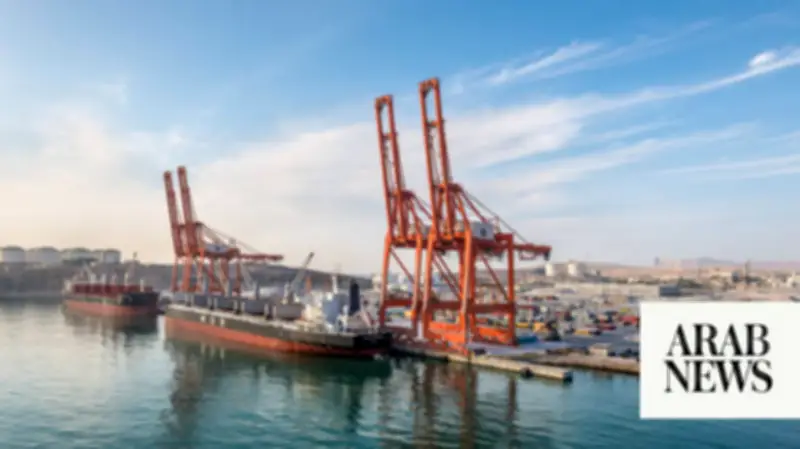
Oman's trade surplus remained stable at 1.54 billion Omani rials ($4.01 billion) in the first quarter of 2026, as imports declined more sharply than exports, according to preliminary data from the National Centre for Statistics and Information (NCSI). Total merchandise exports fell 8.5 percent year-on-year to 5.3 billion rials, while imports dropped 11.7 percent to 3.8 billion rials.
Hydrocarbon Exports Drive Decline
The decline in exports was primarily due to lower oil and gas shipments. Hydrocarbon exports fell by 13 percent to 3.4 billion rials by the end of March 2026, compared with 3.9 billion rials a year earlier, as reported by Oman News Agency (ONA). Within this segment, crude oil exports dropped 14.4 percent, liquefied natural gas declined 12.5 percent, and refined oil fell 8.4 percent, highlighting continued sensitivity to global energy market dynamics.
Non-oil exports edged down slightly by 0.6 percent to 1.61 billion rials, compared with 1.62 billion rials in the same period of 2025, showing relative stability. Re-exports, however, rose by 4.6 percent to 367 million rials, up from 351 million rials a year earlier.

Oil and Gas Still Dominate Trade Structure
Despite diversification efforts under Oman Vision 2040, oil and gas still accounted for roughly two-thirds of total merchandise exports in the quarter. The sultanate has been working to expand non-oil industries, boost exports, and strengthen trade links with regional and international partners to reduce reliance on hydrocarbon revenues.
Key Trade Partners
Trade flows remain heavily concentrated with key regional and Asian partners. The United Arab Emirates (UAE) played a central role across exports, re-exports, and imports. The UAE was the top destination for non-oil exports at 382 million rials, and also ranked among the top destinations for re-exports from Oman, amounting to 102 million rials. Additionally, the UAE was the largest source of imports to Oman at 1.1 billion rials.
Saudi Arabia ranked second in non-oil exports at 201 million rials, followed by India at 156 million rials. On the import side, China ranked second with 537 million rials, followed by Saudi Arabia at 308 million rials.
Outlook
The latest figures highlight the resilience of Oman's external trade position despite weaker hydrocarbon exports, with lower import costs helping to preserve a sizable trade surplus. The data underscores the continued dominance of oil and gas in Oman's trade structure, even as the country pushes forward with economic diversification initiatives.