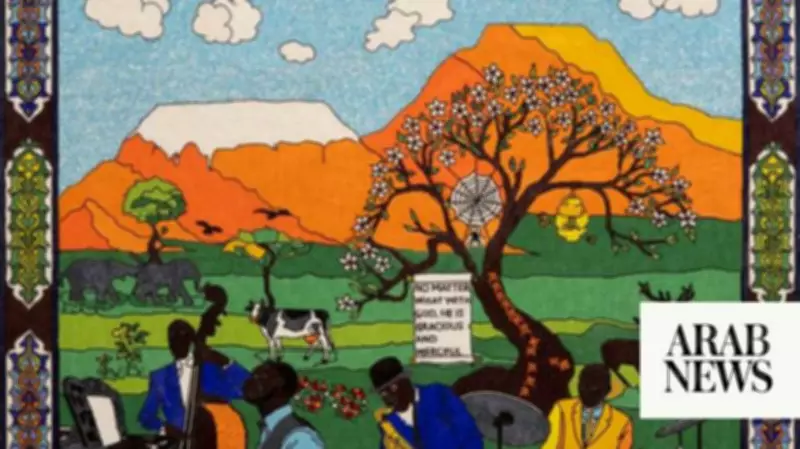
Saudi artist Sultan bin Fahad is showcasing his unique beading-on-canvas artwork at Art Dubai on May 15, as part of his jazz-inspired "Blue Note" series, which will be on display at Leila Heller Gallery in Dubai from May 13 to September. The series delves into the intersections of jazz music, Islam, and African heritage.
Exploring Jazz Roots
Bin Fahad's project began from a place of curiosity rather than deep academic knowledge. He discovered that some roots of jazz can be traced back to West Africa, possibly even to Muslim communities there. His work uses West African beads, reflecting the chanting traditions of African daily life. He imagines that during their journeys, including the era of slavery, people used chants as entertainment and music. For him, jazz carries a sense of sadness, though he acknowledges this is a personal feeling.
Historical Context
The "Blue Note" series focuses on the 1940s and 1950s, when many jazz musicians in the United States converted to Islam for spiritual or social reasons and adopted Arabic or Muslim names. This act of renaming was a form of resistance against a society that categorized people strictly as black or white. By taking names like Yusef Lateef, these musicians challenged and confused existing racial categories.

Inspiration from Ahmad Jamal
One piece in the series is based on the album cover of "Outertimeinnerspace" by Ahmad Jamal. Bin Fahad believes the album was inspired by stories from the Qur'an and Jamal's African heritage. He has adapted the cover and incorporated a quote from Jamal that reflects resilience in difficult situations.
Challenges in Art
The artist faced the challenge of making clear that the work is about both music and Islam, two subjects not typically associated. The border of the piece includes Islamic motifs. Bin Fahad prefers not to explain his work extensively; he believes that if viewers do not understand or feel something within ten seconds, he has failed.
Open Identity
Throughout the series, faces are softened or removed entirely, as Bin Fahad is not interested in fixing identity. He wants to keep the meaning open, focusing on the broader movement of jazz and its themes of faith, diaspora, and resistance. This approach allows the work to apply to contemporary genres like hip-hop that are influenced by similar social themes.
Ultimately, Bin Fahad aims to provoke curiosity, encouraging viewers to think and learn more about the subject of music and the influence of Islam.