The exhibition "What's between, between?" is currently on display at the Media Majlis Museum in Northwestern University in Qatar, running until May 14. This event is described as a critical and immersive exploration of the Gulf region's future, offering audiences a chance to examine the concept of 'Gulf Futurism,' a term coined by Qatari artist Sophia Al-Maria. The exhibition delves into histories, dreams, and futures, presenting the Gulf as a contested field shaped by rapid transformation, speculative imagination, and lived experience, moving beyond singular narratives toward complex, in-between realities.
Featured Saudi Artists and Their Works
Several Saudi artists have contributed to this exhibition, with five notable pieces highlighted below.
Nasser Al-Salem: 'Arabi/Gharbi'
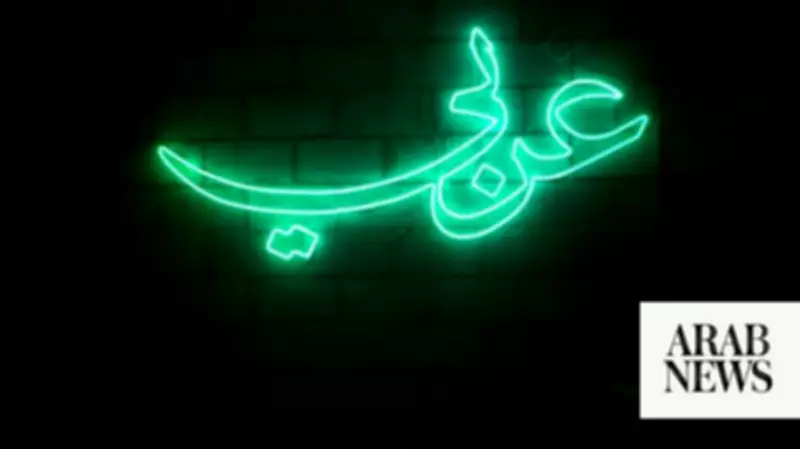
The Makkah-born artist's 2016 work is an illuminated neon light that presents the two Arabic words 'Arabi' (Arab) and 'Gharbi' (Non-Arab) almost simultaneously. The only difference between the two is the addition of a single dot, or nuqta. When the nuqta is illuminated, it reads 'Gharbi'; when unlit, it reads 'Arabi.' The exhibition catalogue questions, 'What makes an Arab an Arab? And who gets to decide?' Al-Salem's work reveals hybrid identities, peripheral stories, and voices of outliers, refusing singular narratives and advocating for a future where diverse, intersecting identities exist in parallel. It reminds us that we have no one story but flicker and transition between many. A brochure from a 2025 exhibition described Al-Salem's work as challenging traditional boundaries of Arabic calligraphy by recontextualizing it through mixed media, minimalist approaches, and architectural methods.

Sarah Abu Abdallah: 'Blanket No. 64'
The Qatif-born artist's work responds to Gulf Futurism's gleaming promises, endless consumption, and forgetting of the past. Her piece comes from the 'Blanket' series of digital images on woven textiles, featuring images of everyday life taken by friends and family members in the Kingdom. The domestic object bears strange yet familiar images of childhood, like stuffed toys seated on chairs, as if waiting for something to begin. As children, we used toys to imagine, constructing identities, characters, and roles, rehearsing futures, testing personalities, and making sense of the world through play. A blanket symbolizes that era of warmth, comfort, and belonging. The catalogue asks, 'In the adult world outside, what do we reach for now, when the world moves too fast and change outpaces memory?'
Ahaad Alamoudi: 'When I was Asked (Silver III)'
Ahaad's featured work is one of several of the same image created in different colors. According to the catalogue, the Jeddah-born artist documents the social shifts reshaping Saudi Arabia, using symbols that circulate as proof of progress and national pride. Her work reminds us that in a rapidly evolving landscape, society, and future, advancements like women driving shouldn't be seen in isolation or as coincidence but as a dynamic layering of change.
Ayman Daydban: 'Distortion 11'
The Palestine-born Saudi artist's stainless-steel sculpture represents a folded flag, particularly the Arab revolt flag and its derivatives, now adopted by several Arab countries. Daydban has removed the familiar colors—black, white, green, and red—leaving the national symbol reduced to harsh metal surfaces that engage viewers as their distorted reflections appear in the glossy brushed surface. The 'Distortion' series captures the profound complexities of national identity and its relation to globalized politics, ridiculing our obsession with notions of identity in a globalized world. The show catalogue notes that it inspires us to think critically about national narratives and constructs, exposing complexities and tensions between translation and interdependence.
Lulua Alyahya: 'Bullet Train'
The site of a bullet train—a symbol of urbanization and technological progress—crossing bare desert sands is an unusual image, and that's the point behind the US-born Saudi artist's work. The catalogue notes that it draws attention to how the ordinary can become strange when viewed from the outside, capturing something seen but rarely named in the Gulf, known but left unspoken: Why does modernization look different, depending on who's doing it?